

Academic Spotlight: Dr. Laman Tasch, Associate Dean of Academic Strategy, Social Sciences
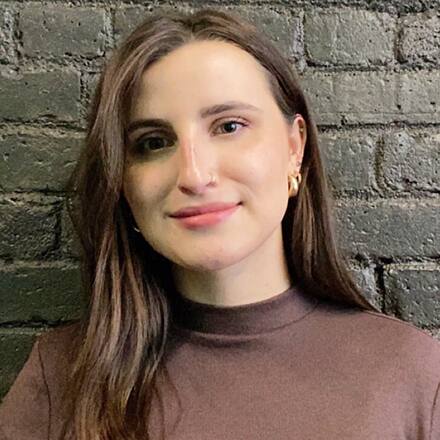
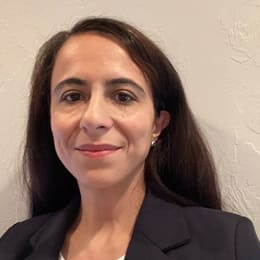
Dr. Laman Tasch, an associate dean of academic strategy at Southern New Hampshire University (SNHU), has an academic background in political science and sociology. Tasch earned both a master’s and a bachelor’s degree in sociology from Middle East Technical University in Turkey. She also holds a PhD in Political Science from Northern Illinois University.
Recently, Tasch took the time to answer questions about the power of education, her work in political science and sociology and her love of travel.
Can you tell us about your professional background?
I've been teaching in higher education since 2003, and my career has taken me through different contexts, from project management for a multinational corporation, international student compliance as a designated school official and eventually academic management. All of that gave me insight into how students navigate educational systems, especially when they are crossing cultural or institutional boundaries.
As associate dean of social sciences programs at SNHU from 2019 to August 2025, I oversaw undergraduate programs in anthropology, political science and sociology while developing student engagement initiatives, virtual Model UN, student webinars and international conference series that brought together hundreds of participants from more than ten countries. In August 2025, I moved into the academic requirements strategy group within academic strategy management, where I focus on using systematic analysis and emerging tools like AI to optimize academic operations and strengthen institutional effectiveness.
What first drew you to higher education?
In some ways, it was the path of least resistance. My father was a university professor and education was considered an appropriate profession for women in my family and culture. It was safe, respectable, acceptable. But my dream was to be the next Christiane Amanpour: breaking boundaries, reporting from conflict zones, challenging traditional roles for women. I wanted to be where the action was.
What I learned, though, is that you can break boundaries from anywhere, even within roles that were designated for you. Higher education gave me a platform to ask uncomfortable questions, to bring multiple cultures into conversation with each other, to create spaces where students could challenge what they'd been taught to accept. I realized I didn't need to reject the path entirely: I needed to transform what that path could mean.
What aspects of your own education have been influential in shaping your career in academia?
Two things: learning to think across disciplines and learning to sit with complexity rather than rushing to simplify it. My training in sociology taught me about the power of social interactions, how the people around us shape what we think, what we believe and how we behave in ways we often don't recognize. Political science gave me tools to understand how institutions and decision-making processes work, from governments to organizations.
Together, these disciplines taught me to look for patterns and connections that aren't immediately obvious. The second piece is methodological. My PhD research required me to conduct interviews, analyze policy documents and synthesize findings from multiple sources, skills I use every day. Academia taught me that rigor and creativity aren't opposites: they're partners.
What attracted you to this field of study? What keeps you excited about it?
Sociology was actually chosen for me: my mother wanted me to be "like Raisa Maximovna," Mikhail Gorbachev's wife, the first lady with her own voice and opinions who happened to be sociologist. Higher education was culturally acceptable for women in my family, so that's where I ended up.
But I soon discovered something powerful: higher education gives people the capacity to become who they're striving to be, to pursue what's meaningful to them, to develop capabilities they didn't know they had. That transformation depends on how we see and use the opportunities that sometimes lie right in front of us. Opening doors requires seeing them first.
What keeps me excited is treating every challenge as a puzzle. I look at how something currently works and think: could this be better? What would make students' experiences more effective? How can we use data and systematic analysis to make smarter decisions? It requires both analytical thinking and genuine understanding of the people using these systems. That combination, intellectually challenging work that directly affects people's educational journeys, is exactly what keeps me engaged.
How have you found ways to effectively connect with students?
In my current role, I don't work directly with students day-to-day, but I still teach online and look for every opportunity to engage with them through workshops and presentations. I am an educator and to me that means more than delivering content: it means understanding where students are coming from, what they are navigating, what's shaping their experience.
When we pay attention to what students are saying, it changes how we think about their needs and how we approach anything that affects their educational journey. Students and people in general connect when they feel genuinely heard and when you meet them where their needs live.
What brings you the greatest joy in your work at SNHU?
Seeing impact. With students, it's when they tell me they have used something we discussed: they reframed how they think or applied a concept in their own lives in a way that surprised them. That's when I know the learning stuck.
In my institutional work, it's when I can see that something I worked on made things better. I'm lucky to work somewhere where the institutional values, such as putting people first, embracing learning, collaborating toward shared success, match what I believe in. When I can use analysis and systematic thinking to help the institution function more effectively, knowing that ultimately affects students' experiences, that matters to me. It's the kind of work where you can see the connection between what you are doing and why it matters and that is exactly why I do this.
What do you feel is unique about the faculty and students you work with?
Our faculty are remarkable people who bring their individual experiences and dedication to students in ways that go far beyond job descriptions. The faculty I have interacted with genuinely care about their students' success, not in an abstract way, but in the everyday choices they make about how to teach and support learners.
Our learners are equally impressive. Many are juggling full-time jobs, families and education simultaneously. What makes them truly unique is what they bring into the classroom. Their real-world experiences, diverse perspectives and the way they connect course concepts to their own lives enriches the learning environment for everyone. The communication that happens in those spaces isn't just about delivering content: it's genuinely educational for all of us.
What does SNHU’s mission to transform the lives of learners mean to you?
Transformation happens through the journey, when someone realizes they can learn something they didn't think they could, when they discover capabilities which they didn't know they had, when they start seeing themselves differently. Higher education did that for me, transformed what I thought was possible not just professionally, but in how I understand the world and my place in it. It's not just about degree completion, though that matters. It's about those shifts in how people understand what's possible for them. The right conditions can make that transformation more likely, more accessible.
SNHU's mission resonates with me because it's about creating space for those transformative moments to happen for as many people as possible. When we do our work well, we support people as they discover their own capabilities.
Outside of work, what’s something you’re passionate about or really enjoy doing?
Traveling, but not just to see new places: to understand how different cultures think, express themselves, create meaning. There is something about stepping into a completely different context that makes you see patterns you couldn't see from home. And somehow in the process of discovering other cultures, you rediscover yourself.
Flamenco captures that for me. I've loved it since childhood and visited Andalusia multiple times to experience it where it lives. What draws me is how it emerged from the intersection of cultures, Roma, Moorish, Jewish, Spanish, each contributing to create this art form that tells the story of all the people who passed through Andalusia and their journeys. I'm also drawn to coastal forts, places that tell the stories of all the people who passed through those lands. I've visited all the coastal forts in New England and each one carries traces of the lives and struggles of those who built them, defended them, left them behind.
A degree can change your life. Choose your program from 200+ SNHU degrees that can take you where you want to go.
Alexa Gustavsen ’21 '26G is a content marketing specialist and writer at Southern New Hampshire University. Based in New Hampshire, she completed her bachelor's in creative writing and English on campus at SNHU. She also earned a master's in marketing from the university. Connect with her on LinkedIn.
Explore more content like this article

Careers in Industrial-Organizational Psychology That Don’t Require a PhD

How to Become a Child Psychologist
What is Forensic Psychology?
About Southern New Hampshire University
SNHU is a nonprofit, accredited university with a mission to make high-quality education more accessible and affordable for everyone.
Founded in 1932, and online since 1995, we’ve helped countless students reach their goals with flexible, career-focused programs. Our 300-acre campus in Manchester, NH is home to over 3,000 students, and we serve over 135,000 students online. Visit our about SNHU page to learn more about our mission, accreditations, leadership team, national recognitions and awards.