

AI in Education: How Technology is Shaping the Future of Learning


Is it cheating if you use artificial intelligence (AI) while completing your homework?
It depends. How are you using the AI tool? What role does it play in your thinking — and why are you turning to these tools in the first place?
The questions don’t stop there either. What happens when you join a workforce that expects its employees to use AI tools?
As AI continues to grow in use and capability, the questions are coming faster than answers. But one thing is clear: The future of AI is impacting education today.
To understand the role of AI in education now and in the future, take a look at how it’s currently being used, what opportunities and risks are present and how you can move forward responsibly.
How is AI Used in Education?

AI tools have been used in education longer than you might think, according to Jaymes Walker-Myers, a vice president of learning science and assessment at Southern New Hampshire University (SNHU) with two decades of experience in online higher education. He said AI tools have long powered:
- Adaptive learning platforms
- Educational tools in a variety of fields
- Intelligent tutoring systems
But the more recent introduction of generative AI has broadened possibilities for teachers and their students, according to Walker-Myers. In particular, there’s now an opportunity for students to get “on-demand” support related to:
- Brainstorming
- Data interpretation
- Feedback
- Text and image creation
- Voice and video generation
According to a 2025 Pew Research Center study, younger Americans have a higher awareness of AI than any other age group, and 53% of those aged 18-29 reported using AI once or more per day. The percentage increases among teenagers, with 64% of U.S. teens aged 13-17 reporting that they use AI chatbots, according to another recent Pew Research Center study.
With this widespread adoption of generative AI among traditional middle school, high school and college-aged students, new priorities have emerged when it comes to learning.
“These (AI) tools are influencing everyday academic tasks, from drafting assignments to designing course materials, calling forward the need to have conversations about assessment, academic integrity and digital literacy,” Walker-Myers said.
Similar to growing media literacy, teachers are now tasked with educating students on the opportunities and risks of AI. Primarily, students must be taught to evaluate AI-generated responses as they often contain biases, stereotypes and hallucinations — or false information that’s presented as factual. To do this, Walker-Myers noted that skepticism and critical thinking skills are paramount.
To learn more about the different types of AI and how it works, keep reading: What is Artificial Intelligence (AI)?
What Are 3 Disadvantages of AI in Education?
There are three primary risks to consider when it comes to AI in education, according to Walker-Myers. They are:
- Biases: AI tools are inherently biased because the material they’re trained on contains biases. You must learn to evaluate outputs with a critical eye.
- Cognitive Offloading: While AI tools can quickly complete tasks, they can also undermine the learning process and cause long-term damage to critical thinking and human intelligence.
- Plagiarism: Without acknowledging the use of AI tools to complete an assignment — even just a portion of it — you put your academic integrity and academic standing at risk.
As a result of these risks, there are mixed feelings around AI use within education — and a need to adapt to the new technology.
“A primary concern that most teachers and faculty agree is that students need to know how to use AI tools ethically, responsibly and ensure that reliance on AI is not undermining their own learning,” Walker-Myers said.

So, What Are 3 Advantages of AI in Education?
The advantages of AI in education are wide-ranging, impacting both students and their teachers.
 Career Readiness
One primary benefit of learning about artificial intelligence as a student is that it can help you build skills in an area that’s impacting every industry.
Eighty-five percent of jobs now require AI experience, according to a Forbes article based on Cornerstone’s 2026 Skills Economy Report. AI and machine learning skills skyrocketed to the number one most in-demand skill this year, the report noted.
“We know that AI will continue to shape the professional world, so it's critical that education prepares students for an increasingly AI-integrated future,” Walker-Myers said.
 Personalized Learning
Forget the one-size-fits-all learning model that challenges classrooms full of different learning styles and preferences. Walker-Myers believes AI has the potential to deliver “precision learning.” EDUCAUSE Review defines precision learning as a type of learning that caters to individual student needs.
Educators can use AI tools that help them modify their lessons and assessments to create more personalized experiences for their students at scale as they work toward the same learning outcomes.
 On-Demand Support
From the perspective of a student, AI tools offer one-on-one attention at any hour of the day. Plus, Walker-Myers said it allows students to better feed their curiosity: You can dig deeper into areas of interest and ask more questions.
What’s important to understand about this newfound learning resource, though, is that it can’t always be taken to be the truth. If left unchecked, it’s easy to learn and spread the wrong information.
Read more: Misinformation vs. Disinformation in the Age of AI
What is an Example of an AI Tool Used in Education?
Conversational platforms such as ChatGPT are an example of an AI tool that students are using. This type of tool turns a traditional search engine — something you're probably already familiar with — into a chatbot that offers more personalized responses.
With training, Walker-Myers said that generative AI support can be even more customized. He noted these tools have the potential to help you:
- Brainstorm topics for assignments
- Create podcast-style conversations to summarize course materials
- Engage in Socratic questioning to foster critical and deep thinking
- Generate practice quizzes on course concepts
- Get feedback on assignment drafts
- Plan out coursework and schedules
Understanding how to prompt the AI tool — or engage with it to get the output you expect — requires education and practice, though.
If you're looking to get more experience in AI, from creating effective prompts to responsible use, you can take courses online, such as SNHU's 8-week "Introduction to AI Literacy" 3-credit class or the university's 6-week "Generative AI: Concept to Innovation" that results in a Generative AI Practitioner badge.
Find Your Program
What to Avoid When Using AI Tools
While a key part of learning how to improve your prompting is knowing what information to include, it’s also important to understand what should be left out.
Conversations within AI tools may feel private, but they are not. The organization OpenAI, for instance, uses information that users provide to train ChatGPT. That means you have to be careful about including sensitive material and anything that’s considered intellectual property or subject to copyright laws.
In particular, Walker-Myers advised caution around uploading:
- Course materials (e.g., module overviews and assignment guidelines)
- Other students’ work
- Textbook materials and academic journals
Ensuring that your AI use cases complement or enhance the learning process is also essential in this new age of education.
“The most common misuse of AI that we are seeing is the use of an AI output to stand in place of a student's own work and thinking,” said Walker-Myers.
So, if you’re using an AI tool to assist you in your assignment, it’s necessary to disclose that use with proper attributions, according to Walker-Myers — just as you would cite any sources you used.
“Education is a difficult and time-consuming journey, and the temptation to shortcut the work required to complete course requirements with an AI tool has long-lasting, damaging effects on an individual's educational experience and the field of education in general,” he said.
How Will AI Change Education?
Artificial intelligence, especially the introduction of generative AI, is challenging the education system in all kinds of ways. And as AI tools continue to evolve and improve, one thing is clear, according to Walker-Myers: It’s more important than ever to protect the learning process and uphold academic integrity.

That means thinking about what education could and should look like in this advanced technological era.
Enduring questions in education have a new lens to consider now, Walker-Myers said: “What is the value in certain assessment types, such as the standard argumentative essay? What is the nature of instruction and learning when you have the answers to the world's questions at your fingertips?”
There’s an opportunity to rethink what the classroom experience is like with the ability to leverage “precision learning.” And for classes that were once lecture-based with standardized assessments, Walker-Myers suggested the transition to learning through more labs and simulations.
There’s also the need for acceptable AI use policies, he said — and treating those policies as living documents that are amended as technology changes.

Simply put, AI needs to be discussed in classrooms, according to Maggie Aubin, an AI integration specialist at SNHU. During this period of immense change, she encourages you to share your thoughts on AI and experiences using it — and really lean into your curiosity.
Open conversation, built on curiosity, will also help teachers and students discuss when and how AI can and should be used.
“Many believe that this is the end of critical thinking, but I disagree,” said Aubin, who holds two degrees in the liberal arts and has long studied how AI will impact student experience. “Critical thinking is evident in how we prompt, ensuring that we provide accurate and detailed information.”
Because AI is here to stay, Aubin and Walker-Myers agreed that it will — and is — changing education.
“Students have access to everything at any time, and it now requires us, more than ever, to teach them how to spot incorrect information and how to verify it,” Aubin said.
Education can change your life. Find the SNHU artificial intelligence course that can best help you meet your goals.
Rebecca LeBoeuf Blanchette '18 '22G is a writer at Southern New Hampshire University, where she fulfills her love of learning daily through conversations with professionals across a range of fields. She earned her Bachelor of Arts in Communication with a minor in Professional Writing at SNHU’s campus in Manchester, New Hampshire, and followed her love of storytelling into the online Master of Arts in English and Creative Writing at SNHU. Connect with her on LinkedIn.
Explore more content like this article
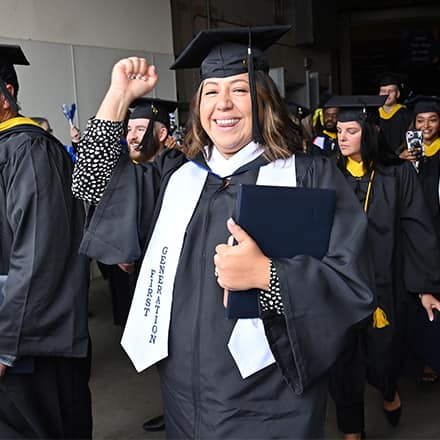
What Does First Generation Mean? A First-Gen Student Guide

Will My Credits Transfer?

How Many Credits Do You Need to Graduate College?
About Southern New Hampshire University
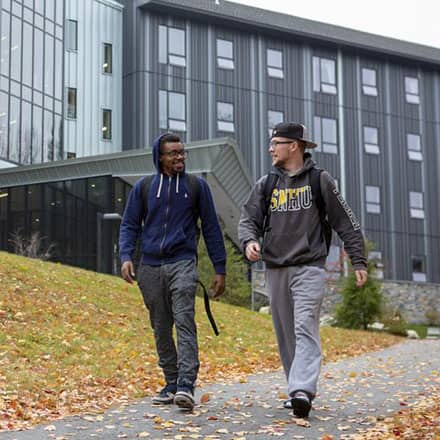
SNHU is a nonprofit, accredited university with a mission to make high-quality education more accessible and affordable for everyone.
Founded in 1932, and online since 1995, we’ve helped countless students reach their goals with flexible, career-focused programs. Our 300-acre campus in Manchester, NH is home to over 3,000 students, and we serve over 135,000 students online. Visit our about SNHU page to learn more about our mission, accreditations, leadership team, national recognitions and awards.