

Major vs. Minor vs. Concentration: What’s the Difference?


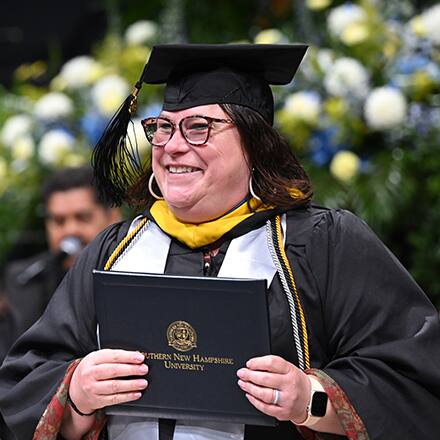
Juliana Zambrano '24, bachelor's in business administration with a concentration in project management
As a college student, your major doesn’t have to be your sole focus outside of your required coursework. You can study multiple subject areas or gain specialized knowledge in your field by earning a concentration or a minor, too.
Let’s say you’re interested in earning a Bachelor of Science (BS) with the hope of becoming a business leader in the technology space. What would you choose?
- BS in Business Administration with a minor in Information Technology
- BS in Computer Science with a concentration in Software Engineering and a minor in Organizational Leadership
- BS in Information Technologies with a concentration in Business Management and a minor in Finance
Your major, minor and concentration are three building blocks that can make your college degree, and they play roles of different sizes. Understanding each component will help you build a program suited to your specific interests and priorities.
| Major | Concentration | Minor |
|---|---|---|
| Your primary field of study or academic program | An optional specialization tied to a specific area within your major | An optional secondary subject area intended to broaden your knowledge |
What is the Difference Between a Major and a Minor?
Your college major is the subject you’ll be most immersed in as a student. It takes more credits to fulfill a major than a minor, and where a minor is optional, your major isn’t. Although you’ll often be able to start your degree before declaring a major, you’ll eventually have to choose one.

“A major is your primary field of study, or the academic discipline in which you complete most of your coursework and ultimately earn your degree,” said Dr. Torialyn Draper-Crook, an adjunct instructor and career advisor at Southern New Hampshire University (SNHU) with almost two decades of experience in higher education. “It serves as the foundation of your academic program and typically aligns with your long-term career goals or areas of professional interest.”
In contrast, she said a minor is a secondary subject area that might not tie directly to your major.
“A minor is different in that it requires fewer courses and allows you to explore an additional area of interest or develop a complementary skill set,” said Draper-Crook. “It can also create opportunities to build expertise in another discipline, strengthening both your academic profile and career preparation.”
Unlike a major, choosing a minor isn’t mandatory. However, many students find it to be worth it.
Read more: What is a Minor in College?
What is the Difference Between a Minor and a Concentration?
Your minor doesn’t need to relate directly to your major, but your concentration does. That means your options for a concentration will typically depend on your program of study.

“A concentration allows you to specialize in a focus area within your major,” said Matt DiPirro, an associate dean overseeing liberal arts and general studies programs at SNHU.
If you’re earning a BS in Healthcare Administration at SNHU, for example, you have the option to choose between concentrations in Health Information Management or Patient Safety & Quality. On the other hand, minors like political science, history or mathematics can be added to any major.
And while minors are typically reserved for bachelor’s programs, many master’s programs allow you the option of adding a concentration, too.
Concentrations: Explore Your Options
While not all majors offer concentrations, many do.
For example, the BS in Criminal Justice at SNHU has several related concentration options, such as:
- Criminology & Crime Analysis
- Cybercrime
- Homeland Security & Counterterrorism
- Human Services & Advocacy
Or if you’re interested in continuing beyond your bachelor’s degree to a Master of Business Administration (MBA), you could choose from more than a dozen MBA concentrations, including:
- Business Analytics
- Finance
- Project Management
- Public Administration
Choosing a Minor
 Your college minor doesn’t need to relate specifically to your program, and you’ll have plenty of options to choose from at most schools.
“While major pairings can vary based on a learner’s career goals, the best combination is one that aligns with the student’s intended path, and the possibilities are virtually endless,” Draper-Crook said.
She encouraged students to consider these four areas when deciding on a minor:
- Career alignment
- Industry trends
- Personal interest
- Skill enhancement
Adding a minor in sociology could help inform your perspective regardless of your major. A minor in communication can also showcase a commitment to professionalism and other soft skills that are necessary across almost all fields and industries.
Here are a few other minors you might consider:
- Criminal Justice
- Economics
- International Business
- History
- Psychology
Explore 60+ academic minors to choose from at SNHU.
Find Your Program
Are Minors and Concentrations on Your Diploma?
No, a minor or concentration won’t appear directly on your diploma, according to DiPirro. However, you can note your concentration or minor on your resume to signal your additional knowledge and skills to employers.
“They do not appear on your diploma, but they do appear on your transcript,” DiPirro said. “Minors and concentrations are common additions to a job profile or resume and have clear benefits to your career in today’s world of work.”
Your diploma will only list one program — your first major — so you'll need to earn an additional/dual degree if you want to earn two diplomas in different subjects.
Read more: Dual Degree vs. Double Major: What’s the Difference?
What’s a Good Major, Minor and Concentration Combination?
Many program combinations work well together. But what works best for you entirely depends on your interests.

Take Haley-Grace McCormick '24, for instance, who was drawn to all the different program options offered at SNHU.
"Genuinely, when I looked at a class catalog, I wanted to do everything," she said. With the help of her academic advisor, she decided on the following focuses:
- Major: Bachelor of Arts in Creative Writing and English
- Concentration: Screenwriting
- Minors: Art History and Psychology
McCormick wanted to become a writer who could really capture the human experience and connect with her readers. She's also an artist with a lifelong love of film. Her concentration and two minors allowed her to round out her degree in meaningful ways — and in ways that fulfilled her degree requirements.
"(College) was kind of this open door for me to finally have a little bit of freedom in my own education," said McCormick, who recently published her debut novel, "The Enemy of Time."

What Are the Benefits of Specializing Beyond Your Major?
With credentials in multiple subjects, you could have a wider range of career opportunities available to you.
“Adding a concentration allows you to specialize within your major, which is important because you might have a specific area you need to study to reach your goals,” DiPirro said. “In a competitive job market, a concentration listed on your resume can also boost your signal to employers.”
He said a minor can be just as beneficial.
“Minors are like the unsung heroes of higher ed: they don’t get talked about very much, but they continue to provide value,” said DiPirro. “By using some free elective space to pursue a minor, you gain credit for an additional specialty or personal passion. You never know what doors that might open for you.”
If you’re interested in writing about real-world social issues, you might consider a Bachelor of Arts (BA) in Creative Writing with a concentration in Nonfiction and a minor in Sociology. Or if you’re looking to work in AI governance, you might get your start by earning a BS in Cybersecurity with a concentration in Generative AI and a minor in Philosophy.
It’s up to you to build a degree that fits your passion and goals, but your career advisor can help you make well-informed choices along the way.
“(They) can help you explore and navigate majors, career paths and internships, craft resumes and cover letters and even practice for interviews,” said Draper-Crook. “Selecting a major and deciding whether to add a minor or concentration can feel overwhelming, but you don’t have to do it alone.”
A degree can change your life. Find the SNHU online degree that can best help you meet your goals.
Mars Girolimon '21 '23G is a staff writer at Southern New Hampshire University where they earned their bachelor’s and master’s, both in English and creative writing. In addition to their work in higher education, Girolimon’s short fiction is published in the North American Review, So It Goes by The Kurt Vonnegut Museum & Library, X-R-A-Y and more. Connect with them on LinkedIn.
Explore more content like this article

What Does First Generation Mean? A First-Gen Student Guide

Will My Credits Transfer?
How Many Credits Do You Need to Graduate College?
About Southern New Hampshire University

SNHU is a nonprofit, accredited university with a mission to make high-quality education more accessible and affordable for everyone.
Founded in 1932, and online since 1995, we’ve helped countless students reach their goals with flexible, career-focused programs. Our 300-acre campus in Manchester, NH is home to over 3,000 students, and we serve over 135,000 students online. Visit our about SNHU page to learn more about our mission, accreditations, leadership team, national recognitions and awards.