

CHEPP Highlights Policy Solutions to Strengthen Career Connections at Higher Education Institutions

The Center for Higher Education Policy and Practice (CHEPP) at Southern New Hampshire University (SNHU) has published a new fact sheet, Building Postsecondary Program Pathways into the Workforce for Today’s Learners, which highlights the frequent disconnect between higher education programs and the workforce needs for skilled workers. Today’s learners are often balancing courses, work, family life, and caregiving while earning a degree. With learners managing many other responsibilities outside of school, it has become increasingly important for higher education institutions to help make the connection between curricula and realistic workforce needs.
CHEPP regularly engages policymakers and higher education leaders to advance policies that bridge the gap between college and career-readiness, aiming to create flexible education pathways that help students develop in-demand skills while balancing the realities of work and family life.
CHEPP’s fact sheet takes a closer look at the challenges that today’s learners face while earning a postsecondary degree and provides clear, actionable policy recommendations, such as:
- Increase funding for career advising and navigation services.
- Expand work-based learning options, such as apprenticeships, to allow students to earn an income while receiving training.
- Support flexible higher education pathways, such as online, hybrid, and competency-based education (CBE) that allow working students to access higher education opportunities.
CHEPP’s research also features real-life success stories from SNHU’s CBE partnerships with nonprofit organizations, including Rivet School, Gateway U, and Duet. Rivet School’s Educator Pathway program is just one example that illustrates the value of workforce-aligned higher education programs. Among Rivet School’s educator pathway students at SNHU, 83% complete at least 8 credits per term of enrollment, and 74% of graduates have secured a job within 9 months of graduation.
More details can be found in CHEPP’s recent blog post, Building Stronger Pathways from College to Career.
Explore more content like this article
SNHU Again Named a Best Employer for Women by Forbes

SNHU Launches Enterprise Ventures, Names Jim Chilton EVP to Lead Strategic Investments and Partnerships
Celebrating National Nurses Week 2026
About Southern New Hampshire University
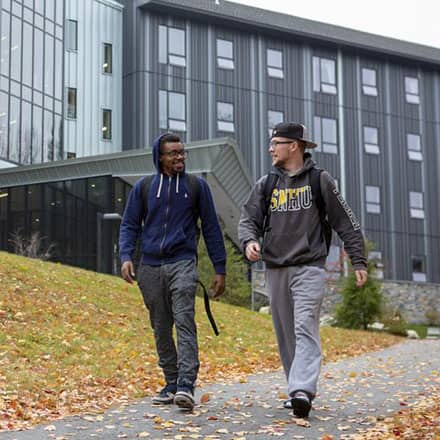
SNHU is a nonprofit, accredited university with a mission to make high-quality education more accessible and affordable for everyone.
Founded in 1932, and online since 1995, we’ve helped countless students reach their goals with flexible, career-focused programs. Our 300-acre campus in Manchester, NH is home to over 3,000 students, and we serve over 135,000 students online. Visit our about SNHU page to learn more about our mission, accreditations, leadership team, national recognitions and awards.