

What is International Women’s Day?

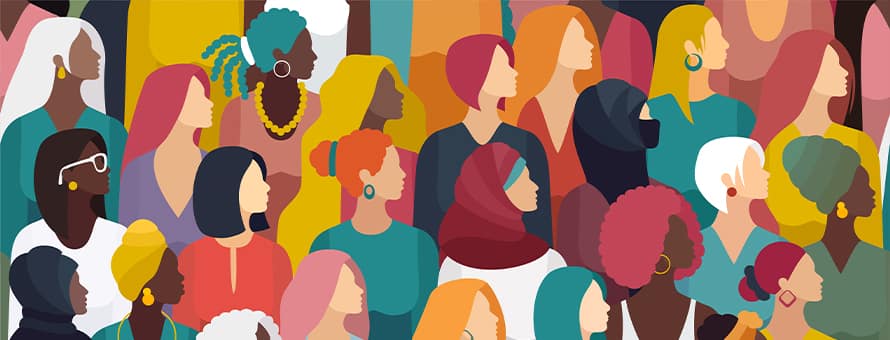
International Women’s Day (IWD) is a global holiday that takes place each year in March, during Women’s History Month.

According to a timeline on the International Women's Day website, the first IWD was observed in 1911, after having been proposed and unanimously backed by over 100 women representing 17 countries across the globe at an international conference the previous year. Now, the day is recognized across the globe annually on March 8, with 2026 marking 115 years of IWD celebrations.
"Significant activity is witnessed worldwide on March 8 as groups come together to celebrate women's achievements or rally for women's equality," said Beth Anderson, associate director of the Deborah L. Coffin Women’s Center at Southern New Hampshire University (SNHU). In addition to her role at SNHU, Anderson has a decade of experience working in community development.
She said IWD honors the social, economic, cultural and political accomplishments of women around the world.
So, What is International Women's Day All About?

IWD emerged from the labor movements of the early 20th century in Europe and North America, the United Nations (UN) reported.
In 1908, a group of 15,000 women marched through New York City to demand shorter workdays, higher wages and the right to vote, according to the BBC. This protest was the spark that would eventually lead to the advent of IWD.
Now, every year, IWD focuses on a particular theme. The IWD website noted that 2026's theme is Give to Gain, encouraging those who celebrate to prioritize generosity and collaboration.
The website also said that the observance of IWD serves several purposes, including:
- Celebrating women’s achievements
- Raising awareness about gender-based discrimination
- Taking action in support of gender equality
The 19th Amendment to the U.S. Constitution was ratified in 1920, the U.S. National Archives said, meaning women in the U.S. have had the right to vote for a little over 100 years. In some other countries, women acquired the right to vote more recently. For instance, it wasn't until 2015 that women were first able to vote and run for office in Saudi Arabia, according to PBS.
IWD encourages you to reflect on women's history and triumphs as well as the present and future state of gender across the globe.
Learn about social change.
Why is International Women's Day Important?

Anderson said that both IWD and Women's History Month give you a chance to celebrate, reflect and commit to action related to gender equality. "Without them, it’s easy to feel like progress isn’t being made," she said.
Recognizing women’s accomplishments can be especially important because women’s contributions to society have historically been devalued. According to JSTOR, the Matilda Effect describes a phenomenon wherein women’s successes are erased and attributed to men. The concept is named after Matilda Joslyn Gage, who first described the effect in an 1883 essay discussing women as inventors.
She said women have created or helped to create many significant inventions without credit, noting that a woman of her era might not even pursue patents for her inventions because she didn’t have the same rights afforded to men. “Her husband could take out the patent in his own name, sell her invention for his own sole benefit, give it away if he so chose or refrain from using it, and for all this she would have no remedy,” Gage wrote.
Although women's rights have since improved, the impact of this history can still be felt.
You may have heard the phrase “representation matters.” When girls grow up without exposure to diverse role models — like women in STEM, for instance — they may not consider traditionally male-dominated fields as options. IWD offers an opportunity to acknowledge women’s contributions to the world and inspire more women to leave their mark.
“Elevating this work through a global movement allows us to come together across experience, difference and borders,” Anderson said. “The day also marks a call to action for accelerating gender parity.”
Read about why history is important.
How Can You Honor International Women's Day?

You can honor IWD in any way that feels right to you. For many, it's a great time to learn more about women's history or commit to making a positive impact for others.
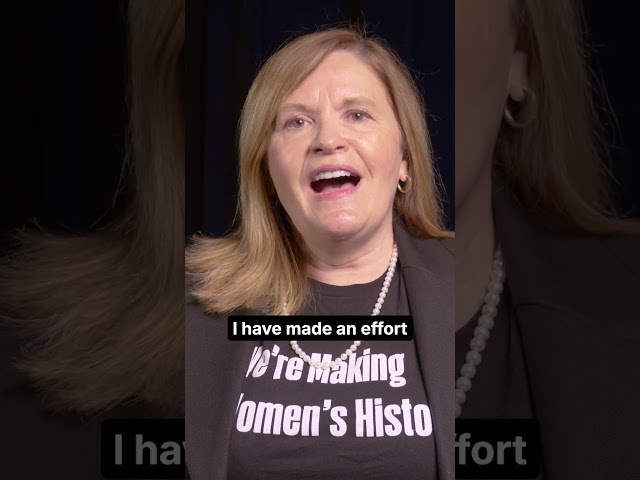
In addition to her role as president of SNHU, Lisa Marsh Ryerson is a lifelong advocate for girls and women and a board member of the National Women's History Museum.
“International Women’s Day is both a celebration and a call to action,” she said. “We celebrate the extraordinary leadership, resilience and contributions of women across our communities, while also acknowledging that equity is not settled work. This day reminds us of our ongoing commitment to widen the circle of opportunity so every woman can lead, thrive and shape the future.”
Evelyn Barezen invented the computerized typewriter, the National Inventors Hall of Fame reported. Ida B. Wells was an investigative journalist and early civil rights leader who co-founded the NAACP, said the National Women’s History Museum. To commemorate IWD, you can also take time to learn more about women's achievements like these, both throughout history and in the present.
According to Scientific American, The Lost Women of Science Initiative aims to encourage girls to pursue careers in STEM by highlighting the stories of women who have made lasting impacts in their fields. If you’d like to learn about more influential women, this could be a good place to start.

You can look for events to attend, too. For example, SNHU hosts a range of IWD events both virtually and in person, including an annual International Women's Day breakfast, which you can attend virtually or in person on March 11, 2026 at 9:30 a.m. EST.
This year, Dr. Sara Buhrlage, a leader in cancer chemical biology, will be speaking about the intersection of healthcare and technology.
The celebrations won't end there. "March, in general, is Women’s History Month, and the Women’s Center at SNHU puts on a variety of events," Anderson said.
To learn more about how to celebrate IWD and Women's History Month at SNHU, you can follow the Debra L. Coffin Women's Center on Instagram.
A degree can change your life. Choose your program from 200+ SNHU degrees that can take you where you want to go.
Mars Girolimon '21 '23G is a staff writer at Southern New Hampshire University where they earned their bachelor’s and master’s, both in English and creative writing. In addition to their work in higher education, Girolimon’s short fiction is published in the North American Review, So It Goes by The Kurt Vonnegut Museum & Library, X-R-A-Y and more. Connect with them on LinkedIn.
Explore more content like this article

A Day in the Life of SNHU’s Comfort Dog, Sunny
Summer Reading 2026: From the SNHU Community to Your Bookshelf

What is Juneteenth and Why is it a Holiday?
About Southern New Hampshire University

SNHU is a nonprofit, accredited university with a mission to make high-quality education more accessible and affordable for everyone.
Founded in 1932, and online since 1995, we’ve helped countless students reach their goals with flexible, career-focused programs. Our 300-acre campus in Manchester, NH is home to over 3,000 students, and we serve over 135,000 students online. Visit our about SNHU page to learn more about our mission, accreditations, leadership team, national recognitions and awards.