

The Online First Year Experience Movement: Driving a National Conversation

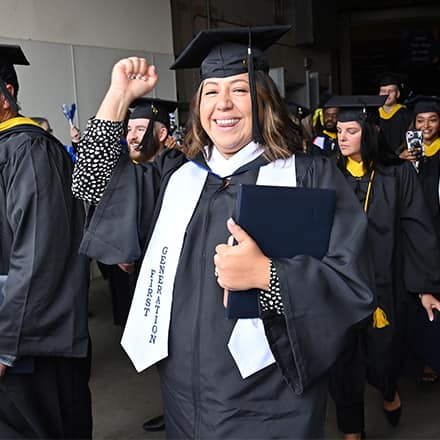
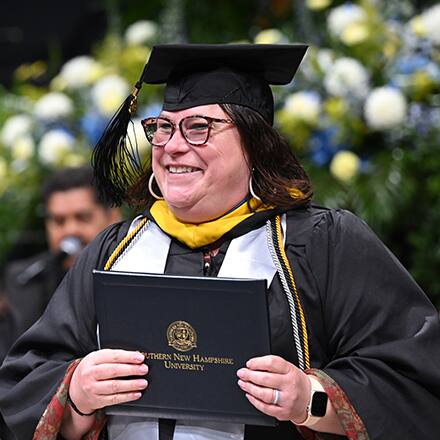
Students at commencement

Co-Authored by Dr. Jasmeial "Jazz" Jackson
Originally published in the 2017-2018 Beyond The Ivory Tower.

Reinvention is becoming the norm in a volatile, uncertain, complex, and ambiguous (VUCA) world where traditional frameworks must evolve to facilitate change. Higher education is no exception, and the old admission model requiring students to “fit” the institution has been upended by modern, consumer fueled expectations. Institutions are now looking for a variety of ways to “fit” their students’ needs to reflect these market demands. To do this, many institutions are now looking to the online model as a means to meet the necessity for this change. Yet, they do not often take into account the reality of today’s adult learner. This may be in part due to a heightened sense of urgency to embrace the development of online programs, or the unfounded assumptions about nontraditional learners and their level of preparedness to simply “jump in” and get started. Regardless of the root cause, the first year experience (FYE) and onboarding process is not being considered as a “value add” for online learners, and this could not be further from the truth.

Standard onboarding efforts to introduce students to institutional expectations and culture, typically referred to as the first-year experience, are often overlooked in the online space. While much is known about the traditional campus first-year experience, little research has been conducted for online students entering their first year. Yet, we know from a vast array of research available for the traditional FYE model that a well-planned first-year experience can impact both success and retention by facilitating a smooth transition to collegiate learning. With over three million students completing their coursework entirely as distance learners, and nearly a third of the collegiate population (Seaman, Allen & Seaman, 2018) taking at least one distance course, ensuring the successful transition to higher education for these learners is becoming more important than ever.

With the understanding that there is a marked gap in research for online learners’ first-year experience and a lack of programming in this area nationally, Southern New Hampshire University’s First Year Experience department has been working diligently to integrate this topic into national discussions about higher education and the efforts needed to support online learners. As a means to build awareness, the online first-year experience (OFYE) team has employed a variety of efforts beginning with establishing “OFYE” as a topic of national importance. These ongoing efforts encompass leveraging digital leadership strategies to build a national network to collaborate across institutions, contributing to national publications and conference presentations, and fostering a grassroots OFYE educator movement centered on supporting learners.

The initial efforts of the OFYE movement began by launching a national conversation with educators who work closely with these learners. Empowering them to share their voice and knowledge on topics specific to supporting these learners not only began an ongoing dialogue, but generated a living resource that can be leveraged and used by educators around the country. As a method to include diverse perspectives, intentional efforts have been applied to identify subject matter experts to become collaborators and fellow pioneers in the conversation. These collaborative efforts further cascaded into developing cross-institutional publications and working to fill research gaps. With the understanding that traditional first-year experience stakeholders are firmly rooted in campus-based efforts, the OFYE movement has targeted key conferences where OFYE knowledge is needed in order to build awareness. At the heart of all of these efforts is the desire to increase student success and build understanding that OFYE truly matters to online learners beginning a very important journey.

Explore more content like this article

A pen resting on a pad of paper listing a series of SMART goals.

What Are SMART Goals? A Breakdown With Examples

Creating SMART goals can ensure that you're setting yourself up for success while objective-setting. SMART goals can be used for various reasons and are intended to be more specific, measurable, achievable, relevant and time-bound than a typical goal.
Two hands typing on a laptop with transparent icons depicting artificial intelligence, a book, graduation cap, bullseye target, magnifying glass, play buttons and a person.

AI in Education: How Technology is Shaping the Future of Learning

As artificial intelligence continues to grow in use and capability, one thing is clear: AI is impacting education. To understand the role of AI in education, take a look at how it’s being used, what opportunities and risks are present and how both teachers and students can move forward responsibly.
A group of people working on a white board.

Associate Degree vs. Bachelor's Degree: What's the Difference?

Many students start college with an associate degree, which can open career doors and offer a strong general education base. For others, it's a stepping stone to a bachelor's degree. Learn the differences, why and how you might transfer, and how each path can lead to career opportunities. 

About Southern New Hampshire University

Two students walking in front of Monadnock Hall

SNHU is a nonprofit, accredited university with a mission to make high-quality education more accessible and affordable for everyone.

Founded in 1932, and online since 1995, we’ve helped countless students reach their goals with flexible, career-focused programs. Our 300-acre campus in Manchester, NH is home to over 3,000 students, and we serve over 135,000 students online. Visit our about SNHU page to learn more about our mission, accreditations, leadership team, national recognitions and awards.