
SNHU Hosts 5th Annual Global Summit for Healthcare Professionals
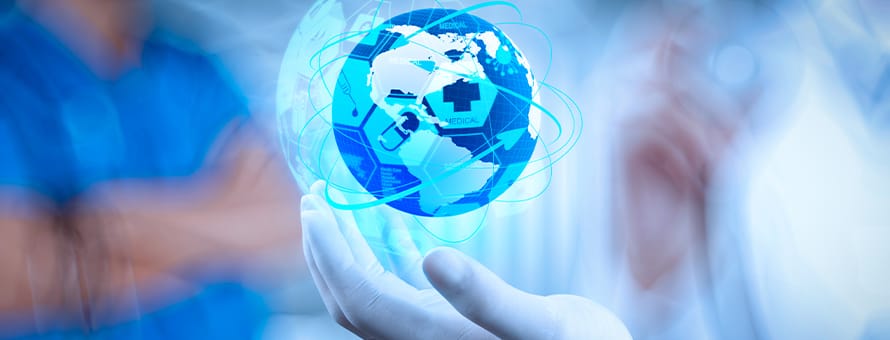
This fall, the nursing and health professions team at Southern New Hampshire University (SNHU) hosted the university’s fifth annual Global Summit. The free, virtual event invites professionals across disciplines to engage in meaningful dialogue and share innovative ideas about the future of healthcare.
It’s a valuable professional development opportunity for anyone, but is popular among nurses, especially, who can earn contact hours for their participation.
Building Future-Proof Healthcare
Each year, the Global Summit centers around a relevant healthcare topic. This year’s theme: Global Collaboration, with a focus on building resilient health systems in a changing world. Dr. Lyndsay Goss, DNP, RN, CNE, NPD-BC, SNHU’s director of nursing continuing professional development, said the theme was chosen — as it is each year — with great intention.
“We chose this theme because healthcare is never static: it evolves constantly in response to global challenges, technological advances and global health needs,” Goss said. “Exploring collaboration and resilience is critical because no single discipline or region can address these complexities alone.”
Ademola Eleshin is a current SNHU student pursuing his Master of Science (MS) in Healthcare Administration, and was a presenter at this year’s conference. He echoed Goss’s sentiment, and shared why this theme felt, to him, like the right choice for right now.
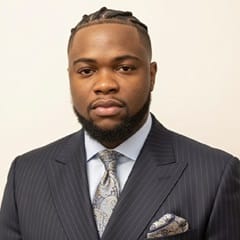
“Healthcare challenges are not confined by borders. Issues such as access, equity and community trust affect populations worldwide,” he said.
He noted that this year’s focus on global collaboration encouraged attendees to think about healthcare from an outside-the-box vantage point, envisioning how existing traditional models might evolve to meet changing needs. He also emphasized the idea that global solutions start at the local level.
“Healthcare leadership requires an understanding of both policy and people,” he said. “And meaningful change begins with informed, passionate individuals.”
Start Local, Go Global

Eleshin’s passion for local change-making led him to present at this year’s Summit — a talk which he titled “Community-Based Health Delivery in Nigeria: A Call for Action.” He discussed the importance of strengthening healthcare delivery in underserved regions globally by starting small: through community-driven approaches.
“My presentation examined how decentralized care, local engagement, preventative health initiatives and culturally-informed strategies can significantly improve health outcomes in areas with limited access to formal medical systems,” he said.
His hope is that his research will expand far beyond Nigeria and into any community with unmet healthcare needs.
“Access to care, resource allocation, equity and community trust are core issues worldwide,” he said. “By studying and proposing solutions for regions like Nigeria, we gain insights that can inform better policies and more inclusive healthcare models everywhere."
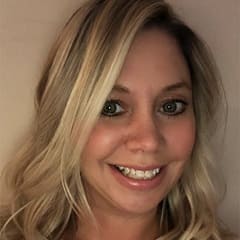
Dr. Lisa Bechok, a nursing faculty member at SNHU, focused on community-level healthcare issues, too — and how to use insights gained at the local level in global solutions.
“My presentation explored the intersection of food insecurity and healthcare access in rural communities, with a particular focus on the unique challenges faced by geographically isolated populations,” she said.
Bechok said the topic was meaningful on a personal level for her. Outside of her work at SNHU, she is a health officer and welfare overseer for the remote, rural town of Pittsburg, New Hampshire. Three years ago, she set out to build a sustainable, community-driven solution to food insecurity in that area, and used her presentation, in part, to share what she’s learned through the process.
“While locally implemented, this model offers scalable and globally replicable strategies for addressing rural health disparities and improving food access,” she said.
Find Your Program
Using AI — and Other Technology — for Good
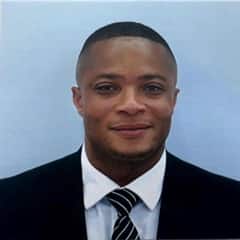
Other presenters at this year’s Summit included Denis M. Bright, a current SNHU student who, like Eleshin, is currently pursuing his MS in Healthcare Administration. Bright took his presentation in a different direction, focusing on the critical role technology plays in today’s healthcare solutions — and those of the future.
“My presentation focused on integrating technology and effective policy to build a resilient healthcare system,” he said.
Bright covered the myriad of ways various technological advancements have been proven useful tools: telehealth to support remote care, artificial intelligence to enhance decision-making and disease surveillance, and universal healthcare coverage that helps address inequalities, to name a few. He expressed wanting to use this presentation — and his degree — as a launch point for making a real, measurable impact in the field.
“Global Summit provided a great opportunity for me to actively participate in developing solutions to the current problems in healthcare,” he said.
Get Involved (And Maybe Even Get a Degree)

Thinking about attending next year’s summit? The folks highlighted in this article think you should. Here’s why
“Attending the Global Summit is an opportunity to grow professionally and personally, and it’s free,” said Goss. “Participants can gain valuable continuing education contact hours while engaging with thought leaders. It’s a chance to invest in your expertise and connect with a community committed to advancing health worldwide.”
Bright highlighted the annual conference’s commitment to shining a light on timely, relevant issues that affect everyone — not just healthcare professionals.
“Global Summit positions emerging healthcare professionals to embrace up-to-date knowledge — because education must always respond with the exigencies of time,” he said.
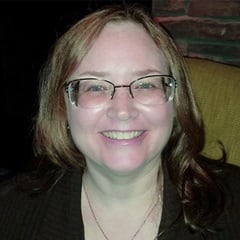
Dr. Karen Myers, an adjunct faculty member at SNHU, agreed. In addition to recommending Global Summit as a valuable resource, she encouraged prospective students to consider earning a degree in healthcare — and doing so at SNHU.
“I would encourage people to enter the healthcare system as I feel the work is rewarding,” she said. “Faculty at SNHU are held to a high standard of teaching, and students benefit from the faculty's lived experience.”
Goss echoed Myers’ sentiment, emphasizing that now — as the new year nears and healthcare continues to need experienced professionals — could be the perfect time to get started.
“Working in healthcare is not just a career — it’s a calling to be part of something bigger than yourself,” she said. “SNHU has a variety of health degrees designed to meet industry needs that are flexible, online and focus on real-world applications.”
As a current student, Eleshin said he feels confident in his decision to pursue his degree with SNHU — and he hopes others make the same choice.
“Take that step,” he said. “Education is one of the strongest investments a person can make in their future, and SNHU offers the resources, encouragement and community needed to help students achieve their goals and make an impact in their chosen fields.”
A degree can change your life. Find the SNHU health program that can best help you meet your goals.
Abigail (Abby) Syversen-Mark ’23G is a copywriter, contributing content writer and adjunct faculty member at Southern New Hampshire University (SNHU). A passionate storyteller, Abby hopes her writing will help prospective students and employees alike see just how transformative SNHU could be for them (as it’s been pretty transformative for her). You can connect with her on LinkedIn.
Explore more content
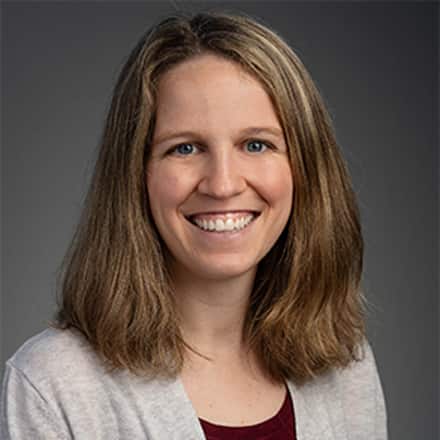
Academic Spotlight: Dr. Lyndsay Goss, Director of Continuing Professional Development in Nursing
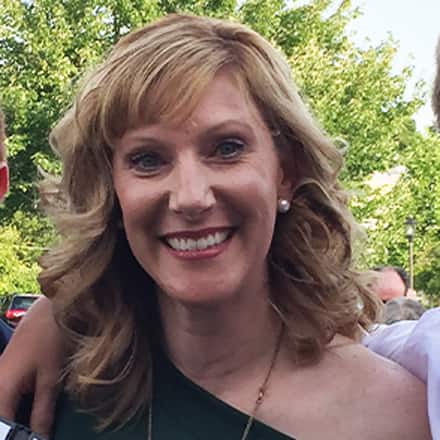
How a Patient Advocate Inspired Mary’s Path in Healthcare Administration

Master’s in Healthcare Administration vs. MBA: Which is Right for You?
About Southern New Hampshire University
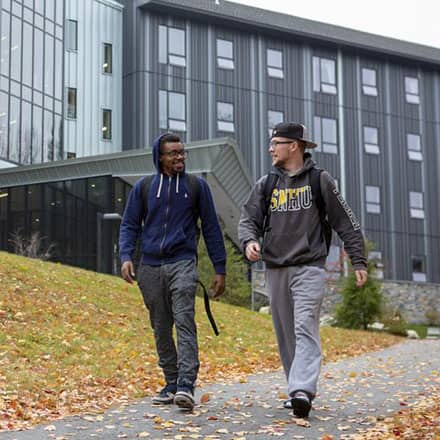
SNHU is a nonprofit, accredited university with a mission to make high-quality education more accessible and affordable for everyone.
Founded in 1932, and online since 1995, we’ve helped countless students reach their goals with flexible, career-focused programs. Our 300-acre campus in Manchester, NH is home to over 3,000 students, and we serve over 135,000 students online. Visit our about SNHU page to learn more about our mission, accreditations, leadership team, national recognitions and awards.