

How Emily Bevens Became an Investigative Analyst
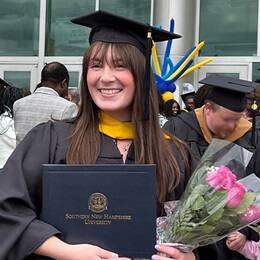 When Emily Bevens '23G came to Southern New Hampshire University (SNHU), she wanted to jumpstart her career by combining her interests in psychology and law enforcement.
"I have always wanted to do some sort of work in law enforcement," she said. "As I grew older, I wasn’t sure that I wanted to be a cop."
So, she decided to earn a master's in psychology with a concentration in forensic psychology. After graduating, Bevens started working at a police department and later advanced to a role as an investigative analyst.
Studying Forensic Psychology
Bevens said she appreciated the flexibility of an online degree, which allowed her to complete her coursework each week when it was convenient for her. "I was able to work and coach field hockey outside of school as well," she said.
She also noted that SNHU's staff and faculty supported her throughout her program. "My advisor was there along the way, and my professors, right from the beginning, made their office hours available," said Bevens.
And what she learned in her program has proved helpful in her career thus far.
"My degree aided in my ability to thoroughly research information and provide intelligent and well-written feedback to my colleagues," she said. "My degree also provided me with the necessary background information on the judicial system and how procedures within our courts and law enforcement work."
Entering the Field — And Moving Up
After graduating, Bevens leveraged her master's degree to secure a position as a records specialist at a local police department. She said that her forensic psychology program taught her about criminal justice processes as well as the people she would come across in the field.
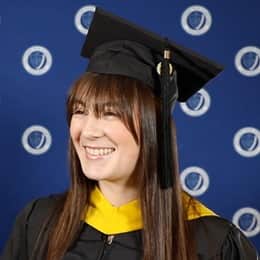
"This information was useful, as I (dealt) with the public daily as well as other members of the police department and court systems," she said.
Once she gained experience, Bevens was then able to move into a new role that was even more closely related to her interests and passion.
"I started as a records specialist and moved my way up to an analyst," she said. "My job in the records department was a great starting point and allowed me to have an understanding of our records management system, the court processes and processes within the department prior to becoming an analyst within the same department."
Now, as an investigative analyst, Bevens said her role involves using analytical tools and databases to collect, analyze and disseminate information related to criminal activity in her department's jurisdiction. She noted that she also provides case support to detectives and combs through incidents to add relevant information to cases.
"Working at the police department fills that want of wanting to do something in law enforcement," Bevens said. "I am still involved in criminal cases and get to aid in the investigations of them without being in the field."
A degree can change your life. Choose your program from 200+ SNHU degrees that can take you where you want to go.
Mars Girolimon '21 '23G is a staff writer at Southern New Hampshire University where they earned their bachelor’s and master’s, both in English and creative writing. In addition to their work in higher education, Girolimon’s short fiction is published in the North American Review, So It Goes by The Kurt Vonnegut Museum & Library, X-R-A-Y and more. Connect with them on LinkedIn.
Explore more content like this article
Careers in Industrial-Organizational Psychology That Don’t Require a PhD

How to Become a Child Psychologist
What is Forensic Psychology?
About Southern New Hampshire University
SNHU is a nonprofit, accredited university with a mission to make high-quality education more accessible and affordable for everyone.
Founded in 1932, and online since 1995, we’ve helped countless students reach their goals with flexible, career-focused programs. Our 300-acre campus in Manchester, NH is home to over 3,000 students, and we serve over 135,000 students online. Visit our about SNHU page to learn more about our mission, accreditations, leadership team, national recognitions and awards.