

Career Paths in Psychology to Help You Get Started


Know before you read
At SNHU, we want to make sure you have the information you need to make decisions about your education and your future—no matter where you choose to go to school. That's why our informational articles may reference careers for which we do not offer academic programs, along with salary data for those careers. Cited projections do not guarantee actual salary or job growth.
Psychology might feel like a natural choice for your major if you want to help others.

“As the science of human thought and behavior, our knowledge of psychology can dramatically enhance the quality of our lives and the world around us,” said Dr. Josh Garrin, associate dean of social sciences at Southern New Hampshire University (SNHU).
Garrin has worked in behavioral health settings where he managed team projects and designed training programs to promote employee well-being.
Although you might associate careers in psychology with advanced degrees, Garrin said you may not need one to get started. Whether you have a PhD or a high school diploma, you can begin exploring what a meaningful career in the field of psychology might look like.
Is Psychology the Right Career Path for You?
Those who pursue a career in psychology, Garrin noted, are often passionate about helping others enhance their performance, optimize their potential and become the best versions of themselves.
Certain soft skills are particularly important if you want to work in mental health, he said, adding that some crucial emotional intelligence skills include:
- Conflict resolution
- Cultural competence
- Empathy
- Resilience
- Teamwork
While many professions within psychology require these traits, some positions utilize different skills.
“If you prefer working with numbers, research gives you a chance to contribute to the overall field and help people through this expanded knowledge,” said Dr. Barbara Lesniak, executive director of social sciences programs at SNHU with 15 years of experience as a counselor.
With diverse opportunities in the field, Lesniak said psychology allows you to play to your strengths.
How to Get Started in the Psychology Field
While many advanced psychology roles can require specific education, licensure and experience, you can get your start in an entry-level position without an extensive background, according to Garrin. He said informing a prospective employer that you intend to pursue a degree in psychology might be enough to get your foot in the door for an entry-level psychology role.
Garrin noted a variety of psychology-related work settings are in need of support staff, including:
- Clinics and private practices
- Government agencies
- Hospitals
- Research facilities
- Schools

"Start by researching jobs that are out there," said Beth Lippold, a career advisor at SNHU with over 12 years of career counseling experience. She said you can consider what population and area of interest you're passionate about, such as mental health or addiction, and go from there.
According to the U.S. Bureau of Labor Statistics (BLS), three entry-level positions you may be able to get with a high school diploma, include:
- Community Health Worker. As a community health worker, you can help care for clients, conduct outreach or oversee case management, BLS said.
- Psychiatric aide. You could assist mental health professionals as a psychiatric aide and work in clinics, private practices and hospitals, according to BLS.
- Social and human services assistant. As a social and human services assistant, you might work for unemployment services, child protective services or another government agency to assist social workers and clients, BLS reports.

Agencies that provide mental health services have licensed professionals, Lesniak said, but they also need workers without degrees to assist them.
“People without degrees can do other work that directly helps clients, like facilitating self-help groups and referring individuals and families to appropriate support services," she said.
Lippold recommended talking to people you may know who work in the careers that interest you. She said that doing this can help you understand what it takes to work that career while also helping you develop a professional network.
Before committing to an entire degree program, you could start by taking a psychology course to find your area of interest.
Prepare for a Career While Studying Psychology
If you're taking psychology courses, you can apply the knowledge you gain to almost any role working with people, according to Garrin.
“In my experience as an instructor, some of the most empowering takeaways are not found in the course material but in the valuable experiential knowledge that students bring from their careers into the classroom,” he said.
If you have a specialization in mind, you might consider a role related to the type of psychology you’re studying. Here are three different jobs you might consider depending on your specialization:
- Childcare worker. If you’re interested in becoming a child psychologist, you might seek a position working with children while you earn the necessary degrees and certifications.
- Victim advocate. If you’re interested in studying forensic psychology, you might get experience in a vital helping profession within the court system by becoming a victim advocate.
- Teaching assistant. If you hope to eventually become a psychology teacher or professor, a teaching assistantship could be a great experience for your resume.
Volunteer experiences can help you narrow down your field of study when you start work on your psychology degree, according to Lesniak.
“For example, if you volunteer at a school or a neighborhood program that helps disadvantaged youth, you might decide to add a concentration in child and adolescent development to your psychology degree,” she said.
Find Your Program
Get Experience Through Extracurriculars

You might also be able to gain experience through clubs and other extracurricular opportunities at your school as you earn your degree. While Amanda Saldana '24 earned her bachelor's in psychology from SNHU, she took part in several activities that helped her gain real-world experience in the field.
While enrolled as an online student, Saldana became the president of SNHU's psychology club. “I ended up joining the clubs online,” she said. “I then became vice president of the psychology club, and then president until I graduated.”
She was also involved with multiple extra-curricular research projects, including research on conspiracy theories with SNHU psychology professor Dr. Peter Frost. In October of 2024, she and other researchers presented "Following Conspiracy Theories: Implications for Mindset and Mental Health" at the New England Psychological Association.
Taking advantage of experiential learning opportunities like these during your program can offer you more experience to list on your resume.
Find out if you should become a psychology major.
What Are Psychology Career Paths for Bachelor’s Graduates?
Once you earn a bachelor's degree in psychology, a new tier of positions will become available to you.
“Given the extent to which psychology exists in everything we think, feel and do, there are many different career pathways you can pursue with a psychology degree,” Garrin said.
Here are four careers you might consider, depending on your specialization:
- Career counselor. BLS noted career counselors help to match prospective employees with careers that best suit their interests and skill set
- Case manager. Case managers advocate for patients while managing and coordinating treatments and schedules for patients, caregivers and families, according to the Case Management Society of America (CMSA).
- Human resources professional. According to Lesniak, psychology is a prized degree in the human resources field. In a role like this, you could use your skills in psychology to support an organization’s employees.
- Training and development professional. Particularly for students interested in industrial-organizational psychology, a role in training could be an excellent counterpart to your studies.
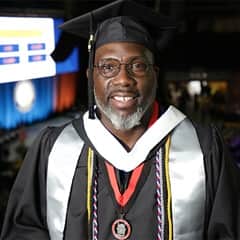
Psychology graduates can also work in various roles at nonprofits, community service centers, healthcare facilities and more. For example, while Roberto King Williams '23 earned his bachelor's degree in psychology with a concentration in addiction studies from SNHU, he launched his own nonprofit.
“That organization is basically to help veterans who struggle with homelessness, substance abuse disorder, along with mental issues,” he said.
Williams said his degree prepared him to run the organization and fulfill his life's purpose — helping others.
“SNHU is helping me to transform the life of my community and others by basically setting the example, setting the pace,” he said. “A lot of young kids look up to me, and I try to counsel as many people as I can and encourage them to be a better person.”
Read more: A List of Helping Professions: Big Hearts, Big Opportunities
Should You Get a Master’s in Psychology?
Although many psychology positions are available to those without an advanced degree, there's even more you can do with a master's in psychology.
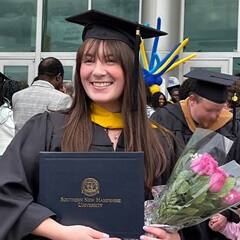
For example, Emily Bevens '23G earned a master's in psychology with a concentration in forensic psychology from SNHU. After getting her start with a job in the records department at a local police department, she advanced to a role as an investigative analyst.
"My degree aided in my ability to thoroughly research information and provide intelligent and well-written feedback to my colleagues," she said. "My degree also provided me with the necessary background information on the judicial system and how procedures within our courts and law enforcement work."
There are a variety of positions you can get with a master’s in psychology, but some require a specific type of degree.
"When you're in a clinical or a therapeutic role, you need your license," Lippold said. "You also need to be in a master's program that is accredited."
If you want to become a therapist, for example, you’ll need a degree such as a master’s in mental health counseling to prepare you for the necessary licensure requirements and work in the field. (SNHU is not currently enrolling new students in the graduate counseling program and does not offer a social work master's program.)
A master’s in psychology could be a great finish to your academic journey — or just the beginning. Some choose to earn a master’s degree in psychology to prepare for an MD, PsyD or PhD in Psychology. (MD, PsyD, and PhD in Psychology are not currently available at SNHU).
If you decide to go that route and earn your doctorate, another level of advanced psychology jobs opens up, and you could become a psychologist or a psychiatrist.
What is a Career in Psychology Like?

"Working with people in crisis can take an emotional toll, but it can also be very rewarding," said Lesniak. "When you do this type of work, it’s fulfilling to see the difference that you can make by helping someone to find the value in living and to turn their life around," she said.
A good psychology degree program, like SNHU’s, will teach you the importance of self-care while preparing you to work with others, she noted.
Beyond the challenges and rewards of the helping profession, Lesniak said working in psychology lets you find your own path.
“For example, I started out in corporate training and development with my bachelor’s degree in psychology, switched to working as a mental health professional while I pursued my graduate degree and eventually ended up in academia,” she said. “It wasn’t the career path I had envisioned, but I’ve loved every minute of it, and my psychology degree has supported my skills in each job.”
Discover more about SNHU's bachelor's in psychology : Find out what courses you'll take, skills you'll learn and how to request information about the program.
*Cited job growth projections may not reflect local and/or short-term economic or job conditions and do not guarantee actual job growth. Actual salaries and/or earning potential may be the result of a combination of factors including, but not limited to: years of experience, industry of employment, geographic location, and worker skill.
Mars Girolimon '21 '23G is a staff writer at Southern New Hampshire University where they earned their bachelor’s and master’s, both in English and creative writing. In addition to their work in higher education, Girolimon’s short fiction is published in the North American Review, So It Goes by The Kurt Vonnegut Museum & Library, X-R-A-Y and more. Connect with them on LinkedIn.
Explore more content like this article
Careers in Industrial-Organizational Psychology That Don’t Require a PhD

How to Become a Child Psychologist
What is Forensic Psychology?
About Southern New Hampshire University
SNHU is a nonprofit, accredited university with a mission to make high-quality education more accessible and affordable for everyone.
Founded in 1932, and online since 1995, we’ve helped countless students reach their goals with flexible, career-focused programs. Our 300-acre campus in Manchester, NH is home to over 3,000 students, and we serve over 135,000 students online. Visit our about SNHU page to learn more about our mission, accreditations, leadership team, national recognitions and awards.