

What Does an Environmental Scientist Do?

The deterioration of the Earth’s ozone layer, which protects the planet from harmful radiation, was viewed as an existential threat to humanity for decades. But today, you rarely hear about it. Ever wonder what happened?
In 1974, two environmental scientists discovered that chlorofluorocarbons (CFCs) prevalent in aerosols at the time were damaging the ozone layer, according to a scientific report available in the National Library of Medicine. The report noted that this discovery eventually led the United Nations to enact the Montreal Protocol in 1987, banning CFCs and helping the ozone layer begin to heal.
If you’re passionate about the planet, becoming an environmental scientist might lead you to make the next great discovery that changes the world for the better.
What is the Job of an Environmental Scientist?

As an environmental scientist, you won’t just study nature — your work will often take a wider lens that considers how nature and humanity interact, according to Tyra Davey, an associate dean of science at SNHU.
“Environmental scientists work at the intersection of science, policy and society,” Davey said.
She said responsibilities include:
- Understanding natural systems
- Assessing how human activities affect the planet’s air, water, land and ecosystems
- Informing decisions to reduce environmental harm and manage natural resources responsibly
“This can include monitoring environmental conditions, interpreting data, assessing risks and communicating findings to a wide range of audiences,” Davey said.
What Does an Environmental Scientist Do on a Daily Basis?
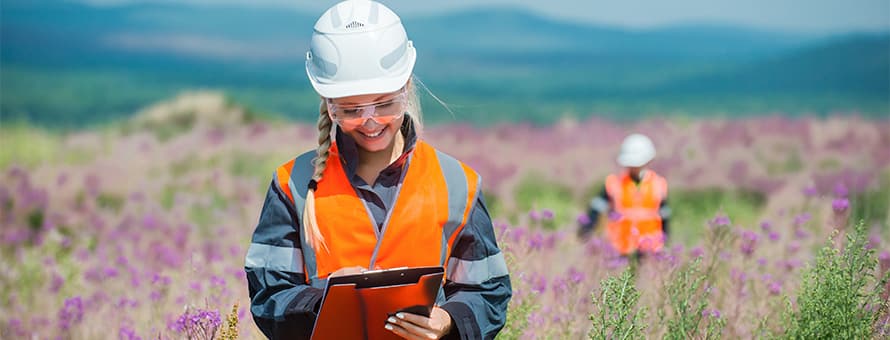
Daily tasks for environmental scientists can vary depending on your specific role. You might find a position that requires frequent legwork collecting data in nature or an in-house position helping organizations make informed decisions related to environmental sustainability, according to Davey.
“Some environmental scientists spend time out in the field sampling water, soil, or vegetation, while others work primarily in an office or even remotely, analyzing data and writing reports,” she said.
She noted that some common tasks for environmental scientists include:
- Collaborating with engineers, planners or policymakers
- Collecting and analyzing environmental data
- Writing reports or environmental assessments
- Reviewing regulations
- Using geographic information systems or modeling tools
“While some roles are highly technical, others focus more on planning, compliance, communication or project management,” Davey said.
Read more: What is Environmental Science?
Is It Hard to Be an Environmental Scientist?
The sciences aren’t known for being easy, and environmental science is no exception.

“Environmental science can be challenging because scientists are often dealing with complex systems, incomplete data and problems that do not have simple solutions,” Davey said. “Environmental professionals may also work on issues where economic, political and social priorities conflict with environmental goals.”
But if you care about the environment and are ready to take on the associated challenges, this could be the right career for you.
In 2020, Samantha Sherwood '24 realized that she wanted to study environmental science while visiting Hawaii. “I wanted to spend the next 40 years of my life doing something that really ignites my soul,” she said.
Sherwood had enrolled at other colleges in the past with mixed success. But at SNHU, things were different. “There was so much support and there was so much help along the way that it always felt possible for me to do it,” Sherwood said.
Find Your Program
How to Become an Environmental Scientist

If you want to work as an environmental scientist or specialist, you’ll likely need at least a bachelor’s degree in a related subject, according to the U.S. Bureau of Labor Statistics (BLS).
“A strong starting point is earning a degree in environmental science or a closely related field that provides both scientific literacy and applied skills,” Davey said. “A wide range of academic coursework in areas such as chemistry, ecology, hydrology and policy is important.”
In addition to earning a degree, Davey said gaining practical experience through field work, internships and research projects is critical, as well. Once you get your start, she said you'll have options as you evolve in your career.
“This field doesn’t lock you into a single path — and a degree in environmental science gives you a foundation that you can adapt as the field changes and as your goals evolve,” Davey said. “SNHU graduates work in conservation, sustainability, engineering, technology and advocacy roles, among many other areas.”
Learn more about careers in environmental science: What Can I Do With an Environmental Science Degree?

Can You Study Environmental Science Online?
Yes — some schools offer online environmental science degree programs. Davey said students in SNHU's online program receive their lab kits in the mail, making the degree just as impactful as a campus experience.
“Students don’t all study the same site or ecosystem,” Davey said. “Instead, they collect samples and analyze data from their own local environment, whether that’s an urban area, a forest or a coastal region.”
She said this type of learning prepares students for the realities of environmental work. “Environmental professionals rarely operate in idealized conditions,” she said. “Learning how to adapt to real constraints is an invaluable skill for a scientist.”

Kayla Stoll, who is currently studying environmental science online at SNHU, called the program highly immersive.
“I can't tell you how many different experiences I get from the online program,” she said. “If you're like me and you love being outdoors, you're going to find it the perfect fit because you can do your school anywhere.”
Studying where you live may even help you gain a more personal connection with the work that you’re doing and the direct impact you can have. “By studying their own environment, they often develop a stronger connection to the field and a clearer sense of how environmental science applies to real-world problems in their local area,” Davey said.
And learning online doesn’t mean you won’t have support along the way.
“Students aren’t left to figure it out on their own,” Davey said. “They receive guidance on study design, data collection, analysis, and interpretation, which helps them develop both confidence and scientific judgment.”
A degree can change your life. Discover more about SNHU’s environmental science degree: Find out what courses you’ll take, skills you’ll learn and how to request information about the program.
Mars Girolimon '21 '23G is a staff writer at Southern New Hampshire University where they earned their bachelor’s and master’s, both in English and creative writing. In addition to their work in higher education, Girolimon’s short fiction is published in the North American Review, So It Goes by The Kurt Vonnegut Museum & Library, X-R-A-Y and more. Connect with them on LinkedIn.
Explore more content like this article

How Tim Pressed Start on a Career in Game Development

How to Become a Game Developer

What Do Programmers Do, Anyway?
About Southern New Hampshire University
SNHU is a nonprofit, accredited university with a mission to make high-quality education more accessible and affordable for everyone.
Founded in 1932, and online since 1995, we’ve helped countless students reach their goals with flexible, career-focused programs. Our 300-acre campus in Manchester, NH is home to over 3,000 students, and we serve over 135,000 students online. Visit our about SNHU page to learn more about our mission, accreditations, leadership team, national recognitions and awards.