

The Human Factor in Healthcare: SNHU’s 6th Annual Global Summit
In early October, Southern New Hampshire University (SNHU) hosted its sixth annual Global Summit — a free, virtual conference for health professionals of every level.
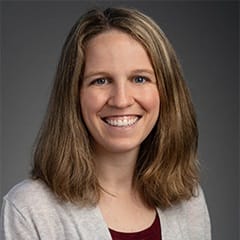
Sponsored by the Elliot Hospital of Manchester, New Hampshire, the event “brings together healthcare professionals, educators, students and leaders to learn from one another and explore global health challenges,” said Dr. Lyndsay Goss, SNHU’s director of continuing professional development.
Attending the summit counts for continuing education credits for nursing and health education specialists, but it offers much more than that, Goss noted, including insights from experienced leaders in the field and actionable strategies to implement in the workplace.
“To me, hosting the Global Summit reflects a commitment to supporting learning throughout a person’s career, not only during a degree program,” Goss said.
‘Human-centered Leadership in a Global Context’
The theme selected for this year’s summit was “Human-centered Leadership in a Global Context: From Local Action to Worldwide Impact.”
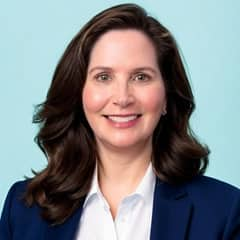
“Together, the sessions, videos and opportunities for discussion demonstrate how evidence, ethical decision-making, empathy, cultural understanding and collaboration can strengthen healthcare leadership while promoting more responsive and equitable approaches to care,” said Dr. Pamela Varhol, a member of the Global Summit planning committee and a senior associate dean of health programs at SNHU.
Varhol said the annual event always offers expected learnings about topics pertaining to the year’s central theme.
“Presenters often share remarkable accomplishments, innovative work and meaningful experiences that participants might not otherwise hear about,” she said. “It is always inspiring to learn from their expertise and celebrate the impact they are making in their professions and communities."
Leadership, Collaboration and Caring Cultures
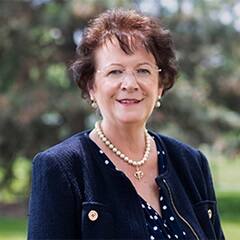
Dr. Liz Westcott, president of Sigma, a global nursing honor society, was the first keynote speaker of this year’s summit. With 48 years of experience as a nurse, Westcott’s keynote discussed the importance of collaboration and supportive leadership in healthcare settings.
“Interprofessional teams don't require perfection,” she said. “But they do require a shared purpose, psychological safety, respect for diverse expertise, the courage to challenge and to be challenged.”
Westcott encouraged leaders in the field to create a caring culture within their teams. “A caring culture is characterized by active listening, perspective taking and kindness,” she said.
To create a caring culture, she noted that leaders can model respectful dialogue and create an environment that encourages honesty.
Westcott’s keynote went on to discuss cultural humility as an alternative to the idea of cultural competence. “Unlike cultural competence, which can imply mastery, cultural humility emphasizes openness, learning and partnership,” she said. “And its core principles include recognizing that no one becomes fully competent in another's culture.”
She also offered insights into the importance of self-care and self-reflection as a leader in the health field.
Global Thinking Starts Locally
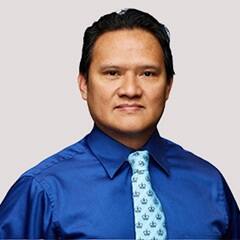
The event’s second keynote speaker, Dr. Jasper Erwin Tolarba, a nurse scientist, educator and Fulbright research scholar, discussed how to build a global mindset even if you aren’t working internationally.
For example, he asked leaders to think about what support internationally educated nurses may need from you. “What strengths might we be overlooking as we work alongside them?” he said. “And what could change if we made more room for their contributions?”
He suggested making an effort to give quieter employees a voice. “Chances are they have great ideas,” he said. “We just need to ask them.”
Tolarba also expanded on the idea of building psychological safety as a leader. “If an organization has the culture of teaching, we ask questions, we challenge each other, and it’s still okay to ask questions, then that means that we are safe,” he said.
And on the other side of cultural humility, Tolarba addressed the concept of cultural intelligence. He said cultural intelligence is the idea that people from different backgrounds have valuable information to share
“The future of global workforce will be shaped by how well we listen to one another, learn from one another and create opportunities for everyone to contribute,” Tolarba said.
AI and Healthcare: Human-Centered Approaches
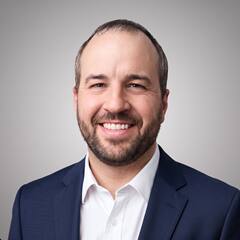
In another session, Dr. Dustin McLemore, an adjunct instructor at SNHU and a senior technical program manager, discussed the impact of artificial intelligence (AI) on the health field and how healthcare workers can ensure quality care during this period of change.
Currently, McLemore noted that many leaders are making decisions related to AI before sufficient evidence is available. As a result, AI is creating two major concerns for patients. “One is over-reliance, trusting the score when it should be questioned,” he said. “Two is losing the human touch — hearing a number and missing a person.”
Detailing various ways AI can be integrated in healthcare settings, McLemore emphasized the importance of questioning AI results every step of the way while taking all available evidence into consideration.
“Every patient deserves a clinician with the training and authority to catch the tool’s errors,” McLemore said.
Risk evaluation should be top of mind whenever using AI, according to McLemore. While some use cases are relatively low risk, he said others require more human scrutiny and oversight.
“I especially appreciated the reminder that embracing technology and protecting human connection are not competing priorities,” Goss said. “We need to be intentional about both.”
Knowledge is Contagious
Speakers presented on various topics throughout the conference, including crisis communication, HIV/AIDS education in Ghana, the global health impacts of climate change and more.
The event also offered opportunities for discussion between attendees. “Two rounds of concurrent breakout sessions further expand the program’s global and human-centered focus,” Varhol said.
After the event, Goss thanked the planning team, speakers, participants and the summit’s sponsor, The Elliot.
For those interested, a recording of the conference is available on SNHU's continuing education platform.
“My hope is that the learning continues after the event closes,” she said, “that each participant takes something back to their work, whether it is a question to explore, a conversation to begin or one action they are ready to take.”
Keep Learning With a Degree or Certificate
A degree can change your life. Find the SNHU health program that can best help you meet your goals.
Mars Girolimon '21 '23G is a staff writer at Southern New Hampshire University where they earned their bachelor’s and master’s, both in English and creative writing. In addition to their work in higher education, Girolimon’s short fiction is published in the North American Review, So It Goes by The Kurt Vonnegut Museum & Library, X-R-A-Y and more. Connect with them on LinkedIn.
Explore more content
Academic Spotlight: Dr. Stacey Rosenberg, Chief Nursing Administrator and Academic Dean
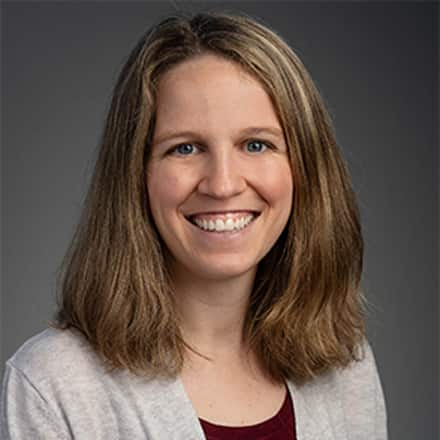
Academic Spotlight: Dr. Lyndsay Goss, Director of Continuing Professional Development in Nursing
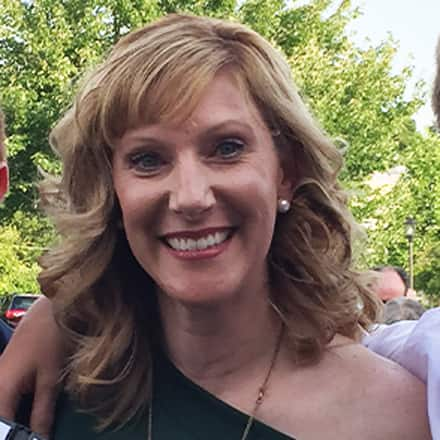
How a Patient Advocate Inspired Mary’s Path in Healthcare Administration
About Southern New Hampshire University
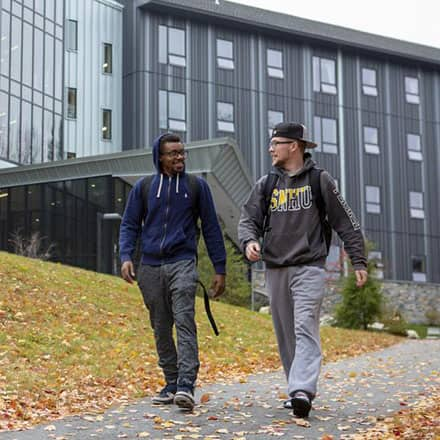
SNHU is a nonprofit, accredited university with a mission to make high-quality education more accessible and affordable for everyone.
Founded in 1932, and online since 1995, we’ve helped countless students reach their goals with flexible, career-focused programs. Our 300-acre campus in Manchester, NH is home to over 3,000 students, and we serve over 135,000 students online. Visit our about SNHU page to learn more about our mission, accreditations, leadership team, national recognitions and awards.