

Population Health: The Intersection Between Nursing and Public Health
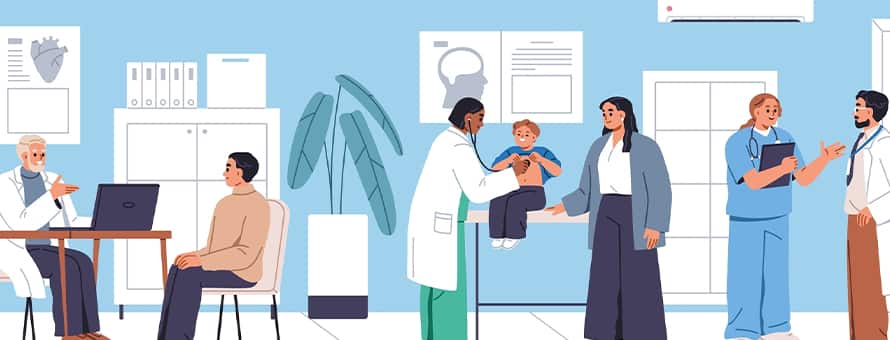
Population health nursing is where nursing and public health come together. These nurses help connect everyday clinical care with key public health activities — like assessing community needs, creating health policies and making sure services are available to everyone equally.
Population health nurses focus on illness prevention and on the social factors in people’s lives that impact health, such as housing, food and safety. They collaborate with public health professionals to study what a community needs, and they use evidence-based strategies to improve health for individuals, families and whole populations.
In places like schools and neighborhoods, these nurses help link direct patient care with broader public health efforts. By doing this, population health nurses — in partnership with public health professionals — support health equity and help improve overall wellbeing in the community.
Today’s Challenges in Public Health

Public health challenges are growing more complex and interrelated. Key factors include:
- An aging population living longer with multiple health issues
- Increasing numbers of children and teens needing complex medical and behavioral care in schools
- Low health literacy and widespread misinformation that hinder informed decision-making
- More people developing chronic conditions at younger ages
- New and returning infectious diseases
These challenges are especially visible in schools, where nurses now manage care that was once handled in clinical settings.
The Role of Nurses in Public Health
As needs increase, so does the demand for nurses who can provide population health. These nurses:
- Lead efforts that improve outcomes for students, families and communities
- Use data to guide decisions
- Work effectively with professionals across disciplines
Nurses have been working to meet the changing needs of healthcare, such as navigating nursing shortages, evolving technology and highly complex patient care. These changes mean that more nurse leaders who can work with individuals, communities and populations are needed in all healthcare settings.
Keep learning: What is Population Health Management?
Where Do Population Health Nurses Work?
Both public health and population health agencies enable nurses to align clinical care with population-level strategies to support disease prevention, health promotion and work to improve health outcomes.
In working in public health and population health agencies, you could strive to strengthen coordinated, data-informed approaches to improving community health outcomes.
If you're considering your future as a nurse, there's an opportunity to become a leader within population health.
Find Your Program
Public Health in Nursing Education
Public health is commonly incorporated into nursing programs, offering you a broader view of healthcare as a system and population health needs.
As a Bachelor of Science in Nursing (BSN) student, you are introduced to significant experiences that include principles of epidemiology, health promotion, disease prevention and how social determinants of health impact clients' health outcomes.
Public health strategies to address the needs of populations are an essential component in preparing future nurses to meet the evolving healthcare system.

Preparing the Next Generation of Population Health Leaders
Nursing education has multiple Master of Science in Nursing (MSN) specialties that prepare nurse leaders.

Population health care is an MSN specialization that focuses on planning and implementing evidence-based approaches to improve health at the population level. When you begin your MSN education in population health care, you can become a strong advocate and develop nursing leadership skills while working with clients on a larger scale.
As healthcare continues to rely more on population‑based care in schools and communities, you are needed as a leader who can help drive system‑level change. Improving health today means more than treating illness. It requires prevention, data‑guided decisions and actions that reduce unfair differences in health across a community.
This is where you, as a nurse leader in population health, make a meaningful impact.
By choosing an MSN program focused on public health, population health and leadership, you can gain the skills to lead health programs, improve outcomes and reduce health disparities. As a population health nurse leader, you help strengthen schools and communities, promote health equity and improve the quality of healthcare for everyone.
A degree can change your life. Find the SNHU online MSN program that can best help you meet your goals.
Dr. Kimberly Gibbons, DNP, CNM(ret), RN, CNL, CNE has been a nurse, nurse-midwife, nurse educator and clinical nurse leader for over 25 years. She has taught undergraduate and graduate nursing full-time for over 18 years. Currently, she serves as full time faculty for the MSN program as well as subject matter expert for several content areas at Southern New Hampshire University. Additionally, Dr. Gibbons is the lead practicum course coordinator for the MSN program and a core member of the SNHU Nursing Continuing Professional Development team. As a veteran spouse, Dr. Gibbons serves as the Contribution to Business Officer for the Military Minded Employee Resource Group within SNHU. Dr. Gibbons holds a Doctorate in Nursing Practice from the University of New Hampshire, a Master of Science in Nurse-Midwifery from the University of Minnesota, and multiple specialty certifications in nursing education as well as clinical practice in nursing.
Dr. Rita Million, PhD, RN, PHNA-BC, CNE has been a nurse for over 36 years. She is experienced in geriatric nursing, rural mental health nursing and nursing education. Her experience includes nursing research in cancer, family caregiving and rural dementia caregiving. Dr. Million is a clinical faculty member in SNHU's MSN program and serves as the Practicum Coordinator and instructor for the Population Health Care (PHC) track. She has a PhD in Nursing Science from the University of Nebraska Medical Center and holds certification as a Certified Nurse Educator (CNE), a Public Health Nurse Advanced-Board Certified (PHNA-BC) and a Certified Online Instructor (COI).
Explore more content
Academic Spotlight: Dr. Lyndsay Goss, Director of Continuing Professional Development in Nursing
How a Patient Advocate Inspired Mary’s Path in Healthcare Administration

Master’s in Healthcare Administration vs. MBA: Which is Right for You?
About Southern New Hampshire University

SNHU is a nonprofit, accredited university with a mission to make high-quality education more accessible and affordable for everyone.
Founded in 1932, and online since 1995, we’ve helped countless students reach their goals with flexible, career-focused programs. Our 300-acre campus in Manchester, NH is home to over 3,000 students, and we serve over 135,000 students online. Visit our about SNHU page to learn more about our mission, accreditations, leadership team, national recognitions and awards.