

What Are Soft Skills and Why Are They Important in the Workplace?


Landing your next — or first — great job is all about marketing yourself to employers. You need to develop the skills employers are looking for and be able to showcase them to get the new career or promotion you want.
So what are employers looking for? What are the most marketable skills? Luckily, employers are talking, and what they’re saying is less about job-specific knowledge, technical knowledge or extensive experience with complicated computer programs or models.
They want leaders, communicators and critical thinkers.
What Are Soft vs. Hard Skills?
In contrast to "hard" or technical skills that are applicable to specific roles, soft skills are transferable abilities that can be utilized in various settings.
Here are a few examples of each:
| Hard Skills | Soft Skills |
|---|---|
| Coding | Communication |
| Data analysis | Leadership |
| Social media management | Teamwork |
Soft skills are often sought after for their universal appeal, but they might be more important now than ever before. In the midst of various changes in the workplace and workforce, including the implementation of artificial intelligence across many industries, the value of a human touch is growing.
Developing your soft skills can help "future-proof" your career and livelihood, according to Fast Company.
What Are Examples of Soft Skills?
LinkedIn recently published a list of the most in-demand skills for 2026, noting that people skills matter more than ever. Specifically, LinkedIn noted that the following skills will help you stay more competitive:
- Communication
- Cross-functional collaboration
- Mentorship
- Team management
Indeed's career guide listed a few other skills employers look for in job candidates, such as:
- Interpersonal skills: Relationship-building, flexibility, empathy
- Learning skills: Adaptability, critical thinking
- Organizational skills: Planning, attention to detail, conflict management
- Problem-solving skills: Decision-making, research abilities
- Self-management skills: Time management, self-motivation, open-mindedness
Referencing traits like these while applying for work can help signal your professionalism and emotional intelligence. It can also demonstrate your values and show that you care about how your behavior impacts others.
For example, as the importance of empathy in the workplace is becoming more widely discussed, you might decide to highlight your ability to act with empathy if that's one of your strengths.
Showcasing these abilities on your resume can help you stand out when applying for a job and demonstrate that you'll be easy to work with.

Ariana Vafai Janbahan '26 learned a lot about behavior and other human complexities while studying psychology at Southern New Hampshire University (SNHU). In addition to learning field-specific knowledge, she said the program helped her develop skills in reflection, critical thinking, research and advocacy.
One of her final courses, which explored social behavior, was particularly beneficial, she noted.
"The assignments and the journals really made me take a look at myself and critically think about what has shaped my identity," Janbahan said. "And (it) also helped me develop important research skills on how to become a better advocate for the social causes that I care about."
Throughout her program, she said she learned more about why people are the way they are — and it's helped her develop greater patience and a broader perspective.
Janbahan did all of this while navigating the loss of her daughter and father — a time when she said she had every reason to quit. But she didn't, and she credits her own self-determination, family and the support of academic advisor, Corey LaMalva.
"I have very much developed grit and resilience coming to this school," she said.
What Are the Five Core Soft Skills?
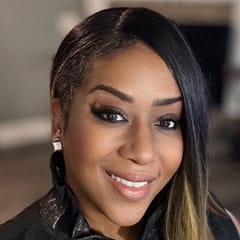
There are many valuable skills — soft or hard — that you can develop for your career growth. But according to Sonja Moffett, a career engagement partner at SNHU, there are a few to focus on.
In addition to building and facilitating relationships with employers, Moffett develops experiential learning opportunities for students. She's also an adjunct business instructor at SNHU, teaching courses in management and human resources.
"When we think about the impact soft skills, also known as people skills, have on career readiness, we rely heavily on the National Association of Colleges and Employers (NACE)," Moffett said.
She noted there are eight skills that NACE refers to as the core competencies for career readiness. "Of those, five are directly correlative to soft skills that employers are seeking in addition to education and experience," she said.
According to Moffett, these five skills are:
- Communication
- Critical thinking
- Leadership
- Teamwork
- Professionalism
If you're looking to enhance your marketability, developing these traits could be a good way to start.
How to Develop Marketable Soft Skills
Here's how you can start building your skill set, beginning with the five core soft skills Moffett described:
- Communication – Being able to clearly and concisely communicate with other people in your company is the only way to minimize mistakes and inefficiencies that come from miscommunication. It defines how the people around you perceive you and, therefore, your relationship with them.
- Critical Thinking – Those who practice critical thinking learn to make informed and thoughtful decisions. According to Forbes, you can improve your critical thinking abilities by vetting your sources, considering varied perspectives, questioning your biases and practicing active listening skills.
- Leadership – You can develop your leadership qualities by focusing on authenticity, relationship-building, self-awareness and empowering others. While essential for managers, these abilities can help you lead from your seat regardless of your job title.
- Teamwork – It’s likely that no matter what profession you’re in, you will need to collaborate with other people to solve problems and accomplish projects.
- Professionalism – According to BetterUp, a virtual coaching platform, you can work on your professionalism by practicing inclusion, setting an example for others and behaving with integrity in all of your interactions.
You can also work to improve some other commonly mentioned soft skills, including:
- Organization – Even if you're technically proficient in your field, you'll face challenges if you can't organize your time, space and workload. A major part of being organized is staying on top of your goals, duties and expected deliverables. Experiment with different organizational systems — from those as simple as a to-do list on a notepad to one of the many tools available online — to find what works best for you and your personality type.
- Time Management – Let’s face it; some of us are procrastinators. Everyone puts off unpleasant or difficult tasks at least some of the time. If you need help managing your time, there are plenty of simple steps you can practice — and hopefully internalize — to become more efficient.
- Writing – In your work, you'll need to create communications, including emails, presentation slides and reports, and these have to be easily understood by others. While practice is important for improving this soft skill, it can also be helpful to receive outside assistance.

Nicholas Botto is a director of career services at SNHU. He and his team work with students each day to help them navigate their career searches and professional journeys. In surveying the job market landscape, he's seeing many employers seeking applicants who are enthusiastic, personable and possess a strong work ethic, critical thinking skills and leadership skills.
According to Botto, one way to develop your soft skills and demonstrate them to potential employers is to practice them in the real world. "We tell our students to find opportunities to step out of their comfort zones," he said. "This may include volunteering, participating in experiential learning opportunities and contributing to community service opportunities."
He noted that SNHU's career team frequently encourages students to seek out hands-on experiences they can add to their resumes. "It’s one thing to say you have critical thinking and leadership skills," Botto said. "It’s another thing to be able to show it through these types of experiences.”
Find Your Program
Building Skills Through General Education
Many colleges and universities offer general education degree programs that focus on strengthening skills like critical thinking and communication through courses like English composition, quantitative reasoning, history and natural science.
These courses can lead to a bachelor's degree in general studies while also helping you develop a broad base of soft skills. You may be able to add a concentration in specific areas, including business administration, writing and creative expression, psychology and more.
You’ll notice a general education component to every degree program. They are required courses that provide a well-rounded overall experience and allow graduates to develop soft skills as well as hone in on courses pertinent to a specific area of focus.

After earning her bachelor's in general studies online from SNHU, Lynn Redmond '23 said her education helped her develop crucial abilities.
"This degree provided me with the soft skills that are essential to be a great leader," she said. "My communications, technical writing and research knowledge flourished because of this degree."
You can develop these skills by attending college on campus or by earning an online degree at your own pace while submitting assignments each week.

Experiential Learning Opportunities to Enhance Your Skill Set
General education courses aren't the only way you can develop your soft skills in college. According to Moffett, many schools offer a variety of experiential learning opportunities that can help to develop these human-focused skills.
For example, the HEaRT Challenge at SNHU organizes students into teams to tackle real-world problems healthcare professionals face. And students in STEM programs can develop soft skills in the AWS Jam, a team-based cloud computing competition.

"Like the first weeks on a new job, these students have to work with people they have never met before to achieve the goal here," Moffett said. "They develop communication skills, teamwork, critical thinking skills, thought leadership and professionalism."
Moffett said SNHU also offers embedded learning opportunities for students to further these abilities through their coursework. In the human resources course, "Creating the Employee Experience," she noted that students learn competencies to prepare them to work in the field of HR.
"They have case studies and scenarios where they have to consult with managers needing guidance and employees needing assistance," Moffett said. She noted that all five core soft skills are practiced in this course.
You can also improve your skill set by joining organizations, clubs and other groups. "By getting involved in professional associations, students can build relationships with professionals in their industry and functional roles," Moffett said. "They can also gain visibility as an active member who participates in leadership or committees within that organization."
Like Botto, Moffett noted that trying new things is an essential part of career development. "Therefore, students should be willing to step outside of their comfort zone to develop soft skills," she said.
A degree can change your life. Choose your program from 200+ SNHU degrees that can take you where you want to go.
Joe Cote is a writer and organic marketer at Southern New Hampshire University (SNHU), where he has worked since 2016. Previously he spent more than a dozen years as a reporter and editor at weekly and daily newspapers in Vermont and New Hampshire. He lives near SNHU's Manchester, New Hampshire campus with his wife and daughter. Connect with him on LinkedIn.
Explore more content like this article
Prime Opportunities: How Amazon Employees Can Earn a Degree From SNHU
What Are Transferable Skills?

How to Prepare for a Technical Interview
About Southern New Hampshire University
SNHU is a nonprofit, accredited university with a mission to make high-quality education more accessible and affordable for everyone.
Founded in 1932, and online since 1995, we’ve helped countless students reach their goals with flexible, career-focused programs. Our 300-acre campus in Manchester, NH is home to over 3,000 students, and we serve over 135,000 students online. Visit our about SNHU page to learn more about our mission, accreditations, leadership team, national recognitions and awards.