

SNHU’s Ethics Challenge Raises Awareness Around Food Insecurity


Recently, 40 Southern New Hampshire University (SNHU) students participated in the Ethics Challenge, an experiential learning opportunity centered on two goals: raising awareness around a social issue and helping students build an array of valuable skills they can take anywhere.
The 8-week challenge narrowed a staggering applicant pool of nearly 400 students down to 40, who were then broken into 8 teams. Each student partnered with a nonprofit in their area — learning from them, serving with them and using their experience to inform their team’s final project.
The project? An informational pamphlet and recorded presentation encompassing their findings. At the end of the challenge, leaders from 4 community-focused organizations — Easter Seals NH, REACH NH, Visiting Angels NH and Team Rubicon USA — served as a panel of judges, scoring each community awareness project based on quality and educational effectiveness.
Participants who successfully completed the project walked away with a digital badge from SNHU (and lots more).
Thinking Critically About Social Issues

Each year, the Ethics Challenge asks students to hone in on a particular social issue. Kelley Hobbs, director of community engagement at SNHU and one of the program leads of the challenge, said students’ projects are meant to examine the specified issue through an ethical lens. When thinking critically about social issues, it can be helpful to explore questions like:
- What conditions created this social issue?
- What conditions perpetuate this social issue?
- What conditions could help resolve this social issue?
The social issue of this year’s Ethics Challenge was food insecurity. Hobbs said the theme was chosen with great care and intention.
“It’s an issue that touches every community,” she said. “Food is a basic need. Kids are not able to focus in school if they’re hungry, parents are plagued with stress and concern about how to feed their families and food pantries are maxed out. The need is so great.”
The need is great indeed. According to Feeding America, one of the leading organizations addressing food insecurity in the United States, 1 in 5 children are food insecure — and over 50 million people are accessing food pantries in their areas.
Getting at the Heart of Food Insecurity
With the challenge’s focus in mind, each team got to work. Part of that work was direct involvement in their local communities, digging deeper into the “why” behind food insecurity in specific regions.

“The challenge involved hands-on, real‑world investigation,” said Jasmine Zinck, whose team took home the winning title this year. “I volunteered at local food banks and conducted fieldwork to understand both sides of the story: the experiences of nonprofit volunteers and the lived realities of individuals and families who rely on food assistance."
Zinck, who is currently pursuing her Bachelor of Arts (BA) in Psychology online at SNHU, focused her portion of the group project on the neuroscience of food insecurity.
“I explored how hunger affects life‑stage development, emotional regulation and even domestic conflict,” she said. “Through research, I found compelling evidence that chronic hunger can mimic the neurological patterns of brain trauma."
This realization was a lightbulb moment for her.
"That insight reframed the entire issue for me — hunger isn’t just a social or economic problem; it’s a neurological and ethical one," she said.
Kori Moore, an online Associate of Science (AS) in Business Administration student at SNHU and another member of the challenge’s winning team, said her research resulted in an interesting — and concerning — finding in her local community in North Dakota.
“I reached out to the Bottineau Food Pantry and found out they had post-COVID declines in donations from the larger local food bank,” she said. “My focus was on figuring out why there were not as many donations coming in.”

Jesseka Moore, who, like Zinck, is working toward her BA in Psychology online at SNHU, said her portion of the project focused on volunteer burnout at The Stewpot in Jackson, Mississippi. She used her experience as a volunteer services coordinator there to help inform her approach.
“I researched the causes of volunteer burnout, including emotional fatigue, lack of support, role overload and the challenges volunteers face while balancing service with their personal lives," she said.
She then pushed herself to think beyond the problems she was seeing and consider solutions.
"I also explored strategies organizations can use to better support, appreciate and retain volunteers," she said.
Collaboration as Online Students
In addition to getting involved in their local communities, each of the students on the winning team cited the group work with fellow classmates as a valuable part of this experiential learning project — especially as online students.

“I was nervous at first,” said Kori Moore. “I had no idea who my group members were or how hardworking they are. But I have to say, once we started working together, all of us felt more at ease and loved doing this challenge.”
Jesseka Moore agreed, noting that her team worked hard to find time to collaborate on their project amidst busy schedules.
“As an online student, most interactions happen through discussion boards and assignments,” she said. “Getting the opportunity to actually collaborate with other students, exchange ideas and work toward a common goal made me feel much more connected to the SNHU community.”
Experiential Learning Skills
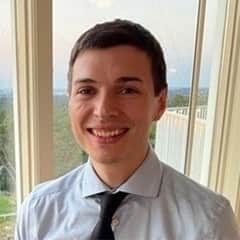
In addition to fostering connection in an online environment, SNHU’s experiential learning offerings — like the Ethics Challenge — are designed to help students build a variety of skills. Matt DiPirro, associate dean overseeing liberal arts and general studies programs at SNHU and one of the program leads of the challenge, said those skills are rooted in social awareness.
“Community awareness is critical for students today because it contextualizes their learning in a real-world way,” he said. “It contributes to well-being locally, and it creates vital connections and belonging within the places students live.”
Lisa Dunlap, executive director of REACH Crisis Services and one of the judges of this year’s challenge, also spoke to community awareness as a foundational takeaway for students.

“Increased awareness can lead to greater support for programs, encourage community action, address underlying causes, support vulnerable populations and advocate for policy change," she said.
DiPirro also spoke to a range of challenge participants, who spanned across different majors and geographical areas but shared an interest in making a positive impact on those around them. Ultimately, he said, leadership is one of the key skills students are building through this experience — and it's a skill they can take anywhere.
“Employers are known to value the communication, problem-solving and leadership skills gained in these experiences,” he said. “By diving deep into the research and realities of food insecurity, students gained essential skills to analyze systems, effectively communicate with others and reflect on their ethics and values — all of which are foundational leadership skills.”
Zinck, who was the leader of her team, said leadership was undoubtedly one of her takeaways, among others.
“I strengthened my leadership and collaboration skills by coordinating our efforts and integrating the diverse strengths of each team member — and I could not have made the same impact without them,” she said.
She also spoke to the skills she gained that were closely aligned with her interest — and career aspirations — in psychology.
“I deepened my ethical analysis skills by applying ethical frameworks to real‑world dilemmas that affect families every day," she said. "I strengthened my qualitative research skills through interviewing, observing and synthesizing community data — and at times I even felt like a journalist getting the inside scoop, which was surprisingly fun!”
Putting Learning into Action
At the conclusion of the challenge, students are asked to reflect on their experience. Some of these reflections, Hobbs said, are particularly moving.
“I was blown away by some of the lessons learned. Many students had no idea the gravity of this social issue,” she said.
Not only did students walk away with a deeper awareness of food insecurity; many of them decided that the end of the 8-week challenge wasn’t the end of their work in this area.
“A handful of students have sought permanent volunteer positions with local pantries or outreach groups,” said Hobbs. “This challenge moved students to action and made them think deeper about their role in the community. Can’t ask for a better result.”

Ethics Challenge participant Jennifer Ready, who is currently pursuing her BA in Communication online at SNHU, was one such student. Her project included volunteering with the Hart County Veteran’s Committee (HCVC), a nonprofit that connects veterans and military families to resources in their area.
Ready, who had volunteered with this organization previously, said this time felt different — and she decided to use a different part of her skill set to make an impact.
“This time, I used my creative skills and created graphics and flyers for their events, like the Food Truck Round-Up and their upcoming 4th of July celebration,” she said. “These events help fund the Hart County Veteran’s Committee's projects, like building an easily accessible food pantry on the HCVC property.”
Her work made an impression on the leadership at HCVC, who said they received great feedback on Ready’s marketing materials — so much, in fact, that they were determined to continue working with her.
“They offered me a volunteer social media management position, and I’ve been working with them ever since," she said.
Ready emphasized that her excitement to continue this work goes beyond the thrill of landing a new role. For her, it's about building her skill set while contributing to a cause she cares about.
"I accepted this position because it is a great opportunity to serve my community in meaningful ways, get hands-on experience and strengthen my communication skills,” she said. “I’m applying everything I’ve learned in my SNHU courses and in The Ethics Challenge to do impactful work.”
A degree can change your life. Choose your program from 200+ SNHU degrees that can take you where you want to go.
Abigail (Abby) Syversen-Mark ’23G is a copywriter, contributing content writer and adjunct faculty member at Southern New Hampshire University (SNHU). A passionate storyteller, Abby hopes her writing will help prospective students and employees alike see just how transformative SNHU could be for them (as it’s been pretty transformative for her). You can connect with her on LinkedIn.
Explore more content like this article

A Day in the Life of SNHU’s Comfort Dog, Sunny

Summer Reading 2026: From the SNHU Community to Your Bookshelf

What is Juneteenth and Why is it a Holiday?
About Southern New Hampshire University
SNHU is a nonprofit, accredited university with a mission to make high-quality education more accessible and affordable for everyone.
Founded in 1932, and online since 1995, we’ve helped countless students reach their goals with flexible, career-focused programs. Our 300-acre campus in Manchester, NH is home to over 3,000 students, and we serve over 135,000 students online. Visit our about SNHU page to learn more about our mission, accreditations, leadership team, national recognitions and awards.