

Debut Novelist Haley-Grace McCormick on Learning, Writing and Dyslexia
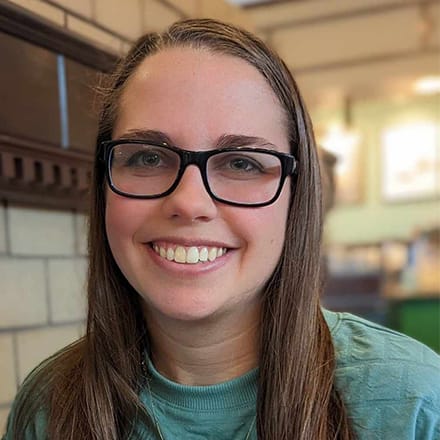

Haley-Grace McCormick ’24 stepped into a new chapter in February. After gaining the attention of a publisher at Rising Action Publishing, an imprint of Simon & Schuster, the 23-year-old's debut novel, “The Enemy of Time,” hit shelves nationwide.
Some may consider her journey to print publication atypical. Reading books has never come easily to McCormick, as someone who was diagnosed at a young age with dyslexia, dyscalculia and dysgraphia — what she calls "a love triangle of learning disorders."
But stories have always been at the center of her life, through television and film. And in high school, a newfound love for plays solidified her desire to learn how to become a writer. It was the teacher of a Shakespeare class, in particular, who helped her understand reading and writing differently.
"From there, I decided that it was something that I needed to learn more and more about,” McCormick said.
This decision led her to Southern New Hampshire University (SNHU).
Why SNHU Worked
SNHU wasn’t McCormick’s original plan. She dreamed of Boston.
“I went, and I toured every college in Boston. I toured colleges in New York. I toured everywhere, and I loved all the colleges that I went to,” she said. “But one thing that was ... constant to me was like, okay, how is my brain going to function in the typical classroom setting?”
McCormick said she could do anything she put her mind to, but she also wanted to go somewhere she could really flourish. It was her mom who initially encouraged her to look at SNHU’s online programs.
“As I dug into (the SNHU website), I could not find a school in person that had the amount of things that I wanted to learn in one degree,” she said. Exploring SNHU's online course catalog helped her see what was possible from her home in South Carolina and anywhere she moved.
Plus, the asynchronous nature of an online program meant she’d have the time she needed each week to process what she was learning — and be the creative person she is.
“Sometimes I'd have to write things out 10 different times in 10 different ways for it finally to click. But once it clicked, it was there, but I had to have that freedom to do so,” McCormick said. “I do love to write at all times of the night, all times of the morning, and I like that freedom.”
So that sealed the deal. McCormick enrolled in SNHU’s online bachelor’s in creative writing and English program, adding a concentration in screenwriting and two minors: art history and psychology.
McCormick credited her academic advisor with helping her build a schedule that supported her interests while fulfilling the program's requirements.
She said she particularly liked the module format each course followed, outlining her assignments each week like a checklist. She also listened to audio versions of her course material, which really fit with her learning style.
“The way that the curriculum was done was geared so well for a neurodivergent mind,” she said. “The anxiety of it all was brought down so much, and I was able ... to learn and to process, which doesn't happen typically in a traditional school environment.”

The Assignment That Started It All
McCormick was initially skeptical about a short story assignment in one of her classes at SNHU. She wanted to write novels — not short stories. But her creative writing instructor told her she was going to love it. It’s the same concept of a longer story, her instructor said: You just have to convey your message faster and cleaner.

“I remember getting the prompt for it, and it was like: Okay, create a quote and make a story around (the) quote,” McCormick said.
The assignment came soon after she moved to a new home. While she set up her bedroom, she flipped through her old journals.
“That's when this idea (came about) of time and moments — and how time isn't this linear thing, it kind of overlaps in all these moments,” McCormick said. "And I was like, hmm, this is an interesting topic: time.”
The topic evolved into a 4-page short story that she submitted, uncertain about what her instructor would think.
“She read it, and she told me that it was a story that connected with her so deeply that she thought that it needed to be expanded into a bigger format,” McCormick said. A novel.
But she wasn’t quite sure how to transform a short story into a novel — so she put it away until the itch to further explore the concept became too great.
Trusting the Process (And the People)
When she returned to the story, McCormick started at the end and wrote backwards. She built up her book's world and character count as she went.
“I had this ending that I knew needed to be said the way it was done in the short story, and the ending is almost identical to the short story to this day,” she said.
Her family's kitchen became her outlining room — each scene represented by a different note card. Some scenes were completed chapters, and others McCormick referred to as a string of smaller ideas that tied everything together.
“I had note cards of all these scenes I wanted,” she said. "I just didn't know where they needed to go and how to make this message land with the scenes.”
For weeks, McCormick arranged and rearranged the note cards and took photos of them from above, on a ladder. She drew on the three-act story structure her high school Shakespeare teacher taught her to whiteboard and map out.
Eventually, "The Enemy of Time" manuscript emerged.
Being an auditory learner, editing the manuscript was a family affair. “My dad — I would joke that he was my beta reader — he read every word of this book out loud to me every night with my mom,” she said. "We would sit as a family and read each chapter out loud ... and so that was my way of being able to edit my story.”
While attending a convention, McCormick met a publisher at Rising Action Publishing, and they stayed in communication over the months to come. When she learned the publishing company was accepting submissions, she decided to go for it.
“Take a risk and see if somebody would like it,” she said. "And I was fortunate that, you know, the story was very resonant with ... our publisher and our editors within the house. And they were like, ‘Yep, let's do it.’ And then I got thrown into the world of, you know, traditional publishing.”
‘A Book That Was Written for People Like Me’
The publication process took about two years for McCormick. There were rounds of editing — from developmental to copy to line edits.
“I'm warning anyone right now, the line edits are going to hit the hardest because that's when the real, true red pen, you know, comes out,” she said. “I remember getting my first line edits and going like, my gosh, I'm the worst writer ... (but) when I look back at the publishing process, one of the greatest gifts in publishing is to get notes because there's such an education to it and you learn so much about your own writing.”
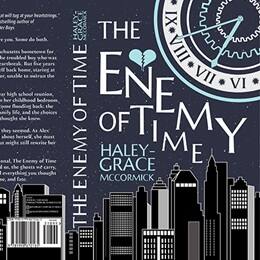
An artist of multiple crafts, McCormick also had the opportunity to illustrate the cover of her book and create designs inside the book. As a neurodivergent reader, she knew timeline changes from past to present can be challenging, so she wanted to create consistent drawings to help guide readers.
“Seeing that in print, and seeing a book that was written for people like me, for brains like me, was also a really proud moment,” she said.
Now, McCormick is spending the rest of the winter and early spring on a book tour for “The Enemy of Time,” which can be found online and at bookstores across the country.
“It was all from this one short story in this one moment where a teacher pushed me to really think — and to think outside the box,” she said.
A degree can change your life. Choose your program from 200+ SNHU degrees that can take you where you want to go.
Rebecca LeBoeuf Blanchette '18 '22G is a writer at Southern New Hampshire University, where she fulfills her love of learning daily through conversations with professionals across a range of fields. She earned her Bachelor of Arts in Communication with a minor in Professional Writing at SNHU’s campus in Manchester, New Hampshire, and followed her love of storytelling into the online Master of Arts in English and Creative Writing at SNHU. Connect with her on LinkedIn.
Explore more content like this article

Why the Humanities Are Important Now More Than Ever

Academic Spotlight: Dr. Karen Wilkinson, Associate Dean of Online Communication Programs

Creative Writing MA vs. MFA: What's the Difference?
About Southern New Hampshire University

SNHU is a nonprofit, accredited university with a mission to make high-quality education more accessible and affordable for everyone.
Founded in 1932, and online since 1995, we’ve helped countless students reach their goals with flexible, career-focused programs. Our 300-acre campus in Manchester, NH is home to over 3,000 students, and we serve over 135,000 students online. Visit our about SNHU page to learn more about our mission, accreditations, leadership team, national recognitions and awards.