

How to Write a Novel: A 7-Step Guide

If you want to become a novelist, your first book can feel like a daunting task. But, with the right approach, it can also be a manageable process. Whether you’re starting with a vivid idea or simply a desire to tell a story, breaking the process into clear steps can help you bring your vision to life.
 Understanding What a Novel Actually Is

A novel is a long-form work of fiction, typically spanning 250–400 pages, according to Jeremy Flagg, a dystopian and sci-fi novelist with the books "Nighthawks" and "Night Shadows" to his credit. He’s also an adjunct faculty member in the online creative writing and English program at Southern New Hampshire University (SNHU).
“Whether exploring seemingly insignificant moments of life or diving deep into the essence of what it means to be human, novels allow writers to weave expansive narratives that capture the complexities of the human experience," he said.
 Starting With an Idea
When it comes to writing a novel, authors find inspiration in different ways.
Ideas can come from the shows you love or mundane places, said Flagg, who’s often inspired by watching crowded spaces or TV. Once it takes shape, he said, it can be developed further by imagining unique situations and building the story around them.
Choosing a topic or theme you care about makes the process more enjoyable and authentic. Beginners should write about something they are passionate about, he said.
 Outlining Your Story
Outlining serves as a tool for organizing your thoughts and creating a roadmap for your novel. Your initial outline could be driven by a character or an idea for a plot, but it’s vital, Flagg said, to start with a central concept before expanding outward.
There's no one "right" way to outline your story. In fact, SNHU's online Master of Fine Arts (MFA) in Creative Writing program encourages students to explore different approaches to find what works best for them.
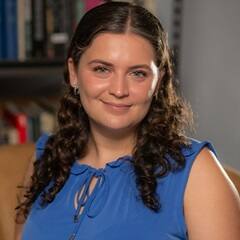
Through some experimentation, Jessica L. Cozzi '22MFA, an SNHU graduate, writer and publicist, knew right away when she found the right outline process for her.
"In this program ... we did this big index card method where you write the scene cards and lay them out," said Cozzi, whose novel "We've Hit Turbulence" was recently published by Delacorte Romance, an imprint of Penguin Random House. "It felt like the story got unlocked to me in a way that had never happened before."
The index card outline Cozzi described is a visual approach, involving different color note cards that can be laid out on a surface in front of you and moved around.
"That is the outline method I have used for the five books I have written since then," she said.
Regardless of how you outline your story, try to balance plot-driven scenes, which advance the storyline, with character development moments that reveal personalities, motivations and growth. “Not too many plot scenes happen without character development, and vice versa,” Flagg said.

 Creating Your Characters
“Compelling characters are much like your best friend,” he said. "They should go beyond simple labels like “the chosen one” or “the rogue” and feel like well-rounded individuals with unique traits and quirks that make them relatable."
Flagg’s tips for creating characters include:
- Letting your characters “speak” to you: Have conversations with your characters in your mind and listen to their imagined thoughts and voices. This helps bring them to life, even if every detail doesn’t make it into the final draft.
- Thinking beyond the story: Consider who the characters are outside the immediate events of the plot. This exploration adds depth and realism.
- Using tools to explore their traits: Tools like role-playing game character sheets can help outline a character’s talents, faults and unique quirks.
 Establishing Your Writing Routine
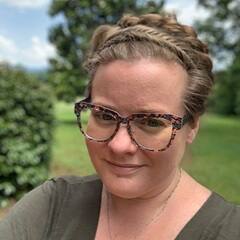
Finding a sustainable writing routine is vital for building momentum and staying committed to your novel, said Beth Revis, a New York Times bestselling author and adjunct MFA instructor at SNHU. She has also written books for well-known franchises like "Star Wars."
“The idea of ‘I have no time to write’ is different if you simply don’t allocate the time to write versus working multiple jobs to make ends meet,” she said.
Once you’ve assessed your situation, prioritize writing in a way that aligns with your lifestyle. Revis said to experiment with different approaches to find what works for you. Some writers prefer daily habits, while others, like her, write in bursts.
Having flexibility allows writers to adapt their writing routines to their unique circumstances. “I may only write one or two days a week, but I’ll write 10,000 words in that time,” she said.
Thinking time is just as important as writing time, whether it’s brainstorming, researching or studying story structure. “Know that you’ve got to give yourself time to think about the story ... It’s all a part of the art process,” she said.
Find Your Program
 Writing the First Draft

The first draft is all about capturing your ideas without worrying about perfection. It’s necessary to stay connected to the heart of your story, according to Revis.
“You have to remember the heart of your story, the reason why you want to tell it,” she said. Whether it’s a message you’re passionate about or a particular scene you’re excited to write, the inspiration behind your novel should stay present throughout the process to keep your passion alive, said Revis.
For beginners wondering if they can write a novel with no experience, she said the answer is "Yes!" Writing a novel is a process of discovery, and the first draft is just the beginning.
Cozzi actually refers to these drafts as "draft zero."
"I call it 'draft zero' because it's so bad that it doesn't even deserve the one," she said. She doesn't show the story to anyone at this point — not until she goes back in and makes revisions.
"Your first draft could be terrible. It should be terrible. It should be a 'draft zero," Cozzi said. "But then you clean it up, and it gets the 'one.'"
Some writers may benefit from practical advice on staying motivated and organized, making the drafting journey feel less overwhelming.
 Revising and Editing
Revising and editing are where your novel truly takes shape. According to Revis, there’s no set number of drafts a writer needs to complete. Every book is unique and may require a different approach, she said. Some drafts might only need minor tweaks, while others might undergo significant rewrites.
Revis said creative writers should avoid stagnation and keep moving forward, even when revisions are daunting. For feedback, she suggested being active in the writing community.
Finding beta readers — trusted individuals who provide feedback on your writing before publication — can help improve your work.
“All my initial beta readers were people I found by talking about writing on social media, attending writing conferences and workshops and going to author signings,” Revis said.
Offering constructive feedback to others’ work is also a valuable way to improve your skills and identify issues in your own writing.
Revis' revision techniques include:
- Experimenting with editing methods, like focusing on pacing or character motivation
- Printing drafts for self-editing or reviewing them digitally
- Working with beta readers or fellow writers


As a dyslexic writer, SNHU creative writing graduate Haley-Grace McCormick '24 takes an auditory approach to editing. While in the editing phase of her debut novel, "The Enemy of Time," her dad read her writing to her.
"I would joke that he was my beta reader," McCormick said. "He read every word of this book out loud to me every night with my mom. We would sit as a family and read each chapter out loud."
The editing process didn't stop there. When Rising Action Publishing, an imprint of Simon & Schuster, picked up her book, McCormick said she was thrown into the world of traditional publishing and all the edits it entails.
"There is like 24 months of, you know, going through this whole process and ... doing your first developmental edit and then, you know, doing your copy edit and line edits and everything," she said. "There's such an education to it, and you learn so much about your own writing."
Common Questions About Writing Novels
If you’re starting your writing journey, you might be wondering about topics like how much writing a novel pays, whether it’s hard to write one, the easiest type of novel to write or tips for beginners.
Is It Hard to Write a Novel?
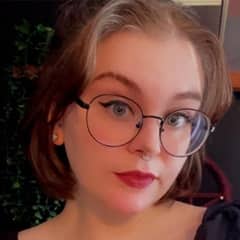
Writing a novel comes with its challenges but also brings immense joy and pride, according to Katelyn Kimbrell '25MFA, a graduate of SNHU's MFA program. She has self-published three novels and had a short story published in the online literary magazine, "The Crow's Quill."
"In the beginning, I wasn’t sure it would go anywhere, but I was excited and optimistic to explore longer forms of fiction and to see where my story would lead," she said.
When writing gets tough, Kimbrell said, "I remember why I started writing in the first place, and I try to remember the joy I feel when I hit a stride or read a particular piece I’m proud of.”
The emotional path of writing a novel is both challenging and rewarding. "There was a sense of pride, of love for the craft, a sense of trepidation around the unknown and determination,” she said. “Determination to finish, to make it good, and to get it in the reader's hands."
What is the Easiest Type of Novel to Write?

The ease of writing a novel can depend heavily on familiarity with the genre and personal passion for the subject matter. "I think most beginning writers are going to pick a genre that they read a lot," said Chloe Longstreet, a student in SNHU's MFA program. She recently self-published her first novel, "The Undead Uprising," and is currently writing a post-apocalyptic trilogy that is still unnamed.
For Longstreet, passion plays a critical role in the process. “Writing a novel and then going through the process of revising and editing it is a labor of love," she said. "You need a lot of passion and personal interest to see it through from beginning to end.”
How Do Authors Overcome Writer’s Block?
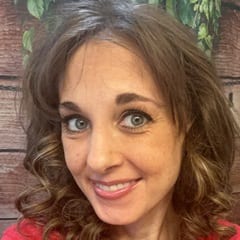
Karyn Holmgren, an MFA student at SNHU, writes under the pen name K.R. Patterson. She has self-published one novel, "A Dead Man's Tale," and is currently working on a dark supernatural fantasy called "Stefano's Bay."
Holmgren shared what she’s learned about novel writing so far: “Don’t worry too much about rules... It stifles creativity. Just have fun and write whatever you want, however you want. You improve with practice, not by trying to get it right the first time," she said.
It’s important to start the novel and push past the fear of imperfection. "What finally got me writing was a book called "No Plot? No Problem!" by Chris Baty," she said.
Holmgren said she learned that putting pen to paper can make a difference, no matter what words initially come out. “If you can’t think of what to write next, just keep writing the word ‘banana’ until you do,” she said. This approach was liberating for her because it freed her from the fear of making mistakes and gave her the courage to start writing.
How Much Does Writing a Novel Pay?

For aspiring authors wondering how much writing a novel pays, Revis said that earnings can vary widely depending on factors like the publishing route, genre and marketing efforts.
While some writers build their careers gradually over time, others may find success earlier.
It often depends on persistence, long-term career planning and thinking beyond a single book. “Don’t think of writing and publishing as one payment; think of it in terms of your long-term career,” Revis said.
While writing is a process that varies for everyone, having a clear framework can help guide your story from idea to finished novel. These steps offer a starting point to shape your narrative and prepare it for readers.
Discover more about SNHU's online bachelor’s in creative writing: Find out what courses you'll take, skills you'll learn and how to request information about the program.
Ollie Burkett '25G is a writer with a Master of Arts in English and Creative Writing from Southern New Hampshire University. You can connect with him on LinkedIn.
Explore more content like this article

Why the Humanities Are Important Now More Than Ever

Academic Spotlight: Dr. Karen Wilkinson, Associate Dean of Online Communication Programs

Creative Writing MA vs. MFA: What's the Difference?
About Southern New Hampshire University

SNHU is a nonprofit, accredited university with a mission to make high-quality education more accessible and affordable for everyone.
Founded in 1932, and online since 1995, we’ve helped countless students reach their goals with flexible, career-focused programs. Our 300-acre campus in Manchester, NH is home to over 3,000 students, and we serve over 135,000 students online. Visit our about SNHU page to learn more about our mission, accreditations, leadership team, national recognitions and awards.