

What is an Advanced Degree? Types, Benefits and More


Know before you read
At SNHU, we want to make sure you have the information you need to make decisions about your education and your future—no matter where you choose to go to school. That's why our informational articles may reference careers for which we do not offer academic programs, along with salary data for those careers. Cited projections do not guarantee actual salary or job growth.
Think about education as a ladder. The first couple of steps off the ground are your primary and secondary schooling. Then you reach the middle section: college. Maybe you stop and get an associate degree or climb directly to a bachelor’s program.
If you decide to climb to the top of the ladder, you’ll end up with an advanced degree — or two.
What is Considered an Advanced Degree?
An advanced degree is synonymous with a graduate degree. It’s the type of degree you can gain access to after successfully completing a bachelor’s program.
What you’ll study in an advanced degree program depends on your area of focus, but you can expect the content to be specialized, in-depth and challenging.
Types of Advanced Degrees
Two types of advanced degrees are a master’s degree and a doctorate. There are other types of advanced education you can consider as well.
Master’s Degree

People decide to earn a master’s degree for a number of reasons. For instance, you might get a master’s degree because you’re looking for upward mobility or a competitive advantage, according to Alicia Gagne ’20MBA, a career advisor at Southern New Hampshire University (SNHU).
"One thing a master's degree shows employers over a bachelor's degree candidate is commitment level,” she said. “Not only did this person make the effort to get into their field, but they went a step beyond to master the material and improve themselves for their career."
Gagne earned a Master of Business Administration online at SNHU in 2020, and this fall she’s finishing a second master’s degree in psychology. She said graduate school has taught her to think on a bigger scale.
Some careers might require you to have a master’s degree, Gagne noted. To be an educator, for instance, you’ll likely need a master’s degree or doctorate to teach at the college level, according to the U.S. Bureau of Labor Statistics (BLS). Depending on your state, a master’s degree could be required to teach at the high school, middle school or elementary school levels as well, BLS reported, once you have your teaching certification and first teaching job.
“One of the best ways to check if you are in a situation where you need the degree is to ... speak with people who are in the position you wish to be in one day,” Gagne said. “They can tell you the pathway they took, versus the one they wish they took.”
You can earn a master’s degree in a variety of fields, such as:
- Business: Accounting, finance, human resource management, marketing, project management, sport management
- Health: Health information management, healthcare administration, nursing, public health
- Liberal Arts: Communication, creative writing, English, history
- Social Sciences: Criminal justice, psychology
- STEM: Computer science, cybersecurity, data analytics, information technology
Many of these degrees are either a Master of Science (MS) or Master of Arts (MA) degree, but they aren't the only types. Others include Master of Public Health (MPH), Master of Fine Arts (MFA) and Master of Business Administration (MBA).
Keep reading: What Master's Degree Should I Get?

Within many master’s degree programs are concentrations that allow you to narrow in even further on a particular area of your field.
For instance, if you’re interested in digital forensics, you might choose to earn a master’s in criminal justice with a cybercrime concentration. Or, if you want to better understand people in the workplace, you could earn a master’s in psychology with a concentration in industrial and organizational psychology.
“If a student knows with all their heart what they want to do, and that it requires that next step, do not pause,” Gagne said. "Go, go, go while you are still in the swing of school... If you can work in the field while you work on your education, phenomenal — but don’t lose focus.”
If you’re not sure what you want to do, Gagne encourages you to take a beat and think about it before diving into a program.
Read more: Is a Master's Degree Worth It?
Is an MBA Considered an Advanced Degree?
Yes, an MBA, or Master of Business Administration, is an advanced business degree.
While there are many types of master’s degrees dedicated to specific areas of business, like finance or marketing, an MBA is a broad business degree. Within an MBA program, you’ll have the chance to study organizational strategy, leadership and people management, data analysis and interpretation — and more.
Read more: What Does an MBA Teach You?
Doctorate Degree
Earning a doctorate degree puts you at the top of the educational ladder.
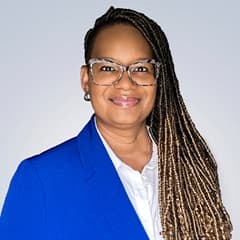
“Earning a degree at this level highlights one’s move into being a subject matter expert within a specific field,” said Dr. Torialyn Draper-Crook, a career advisor and adjunct instructor at SNHU. “This level of education also denotes a person’s move into analyzing and synthesizing information beyond the practitioner level.”
Your reason for considering a doctorate degree may go beyond professional growth, credibility and field recognition. It could be deeply personal.
“Beyond career advancement, it brings personal satisfaction and intellectual growth,” said Draper-Crook, who earned her Doctor of Education (EdD) in Higher Education Leadership Management and Policy for two reasons. She wanted to increase her “professional worth” — but also to honor her family’s commitment to education.

There are many types of doctorate degrees you can pursue. You’re probably familiar with the PhD — or Doctor of Philosophy. PhDs are academic doctorates and can be pursued in all types of fields.
SNHU, for instance, offers a PhD in International Business — and doctoral candidates have the opportunity to tailor their research to specific topics or areas of interest within international business — like business analytics or information technology.
You can also earn what’s considered a “professional doctorate.” A Doctor of Education (EdD) is considered a professional doctorate, as are Doctor of Medicine (MD) and Doctor of Psychology (PsyD) degrees. (Note: SNHU does not currently offer MD or PsyD degrees.)
Regardless of the type of doctorate you choose, Draper-Crook noted that they are challenging and involve a lot of research and perseverance.
“Prospective candidates must be aware of the level of commitment involved in pursuing a doctorate. It requires a great deal of self-motivation,” she said. “Doctoral candidates must immerse themselves into guided independent research, research skill development and creativity.”
Read more: Is a Doctorate Degree Worth It?
Other Advanced Credentials to Know About
Beyond degrees, there are other advanced credentials you could earn after completing a bachelor’s degree.
Take graduate certificates, for instance. Ranging between 3-7 courses in length, you could gain specialized knowledge in areas such as:
- Leadership of Nonprofit Organizations
- Management Accounting
- Operations and Supply Chain Management
- Project Management
- Tax Compliance and Planning
Post Master’s Graduate Certificates also exist for those who already have a master’s degree. If you have a Master of Science in Nursing (MSN), for example, you might be able to earn a Post Master’s Graduate Certificate in Nursing Education or Healthcare Quality & Safety.
How Many Years is an Advanced Degree?
How long it takes to get an advanced degree depends on the program you choose and your pacing.
Master’s degrees typically range from 30 to 60 credits. If you take two classes at a time at SNHU without any terms off, you can complete 30 credits in about a year. Or, if you take one class per term, you could earn about 15 credits per year.
The time it takes to earn a doctorate also ranges, but most can be completed within 8 years, according to Draper-Crook. She completed her EdD in 5 years.
Find Your Program
3 Benefits of an Advanced Degree
An advanced degree has the potential to positively impact your career, your confidence and those around you. Take it from these three SNHU graduates.
 Career Impact

Mary Broderick ’25MSN was at a crossroads in her career when her good friend and manager suggested she go back to school for an MSN.
“I was in a stage of my nursing career where I wasn't sure which way to go,” she said. “So, I decided to go back and get my master's to increase my knowledge so I could make a larger difference in healthcare.”
When Broderick first began her MSN, she had selected the Nurse Executive Leadership track, but a class on evidence-based practice shifted her focus to Healthcare Quality and Safety — where she said her strengths really were.
Her nursing practicum was especially beneficial, she noted.
“It gave me the chance to literally use every single course that I have taken,” Broderick said. The hands-on experience allowed her to learn through trial and error.
Now she said she’s using what she learned every day in her new role as an infection prevention and control coordinator.
 Confidence Builder

While Brendaliz De Los Santos ’24G earned her master's degree, she didn’t believe in herself.
“I have this tendency of doubting myself. So, for some reason, I thought I wasn’t going to get accepted,” she said. “From the first day of class, I was a little bit fearful and at the same time excited because I was out of college for so long, and then, master’s, it has, like, this weight.”
It took De Los Santos several years to apply for graduate school because she knew she wanted to be passionate about her program.
She ultimately chose the Master of Science (MS) in Marketing with a concentration in Digital Marketing. She said she has applied what she learned as a project coordinator for a healthcare system, in her marketing as a life coach and as a volunteer social media director at her church.
It took traveling to New Hampshire to attend her commencement ceremony to really feel the weight of her accomplishment. “Earning my degree at SNHU gave me a boost in my self-esteem,” De Los Santos said.
Now, she looks at the goals she sets for herself differently.
“I was fearful about doing this, but I did it,” she said. “So, that means whatever other goal I have, I can do it.”
 Setting an Example

For Jennifer Guayllazaca ’25G, earning an advanced degree had never been done in her family. But neither had finishing a bachelor’s degree — or even high school. Guayllazaca became the first in her family to do it all.
“What it means to me is a step forward, marking a path that, in my family, is very hard to come by,” she said.
Guayllazaca earned an MS in Management with a concentration in Construction Management online at SNHU. As a project manager within architecture, she said she fell in love with the field — so pursuing this program made logical sense.
And she found she was able to balance her courses with everything else in her life.
"Southern New Hampshire (University) offered something that no other school offered to me,” she said. “I can juggle my daily life, my full-time job, my family and then, at the same time, I can also figure out how to work and study at the same time whenever I could.”
When Guayllazaca traveled from New York to New Hampshire for her commencement ceremony, she donned a first-generation stole to show her family what’s possible, she said.
"Sometimes it's hard because you're the first one, but everything is possible if you just believe,” she said.

Mary Took Her Nursing Career to the Next Level
After years of working as a nurse, Mary wasn’t sure what step to take next — but she knew she wanted to make an even greater impact in healthcare.

How Did Your Degree Change You?
Earning a master's degree helped Brendaliz boost her self-esteem and confidence. Now, she looks at the goals she sets for herself differently.

From First in Her Family to Finish High School to a Master’s Degree Grad
Jennifer was the first in her family to finish high school — then the first to get a bachelor’s degree. Now she's marking a path with a master’s degree.
What is the Most Useful Graduate Degree?
The most useful graduate degree, or advanced degree, depends on your career and interests.
Just because you hear that one type of career has a promising job outlook doesn’t mean it’s the right one to pursue with a degree program. Gagne shared a scenario. “You are in the classes, and you hate it. Is the degree worth it? Not for you,” she said. “You will be miserable in the field if you do not like the work.” But on the flip side, she said you’re more likely to thrive if you enjoy the type of work you’re studying.
As you decide if an advanced degree is going to be useful for you, Gagne advised you to consider your goals and determine if a degree will help you get to that next step.
A degree can change your life. Find the SNHU online master's degree that can best help you meet your goals.
Rebecca LeBoeuf Blanchette '18 '22G is a writer at Southern New Hampshire University, where she fulfills her love of learning daily through conversations with professionals across a range of fields. She earned her Bachelor of Arts in Communication with a minor in Professional Writing at SNHU’s campus in Manchester, New Hampshire, and followed her love of storytelling into the online Master of Arts in English and Creative Writing at SNHU. Connect with her on LinkedIn.
Explore more content like this article

Some College, No Degree? How to Go Back to School

What Does First Generation Mean? A First-Gen Student Guide

Will My Credits Transfer?
About Southern New Hampshire University

SNHU is a nonprofit, accredited university with a mission to make high-quality education more accessible and affordable for everyone.
Founded in 1932, and online since 1995, we’ve helped countless students reach their goals with flexible, career-focused programs. Our 300-acre campus in Manchester, NH is home to over 3,000 students, and we serve over 135,000 students online. Visit our about SNHU page to learn more about our mission, accreditations, leadership team, national recognitions and awards.