

Will My Credits Transfer?


If you have existing college credits, it usually makes sense to transfer as many of them as possible when you enroll in a degree program at another school. After all, you don't want your time, effort and money to go to waste if you can help it.
So, will your credits make the cut? That's where transfer credit evaluation specialists like Alyssa Panny come in.
A college determines which of your credits can be transferred through a transfer credit evaluation, according to Panny, who works at Southern New Hampshire University (SNHU) and has 15 years of experience in higher education.
"The goal is to ensure that transferred courses meet the institution's academic standards while maximizing the number of applicable credits," she said.
How Do I Know If My Credits Will Transfer?

A few factors can impact whether or not your college credits will transfer, Panny said. Some include:
- The grades you earned in your previous courses
- The number of transfer credits a school accepts
- Whether your existing credits meet current academic standards and program requirements
"At SNHU, undergraduate transfer courses must have a final grade of C- or higher to be eligible for transfer credit," said Panny. "For graduate programs, transfer courses must have a final grade of B or higher."
She said each course or experience is examined individually during your transfer credit evaluation, taking into consideration factors such as accreditation, curriculum alignment and more.
Read more: What Are Transfer Credits? How to Find Transfer-Friendly Colleges
What Experiences Can Count as Transfer Credits?
At some schools, you might be able to get credit for certain learning experiences beyond standard university courses — which could help you graduate faster. For example, at SNHU, you could transfer credits from:
- Certifications from CompTIA, Google or Amazon Web Services (AWS)
- College-Level Examination Program (CLEP) exams
- Military education
- Online education providers like Sophia Learning
"Each certification or training is unique and is evaluated individually to determine its academic equivalency and how it aligns with a student's degree program," Panny said.

When Ashley Figueroa '23 earned a bachelor's in computer science from SNHU, she said she was able to transfer more than 80 credits that she had earned through military education — over two-thirds of the 120 credits required for a bachelor's degree.
"I was actually very surprised," she said. "Not many universities accept military credits, especially if you didn’t have any prior education."
Transferring those military credits allowed her to finish her degree faster than she had anticipated. "It definitely saved me time and money, and it's also very encouraging to military students to know that they accepted our military credits," Figueroa said.
How Late is Too Late to Transfer?
In most cases, it's never too late to transfer to another college to finish your associate or bachelor's degree. However, you'll need to earn a certain number of credits from the school where you ultimately get your diploma.

Jeanrobert Dumont '23 said he spent 38 years away from college before coming to SNHU to finish his bachelor's in healthcare administration.
“I left college at age 19 because I had a child,” he said.
After his child graduated from college, Dumont said he recommitted to earning his own degree. He called his graduation a proud moment.
“Life happens,” he said. “Just don’t give up.”
While college credits don't typically expire, Panny said that older credits might not apply toward the major requirements for your degree in some fields that advance quickly, like information technology. "In those cases, the credit may still be eligible to apply as an elective toward the student's degree," she said.
When it comes to graduate degrees, like a master's, time may be a more relevant consideration.
Panny said there's an eight-year time limit to complete a graduate degree at SNHU, noting that courses falling outside that window may no longer count toward degree completion.
Keep reading: Do College Credits Expire?
Learn on Your Schedule
At SNHU, college can fit your life. And with no set class times and multiple term starts per year, you can apply when you’re ready.
Undergraduate: October 26, 2026
Graduate: December 7, 2026
Find your program
Will I Lose Credits If I Transfer Colleges?

Depending on your school and program, you might be able to transfer all or most of your existing undergraduate credits. However, some students may have credits that don't apply to their new program for one reason or another.
For instance, most schools only accept a certain amount of transfer credits per degree, and credits over that limit won't count toward your program.
To help maximize your transfer credits, some transfer-friendly colleges, like SNHU, accept up to 90 transfer credits toward a 120-credit bachelor's degree. But the only way to know for sure which of your credits will be accepted is through a transfer credit evaluation, according to Panny.
Will My GPA Reset When I Transfer?
Typically, yes. Policies may vary, but at many schools, including SNHU, your previous grade point average (GPA) won't follow you when you transfer existing college credits.
"Once transfer credits are accepted, the credits appear on the student's academic record, but the grades earned at the previous institution are not calculated into their SNHU GPA," Panny said.
In other words, your GPA at a school usually only includes grades earned at that school, according to Panny. Some students might welcome that fresh start.
Read more: Some College, No Degree? How to Go Back to School
How to Start the Transfer Process
 Here are three easy steps to start your credit transfer journey at SNHU:
- Complete the free 5-minute online application. There’s no obligation after filling it out.
- Get your transcripts requested — for free. Chat with an admission counselor to have your transcripts requested on your behalf.
- Receive your free evaluation. Soon after all your transcripts are in, you'll get your official evaluation. It will show you what was transferred in and which credits you need to graduate.
According to Panny, transferring credits helps students continue their education in the most efficient way possible while recognizing the value of previous learning experiences.
"At SNHU, we understand that students come to us with a variety of backgrounds, experiences and prior learning, and our goal is to evaluate those experiences thoughtfully and transparently," she said.
Ready to Move Forward?
A degree can change your life. Find the SNHU online degree that can best help you meet your goals.
Mars Girolimon '21 '23G is a staff writer at Southern New Hampshire University where they earned their bachelor’s and master’s, both in English and creative writing. In addition to their work in higher education, Girolimon’s short fiction is published in the North American Review, So It Goes by The Kurt Vonnegut Museum & Library, X-R-A-Y and more. Connect with them on LinkedIn.
Explore more content like this article
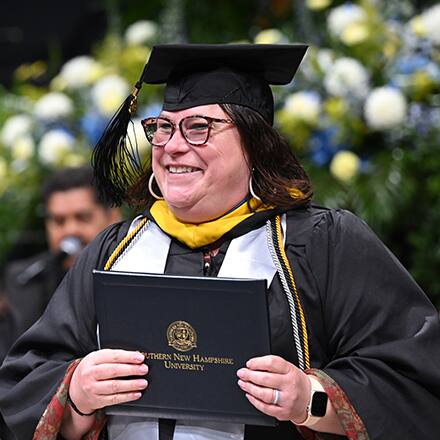
How Many Credits Do You Need to Graduate College?
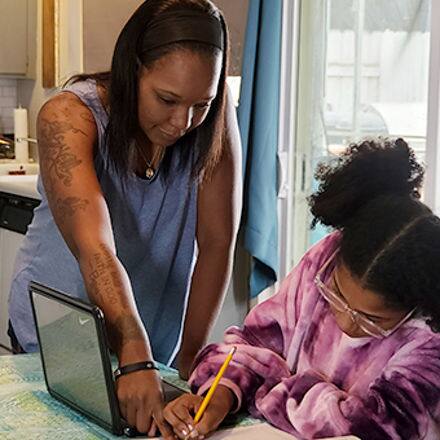
Picture an Online Degree at Your Own Pace

Don’t Quit Your Day Job: Online Degree Programs for Working Adults
About Southern New Hampshire University

SNHU is a nonprofit, accredited university with a mission to make high-quality education more accessible and affordable for everyone.
Founded in 1932, and online since 1995, we’ve helped countless students reach their goals with flexible, career-focused programs. Our 300-acre campus in Manchester, NH is home to over 3,000 students, and we serve over 135,000 students online. Visit our about SNHU page to learn more about our mission, accreditations, leadership team, national recognitions and awards.