

What Can I Do With a Criminal Justice Degree?


Understanding the numbers
When reviewing job growth and salary information, it’s important to remember that actual numbers can vary due to many different factors—like years of experience in the role, industry of employment, geographic location, worker skill and economic conditions. Cited projections are based on Bureau of Labor Statistics data, not on SNHU graduate outcomes, and do not guarantee actual salary or job growth.
Criminal justice is an interdisciplinary field that could take you in any number of directions. Of course, you could use a degree in criminal justice to help start a career in law enforcement — but that's just the tip of the iceberg.
According to Dr. Michael McHenry, an instructor at Southern New Hampshire University (SNHU) with decades of experience in the field, criminal justice spans a variety of disciplines, including law enforcement, courts, corrections, victim services, forensic sciences, probation and parole, policy development and community-based prevention and intervention programs.
Plus, the soft skills you learn in a criminal justice program — like critical thinking, research and communication — are highly applicable across disciplines, meaning you could put your degree to use in almost any role.
What Can a Bachelor’s Degree in Criminal Justice Do?
A bachelor's degree in criminal justice can open doors to a variety of careers. And if you're already working in the field, getting that degree could even help you advance in your role.
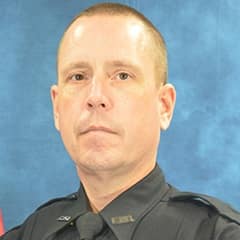
This could make getting your criminal justice degree an attractive choice for current law enforcement officers. Take, for example, online SNHU graduate Derek Stewart '26. After becoming a police officer more than 20 years ago, Stewart decided to go back to school.
"I am still pursuing my ultimate goals of becoming a chief of police and being selected to the Idaho Peace Officers and Standards Training (POST) Council," he said.
With his sights set on advancement, Stewart found a program that matched his specific career goals: the online Bachelor of Science (BS) Criminal Justice with a concentration in Police Administration and Operations from SNHU. He spoke highly of the support his academic advisor and instructors gave him, as well as the value of the program.
"I could not be happier with my experience at SNHU and all that I have learned," Stewart said. "I am so excited to receive my bachelor's degree so I can frame it and proudly show it off."
What Other Jobs Can You Do With a Criminal Justice Degree?
Criminal justice is a broad field with a variety of career paths. And if you're wondering what you can do with a criminal justice degree besides law enforcement, you're in luck.

"Criminal justice is often misunderstood as being synonymous with policing," said McHenry. "But in reality, it is an incredibly diverse system designed to uphold laws, protect rights, ensure due process and promote public safety."
According to McHenry, someone with a criminal justice degree could pursue any number of roles, including:
- Case manager, juvenile justice counselor or victim advocate
- Correctional officer or court specialist
- Crime/intelligence analyst or loss prevention investigator
- Program coordinator for a nonprofit or government agency
- Reentry and community supervisor or probation officer
Wondering what else you can do with a criminal justice degree? Read more about jobs in law enforcement that are not police officers.
What’s the Highest Paying Job in Criminal Justice?
Like many fields, roles requiring greater years of experience are often paid more in criminal justice. Here are some of the highest-earning jobs in criminal justice, according to median annual wage data from the U.S. Bureau of Labor Statistics (BLS):
- First-line police and detective supervisors: $101,750*
- Detectives and criminal investigators: $93,580*
- Transit and railroad police: $82,320*
- Police and sheriff's patrol officers: $76,290*
- Fish and game wardens: $68,180*
- Forensic science technicians: $67,440*
- Probation officers and correctional treatment specialists: $64,520*
- Paralegals and legal assistants: $61,010*
The full salary potential of a criminal justice career is dependent on many factors, including your particular role, level of education, years of experience and geographical location.
Types of Criminal Justice Degrees
If you’re considering a career in criminal justice or wanting to advance or diversify your current job, consider your options:
- Associate of Science (AS) in Criminal Justice
- Bachelor of Science in (BS) in Criminal Justice
- Master of Science (MS) in Criminal Justice
Undergraduate Criminal Justice Degrees
 An undergraduate degree in criminal justice should provide an overview of the many aspects, branches and functions of the criminal justice field. In addition, you can gain a solid understanding of career possibilities and procedures learned from real-world experiences.
If you have a specific goal in mind, adding a concentration to your studies can help you hone in on a subject. SNHU offers an array of concentrations you can add to your online bachelor's program, including:
- Corrections
- Criminology & Crime Analysis
- Cybercrime
- Homeland Security & Counterterrorism
- Human Services & Advocacy
- Police Administration & Operations
- Security Management
- Substance Abuse
You can also craft your own focus with electives ranging from crisis intervention to criminal psychology, public policy, counterterrorism and more.
Graduate Criminal Justice Degrees
If you already have a bachelor's degree and are thinking about continuing your education, you might earn a master’s degree in criminal justice to help you build your skill set in a specialized field. SNHU offers 3 concentrations for the online MS in Criminal Justice program:
- Advanced Counterterrorism and Homeland Security. Explore techniques for collecting intelligence and assessing threats as well as legal and constitutional implications of homeland security.
- Cybercrime. Learn how to identify, prevent and respond to cyber threats using data-driven approaches and cross-agency collaboration.
- Public Safety Administration. Study strategic planning, fiscal responsibility and human resource management approaches to prepare for positions in administration and leadership.
According to McHenry, a master's program can also help you develop skills that are needed for leadership, policy development, expert testimony and system reform.
"Many professionals eventually transition from frontline work into roles where they shape the next generation of practitioners," McHenry said. "Advanced education makes that possible and allows you to influence the field long after you retire from direct service."
For example, a graduate degree can help qualify you to teach classes at a college or university. And after his positive experience in SNHU's BS in Criminal Justice program, Stewart was inspired to continue his education so he could do exactly that.
Whether you're earning your degree online or in person, you'll have access to a network of faculty and peers, some of whom may already work in the industry. You may also experience simulations of actual scenarios you're likely to face on the job, better preparing you for future roles.

Is Being a Criminal Justice Major Worth It?
If you're interested in public service, purposeful work and a variety of paths for career growth, being a criminal justice major could be worth it.

Many criminal justice majors are drawn to the field because they want to make a positive impact in their communities. Take, for example, Alyson Mullen '25, who earned her BS in Criminal Justice online at SNHU.
"My goal is to eventually pursue a position as a juvenile probation officer and help the youth and those who are impacted by the juvenile struggles," she said.
Depending on your goals, you may find yourself in a role with long hours and stressful work environments. "Working in criminal justice is demanding, emotionally complex and deeply meaningful," McHenry said.
While protective service occupations aren't expected to have booming growth, there's still opportunity. According to data from BLS, protective service occupations are projected to have an average of 423,600 openings each year from 2024 to 2034.* And while salaries vary greatly across roles, the median annual wage for this group was higher than the median annual wage for all occupations in 2024.*
Find Your Program
What is the Best Degree for Veterans?
A career in criminal justice is a natural transition for many veterans looking for jobs after the military. Experience in the military can prepare you well for a role in a similarly structured organization, such as law enforcement. But there are other options, too, including corrections, probation and more.
"Veterans frequently bring strong problem-solving skills and a mission-driven mindset," said McHenry, who is a veteran himself. "That said, I always encourage veterans (and all students) to explore a range of roles within the field; some are operational and fast-paced, while others are analytical, administrative, prevention-focused or community-based."
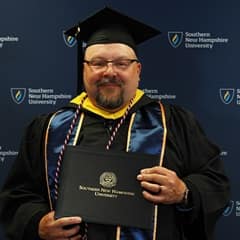
Getting your degree in criminal justice could help you make that career change. In fact, that's exactly what U.S. Army veteran Allan Smithberg '24 did. After transitioning from the military, he decided he wanted to go into corrections. With a goal of making a positive impact on people who are trying to reenter society, he enrolled in the online BS in Criminal Justice with a concentration in Corrections at SNHU.
"I started my college career when I was still in the military," Smithberg said. "SNHU, from the first phone call, was very helpful."
Military veterans are accustomed to working within a strict hierarchy, taking orders and helping each other as a team. Close work with colleagues from many backgrounds has often given them interpersonal skills and self-confidence. These skills can hold them in good stead when dealing with stressful or dangerous situations.
"The criminal justice field often aligns well with veterans’ strengths: leadership, teamwork, discipline, situational awareness and the ability to remain calm under pressure," said McHenry.
Additionally, having a bachelor's degree could help you stand out from the competition. According to the BLS, workers with bachelor's degrees — veterans and civilians alike — had lower unemployment rates than those without.

What Are Other Benefits of Getting a Criminal Justice Degree?
While a criminal justice degree program will teach you practical knowledge and skills needed in the field, it will also help you develop versatile skills like collaboration, critical thinking, problem solving and professional writing.
Having achieved his goal of earning a bachelor's degree in criminal justice, Stewart said he has newfound confidence in his job duties.
"I have gained so many skills," Stewart said. "From improving my mathematical abilities — which will help greatly with budgeting — (to) gaining a better understanding of victimology and how to implement necessary resources."
According to McHenry, higher education also helps criminal justice professionals build their professional identities and expand their networks. Plus, exposure to new, diverse perspectives can help you develop the judgment needed for ethical decision-making.
"In criminal justice, those skills can matter just as much as technical training because the work impacts real people in real situations," he said.
*Cited job growth projections may not reflect local and/or short-term economic or job conditions and do not guarantee actual job growth. Actual salaries and/or earning potential may be the result of a combination of factors including, but not limited to: years of experience, industry of employment, geographic location, and worker skill.
Ryan O'Connor is a former journalist with nearly a decade of experience in organic marketing strategy for online education. Drawing on more than 20 years in professional media and digital marketing, he balances his professional work at SNHU with a deep commitment to faith and family, and enjoys golf and home brewing in his spare time. Connect with him on LinkedIn.
Explore more content like this article

How to Become a Child Psychologist
What is Forensic Psychology?

How Shelbie Lynne Ayles Earned Her BA in Psychology to Help Others
About Southern New Hampshire University

SNHU is a nonprofit, accredited university with a mission to make high-quality education more accessible and affordable for everyone.
Founded in 1932, and online since 1995, we’ve helped countless students reach their goals with flexible, career-focused programs. Our 300-acre campus in Manchester, NH is home to over 3,000 students, and we serve over 135,000 students online. Visit our about SNHU page to learn more about our mission, accreditations, leadership team, national recognitions and awards.