

Award-Winning Online Experiential Learning Course Uses Arboretum Data

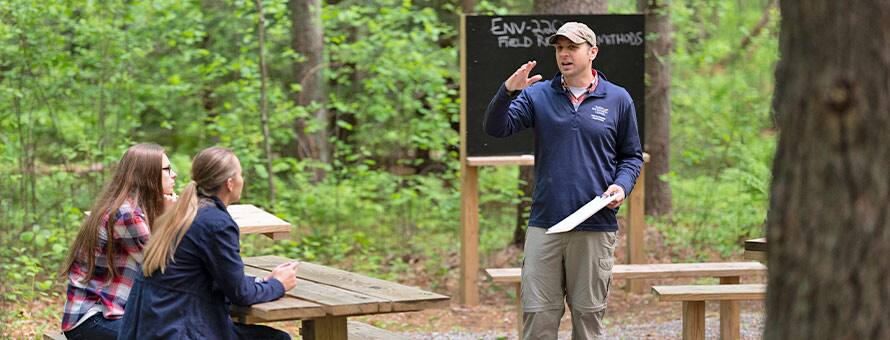
Southern New Hampshire University (SNHU) Arboretum, accredited by the ArbNet Arboretum Program and Morton Arboretum, is more than a learning space for campus courses. Students across the country enrolled in the online environmental science program also tap into the 25-acre forested wetland. Those who elect to take the program’s experiential learning course, which recently received an Effective Practice Award through the Online Learning Consortium (OLC), embark on various data-driven projects.
The creation of this course was a chance to leverage the campus resource on a larger scale, allowing those enrolled to work with data collected in real-time.
Dr. Kelly Thrippleton-Hunter, technical program facilitator of science programs at SNHU, helps develop the framework for experiential learning courses that prepare students for a career in their field of study. “This course was introduced as an elective a few years ago and was meant as a means for our online students to gain further hands-on skills and experiences,” she said.
Collecting, Leveraging and Making Sense of Data
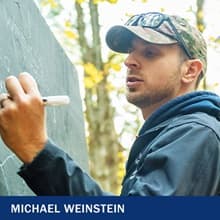
Each term, the course focuses on a different topic, such as animal behavior and field methods. Students use data on weather, soil and wetland parameters, for example, collected with environmental sensors set up throughout the arboretum.
“We also have a number of wireless, networked camera traps which capture imagery on wildlife in the space,” said Michael Weinstein, STEM and arboretum administrator at SNHU. “We’ve cataloged dozens of species including coyote, bear and even relatively rare species such as pine marten.”
The real-time and historical arboretum data is found here around the clock for students to access whenever it’s convenient for them as they work on their projects.
The course allows those in the environmental science program to employ the scientific method through developing and answering research questions – an essential competency in their chosen field.
 “Scientific inquiry and the scientific method are an integral part of science, and providing students an opportunity to conduct their own research using real-world data continues to solidify these processes in their learning and development and helps students continue to build on their critical thinking skills,” Thrippleton-Hunter said.
Since some of the projects challenge them to compare arboretum data to the data students have conducted in their areas, it offers them a chance to develop a deeper connection with their environments, Weinstein said. It also nails home the idea of impact and necessity for protecting natural spaces. The conserved land in southern New Hampshire can benefit people thousands of miles away, too.
It also allows them a space to problem-solve and have the potential to inform change. “For example, we gain an understanding of the use of the space for wildlife habitat or can record changes occurring due to development or climate change, explore those vulnerabilities and use that data to make informed decisions about how best to manage the space,” Weinstein said.
The experience also blurs the line between learning on a traditional campus versus online, Weinstein said, allowing both communities to come together and use the same space and resources.
“Collaborations like this provide our students with great real-world and hands-on experiences that can truly make a difference in the application of their knowledge, their skills and their future successes, wherever their path may take them,” Thrippleton-Hunter said.
Earning the Effective Practice Award
The OLC is an organization focused on advancing quality digital education, and it named SNHU the recipient of two Effective Practice Awards last year. In addition to acknowledging SNHU’s HEaRT Challenge, which works to solve problems in healthcare, the environmental science/arboretum collaboration gained recognition for growing experiential learning options for online students.
When evaluating contenders for the awards, the OLC considers five pillars of quality education in the digital realm:
- Access
- Learning Effectiveness
- Faculty Satisfaction
- Student Satisfaction
- Scalability
“Earning this award helps demonstrate that these experiential learning opportunities promote effective learning practices," Thrippleton-Hunter said. "(They) expand access to equitable science experiences to our distributed online students, no matter their physical, geographical or financial situation, and enhance student confidence and self-efficacy.”
Rebecca LeBoeuf ’18 is a writer at Southern New Hampshire University. Connect with her on LinkedIn.
Explore more content like this article

What Do Programmers Do, Anyway?

Data Science vs. Data Analytics: What's the Difference?

What is Data Analytics?
About Southern New Hampshire University
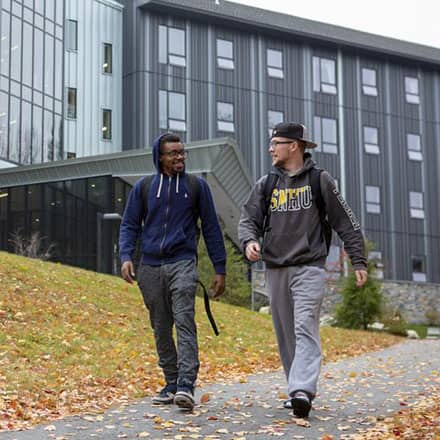
SNHU is a nonprofit, accredited university with a mission to make high-quality education more accessible and affordable for everyone.
Founded in 1932, and online since 1995, we’ve helped countless students reach their goals with flexible, career-focused programs. Our 300-acre campus in Manchester, NH is home to over 3,000 students, and we serve over 135,000 students online. Visit our about SNHU page to learn more about our mission, accreditations, leadership team, national recognitions and awards.