

What Does First Generation Mean? A First-Gen Student Guide
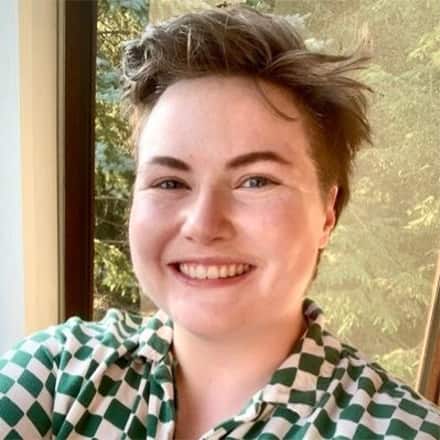
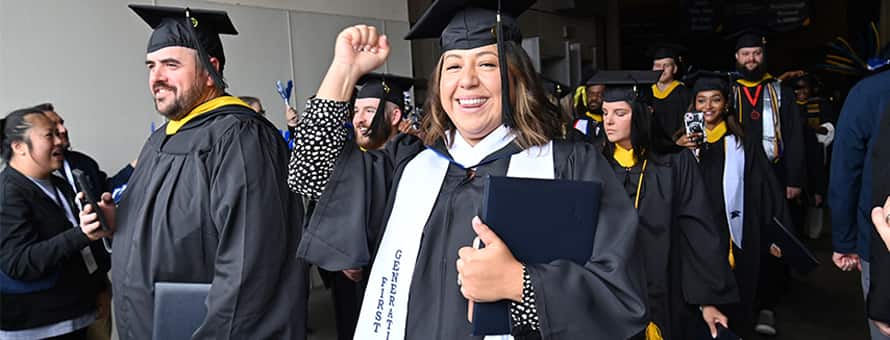
When you do something that no one's done before, you're setting a precedent. You're the blueprint — the start of a new legacy. And if you're setting a precedent as the first person to do or achieve something in your family, that makes you first generation.
The same applies to education.
What Does It Mean to Be a First-Generation Student?

If neither of your parents have a four-year college degree, that makes you a first-generation college student, according to Dr. James Winfield, an associate dean of academic strategy management at Southern New Hampshire University (SNHU). He's worked in First Year Experience, general education and retention strategies for the SNHU Global Campus and is also a TEDx speaker and education advocate.
In his role, Winfield oversees and supports online students in their first year and those undergoing various transitions throughout their college experience. "I am a proud first-gen graduate and advocate for student success," he said.
Although this definition for first generation is common, some schools or institutions may have slightly different definitions of what it means to be a first-gen student. For instance, schools with campuses might focus on that specific experience.
"We define first-generation on SNHU's campus as a student who does not live with a parent or guardian who earned a bachelor's degree on a traditional college campus," said Dr. Lynn Zlotkowski, a senior director of campus student retention and success on the university's campus in Manchester, New Hampshire, with over two decades of experience in higher education.
She said if your parent graduated from an online program, for instance, they may not have the experience to draw upon to help you navigate through a residential campus experience.
Are You First-Gen If Your Sibling Graduated From College?
The short answer is yes. "You are still first-gen if your sibling graduated from college because they are of your generation," Zlotkowski said.
Winfield noted that the definition of first-gen is centered on the educational progress of your parents, not your siblings.

Why Does Being First Generation Matter?
College is important for many reasons, from expanding your opportunities to helping you make valuable connections in your career. If you're setting a precedent as the first college graduate in your family, you're now an example for future generations — proving how beneficial a degree can be and preparing yourself to support them when they're ready to earn a degree, too.
So when Tiare Hazen ’23 graduated from SNHU with a bachelor’s in environmental science, it was about more than the diploma she received.
“Being a first-generation college student means the world to me,” Hazen said. “Just setting that inspiration for my children and breaking those generational curses.” At her commencement ceremony, Hazen said the opportunity to be a role model was one of the reasons she pursued her degree in the first place.
“I hope to show my family that everything that I did through this SNHU program was for them,” she said. “I’m happy that they’re here today and that I can be an inspiration for them.”
For Yasmine Molinari ’22, who earned a bachelor’s in psychology from SNHU, the accomplishment was a tribute to her mother. When she graduated, she wore her first-gen status with pride.
“I had to grab this first-generation stole today because I am very proud to be able to accomplish this,” she said after walking at Commencement. “My mom was and is a single mom, and she did everything by herself; tried to go to school but wasn’t able to finish her college education because of how much she’s given to me and my siblings.”
Molinari said she plans to use her degree to give back to others. “I’m so proud to be able to make this first step for the rest of my generations to come,” she said.
Learn on Your Schedule
At SNHU, college can fit your life. And with no set class times and multiple term starts per year, you can apply when you’re ready.
Undergraduate: October 26, 2026
Graduate: December 7, 2026
Find your program
What Unique Experiences and Challenges Can First-Gen Students Have?

Certain challenges are common among first-gen students. "What can be difficult is that they are missing the practical support necessary to navigate the campus and our various written and unwritten rules," Zlotkowski said.
She noted parents and guardians of first-gen students might not be able to offer as much help with the Free Application for Federal Student Aid (FAFSA), paying for college, understanding expectations and figuring out how to prepare for post-college life. As a result of challenges like these, first-generation students graduate at a rate of 24% compared to 59% for continuing-generation students, FirstGen Forward reports.
Winfield said supporting first-gen students is a huge priority as 55% of U.S. college students bear that distinction, according to Pell Institute data (Pell Institute PDF source).
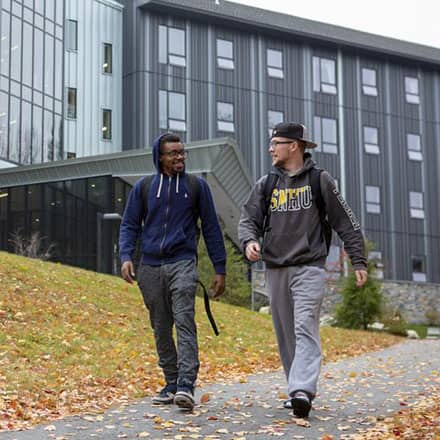
"On SNHU's campus, we have wonderful support available for first-gen students," Zlotkowski said. "I help run our Penmen First Scholars program on campus, which includes support from first-gen peer mentors (and) an invitation to our free pre-matriculation program where students can make valuable connections and learn those unwritten rules before they start their first semester at SNHU."
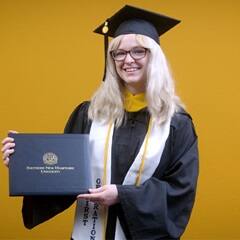
Zlotkowski said that the desire to earn a degree is what often carries first-gen graduates through associated challenges. That was the case for Gigi Bell '25, who became a first-generation graduate when she earned her bachelor's in business from SNHU. By earning her degree, Bell said she hoped to show her family that challenges don't have to hold you back.
"I think I'm setting a precedent for my other family members and for everybody else that comes into our family that we can do it," she said at her Commencement ceremony. "Everything that we've gone through in our lives doesn't set us back from getting our degree and moving forward."

Advice for First-Gen Students
"Acknowledge that you are on an exciting and unique journey," Winfield said. "Work to have a growth mindset and understand that there are others who may be having similar experiences."
He said your academic advisor is your advocate and can support you through any challenges you face while earning your degree. "Ask questions and make use of your college resources like tutoring, academic coaching, peer mentoring and career services," Winfield said.
Zlotkowski recommended connecting with your instructors and other first-gen students, too. "Know that we are all here supporting and celebrating you," she said.
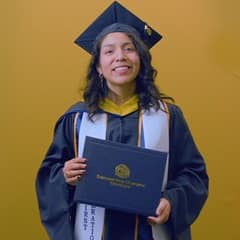
She also noted that SNHU's campus has a first-gen lounge where first-gen students can ask questions, connect or just hang out.
Leaning on your support system could help you get through moments of doubt.
"Sometimes our mind can trick us and tell us that we can't," said Jennifer Guayllazaca '25G, who earned a Master of Science (MS) in Management with a concentration in Construction Management from SNHU.
Guayllazaca was the first in her family to graduate from high school as well as college. She said first-gen students need to believe in their ability to succeed.
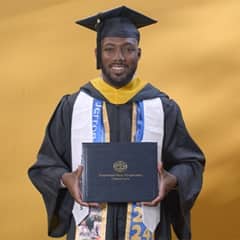
"It's hard because you're the first one," she said. "But everything is possible if you just believe."
If you take advantage of available resources and stay motivated, the finish line could soon be within reach. Remember what you're working toward and why it's important to you.
“It feels good to be first generation,” said Jerron Trice ‘24, who graduated from SNHU with a bachelor’s in business administration. “I believe I'm breaking a cycle in my family and my lineage and starting a new cycle of college graduates from starting with me on going forward.”
It Starts With You
Mars Girolimon '21 '23G is a staff writer at Southern New Hampshire University where they earned their bachelor’s and master’s, both in English and creative writing. In addition to their work in higher education, Girolimon’s short fiction is published in the North American Review, So It Goes by The Kurt Vonnegut Museum & Library, X-R-A-Y and more. Connect with them on LinkedIn.
Explore more content like this article

Some College, No Degree? How to Go Back to School

Will My Credits Transfer?
How Many Credits Do You Need to Graduate College?
About Southern New Hampshire University
SNHU is a nonprofit, accredited university with a mission to make high-quality education more accessible and affordable for everyone.
Founded in 1932, and online since 1995, we’ve helped countless students reach their goals with flexible, career-focused programs. Our 300-acre campus in Manchester, NH is home to over 3,000 students, and we serve over 135,000 students online. Visit our about SNHU page to learn more about our mission, accreditations, leadership team, national recognitions and awards.