

Different Types of Psychology Degrees and the Jobs Within Psychology


Know before you read
At SNHU, we want to make sure you have the information you need to make decisions about your education and your future—no matter where you choose to go to school. That's why our informational articles may reference careers for which we do not offer academic programs, along with salary data for those careers. Cited projections do not guarantee actual salary or job growth.
With a degree in psychology, you can use core skills such as research, decision-making and communication to work in a vast array of fields, including social services, criminal justice, business and many more.

You can narrow down which field you'd like to consider by researching different roles and thinking about which population and special interests you may have, according to Beth Lippold. Lippold is a career advisor at Southern New Hampshire University (SNHU), with over 12 years of counseling experience.
She said you can speak with people you may know who work in the psychology field. That can help you gain a better understanding of what it takes to work in that career while also helping you develop your professional network.
With a clear focus on your interests and the populations you'd like to work with, you can better align your goals with the career path you'd like to pursue.
What Are the Different Psychology Degrees?
Whether you're new to college or thinking about your next degree, you can find psychology programs offered at every degree level.
Here are four types of psychology degrees:
 Associate Degree in Psychology
Associate degrees in psychology are not currently offered at SNHU.
An associate degree in psychology is an undergraduate degree that introduces you to the subject and typically takes two years to earn.
After earning the 60 credits required for an associate degree, you may decide to continue with a bachelor's degree. Although, earning an associate is not required to pursue your bachelor's.
 Bachelor’s Degree in Psychology

A bachelor's degree in psychology is another undergraduate degree that will help you develop a strong foundation in the subject while also allowing you to take courses that round out your education. You may have the opportunity to add a concentration or minor that complements your psychology focus, too.
"Many students opt to enter the workforce right after completing their (bachelor's) psychology degree," said Dr. Barbara Lesniak, an executive director of academic strategy at SNHU with a Doctor of Psychology degree. "Our alumni have enjoyed successful careers in a variety of fields, such as social service, human resources, criminal justice and child development. Other students go on to pursue a graduate degree."
There are a lot of factors that influence how long it takes to get a bachelor's degree. While bachelor's degrees are generally known as "four-year college degrees," you may be able to slow down or accelerate your pace with an online degree.
Learn about SNHU’s online bachelor’s in psychology
Offered entirely online, SNHU's Bachelor of Arts (BA) in Psychology explores the human mind and behavior through weekly assignments. Some courses you might take in this program include:
- Introduction to Psychology
- Lifespan Development
- Psychology and Social Change
- Research Methods
- Theories of Social Psychology
"Psychology is one of the most popular online programs offered at SNHU," Lesniak said. "It provides you with a solid background in psychological theory and research, and it helps prepare you to use the skills you learn in a variety of fields."
While some students choose to pursue the general psychology track, you can also consider specializing in one of five concentrations:
- Addiction Studies
- Child & Adolescent Development
- Forensic Psychology
- Industrial-Organizational Psychology
- Mental Health
Adding a concentration allows you to take courses tailored to a particular area of interest within the field of psychology.
Experiential learning opportunities are also available — and recommended, according to Lesniak. They can help you practice your skills, build up your resume and better define your career goals.

Amanda Saldana '24 completely immersed herself in experiential learning and extracurriculars while earning her bachelor's degree in psychology with a minor in sociology online at SNHU.
She held leadership roles within SNHU's Psychology Club — first as the club vice president and later as its president. She also teamed up with peers and a professor to conduct research and present their findings at The New England Psychological Association conference.
"It is important to participate in different experiences and activities outside of your coursework because it gives you a chance to socialize with peers," Saldana said. "Networking and community involvement can also present different opportunities."
Although she graduated nearly two years ago, Saldana has stayed connected with the SNHU community. She encourages other online students to get involved, have experiences with peers and gain connections and resources.
In addition to the student involvement opportunities at SNHU, there are support systems in place to help you as you navigate your program — including dedicated teams of academic advisors, career counselors, finance counselors and tutors.
If this isn't your first time taking college courses, you may be able to bring previously earned credits into a bachelor's program — including an entire associate degree.
At SNHU, you can begin your transfer journey right now by following these three easy steps:
- Complete the free 5-minute online application. There’s no obligation after filling it out.
- Get your transcripts requested — for free. Chat with an admission counselor, and we'll request your transcripts on your behalf.
Receive your free evaluation. Soon after all your transcripts are in, you'll get your official evaluation. It will show you what was transferred in — and what classes you need to complete.
 Master’s Degree in Psychology
Once you have a bachelor's degree, you can choose to earn a Master of Science (MS) in Psychology. Unlike a bachelor's degree, a master's degree is made up of courses completely dedicated to your chosen area of study.
How long it takes to get a master's degree can vary by program and individual pacing. For instance, at SNHU, a master's degree in psychology is 36 credits in length and can take you just over a year to complete — or longer if you're a part-time student or take terms off.
Learn about SNHU’s online master’s in psychology
Earning a master's degree doesn't mean you have to pause your career or defer other responsibilities. SNHU's online MS in Psychology is an asynchronous program — meaning there are no set class times. Instead, you'll determine how to divide up your coursework each week as you dig deeper into advanced topics in psychology.
Some of the courses you might take include:
- Cognitive Processes
- Ethical Practice in Psychology
- Measurement and Assessment
- Research Methods
- Theories of Personality
While the program is not clinical in nature, nor will it lead directly to licensure, it can prepare you for careers in all kinds of industries — ranging from health services and criminal justice to business and education.
"Virtually any job in which you deal with people and need to know how to relate to them and what influences their behavior will benefit from a graduate degree in psychology," Lesniak said.
If you're interested in adding a concentration to your program, SNHU offers the following options:
- Child and Development Psychology
- Forensic Psychology
- Industrial-Organizational Psychology
You can also stick with the general track if you'd prefer that.
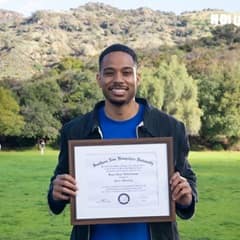
After earning his bachelor's in human services at SNHU, Keyon Tuiteleleapaga ’22 ’24G decided to go on and pursue an MS in Psychology with a concentration in Child and Development Psychology.
"What I've loved about this program is a lot of the final projects are pretty much case studies," Tuiteleleapaga said. "Here's the child or here's the individual; here's what they're facing. How can you serve that? How would you do it? And I like that because it kind of lets you get in the driver's seat as the mental health professional."
While the MS in Psychology program is not clinical in nature, nor does it directly lead to licensure, it can help qualify you for a variety of careers.
With the help of his degrees, Tuiteleleapaga began building a career in education, where he said he can blend his desire to help others with his background in the entertainment industry.
"If you’re on the fence about (college), don’t just think about yourself,” Tuiteleleapaga said. “Think about the lives that you can really change — because it’s not just about you. It’s about your community, your family — those connected to you.”
Learn on Your Schedule
At SNHU, college can fit your life. And with no set class times and multiple term starts per year, you can apply when you’re ready.
Undergraduate: October 26, 2026
Graduate: December 7, 2026
Find your program
 Doctorate in Psychology
Doctorate degrees in psychology are not currently offered at SNHU.
If you want to earn a terminal degree in psychology, you might consider a doctoral psychology program. Depending on your career goals, you'll likely earn either:
- Doctor of Philosophy (PhD)
- Doctor of Psychology (PsyD)
According to the American Psychological Association (APA), a PhD is more common and meant for those who want to focus on scientific research or teaching, while a PsyD can be found in professional schools of psychology for those who want to provide psychological services.

How Long Does It Take to Start a Career in Psychology?

That depends on your career goals and how much you're willing to advance your education. There are several types of psychology degrees, each building on your knowledge and expertise of the discipline. There are also several entry-level psychology careers that you can consider to build your experience in the field.
But bear in mind that to become a licensed psychologist with the ability to treat clients, the U.S. Bureau of Labor Statistics (BLS) noted you'll likely need a doctoral degree and additional training hours. (A doctorate in psychology is not currently offered at SNHU.)
It typically takes between eight and 12 years in total to become a psychologist, according to Indeed's Career Guide.
What Are 5 Career Options With a Bachelor’s in Psychology?
There are many types of psychology and roles in a variety of fields that you can unlock with a bachelor's in psychology.
While psychology has many uses professionally, certain fields may naturally suit you. Five fields you can consider are:
Human Resources
Human resources (HR) is one of the non-psychology fields that nonetheless employs many people with a psychology background, BLS reports.
As a human resource generalist, you would be charged with helping HR managers evaluate and administer a company’s policies that relate to employees, including training, payroll and benefits, and more. Human resources professionals also interview, screen and recruit new employees, according to BLS.
As you move up in your career and become a human resources manager, BLS said other duties can include overseeing insurance, salary and benefits packages offered to new hires.
Learn more about the field of human resources.
Probation or Correctional Treatment Officer
Many times, when someone is released from jail or prison, they are still under court-ordered conditions regarding their behavior. It falls to probation and parole officers to provide that supervision.
In this role, you would interview probationers and parolees — as well as their family, friends and associates — to evaluate if they are abiding by their parole or probation conditions and determine what resources are likely to help them successfully reintegrate into society. Generally speaking, probation officers work with people who have been placed on probation rather than sent to prison. Parole officers work with people who have been released from prison, BLS reported.
Correctional treatment officers, or specialists, help probationers and parolees build and stick to rehabilitation plans. They can evaluate clients using psychological tests and learning about their personal and work history, help them find substance abuse or mental health treatment if needed and help them find jobs and housing, BLS said.
Social or Community Service Manager
Lippold highlighted that one pathway into psychology is starting in an advocacy role. An example is working as a social or community service manager.

For instance, Courtney Garcia '24, who earned her BA in Psychology from SNHU, works as a director at a day program for adults with intellectual and developmental disabilities.
“The brain is really interesting,” Garcia said. “My brother had a brain tumor, and it caused him to have two strokes when he was 16, so just seeing that whole process after about 10 years really intrigued me to get what I’m into now.”
She said her brother inspired her work today, and her psychology degree helped her develop skills that were immediately relevant in her career. “I’m able to understand people and the reasoning behind what they do more through my learning here at SNHU,” she said.
Management Analyst
While some firms that employ management analysts prefer a master's degree, a bachelor’s degree in psychology can help you secure an entry-level position in the field, BLS said. Earning the Certified Management Consultant designation from the Institute of Management Consultants (IMC) USA can improve your chances.
Also called management consultants, management analysts advise a business or organization’s leaders on improving efficiency, often by finding cost savings and areas to increase revenue, BLS said. Management analysts can be self-employed, and some work as part of a consulting firm. They interview employees and managers and observe business practices first-hand to acquaint themselves with the organization. They use that information, as well as financial and employment data analysis, to recommend new procedures or other changes to increase efficiency and profitability, according to BLS.
 Nonprofit Leader
As a leader at a nonprofit, you would likely work with anyone from volunteers to agency executives and ensure that other employees and volunteers are appropriately trained to participate in the work you manage.
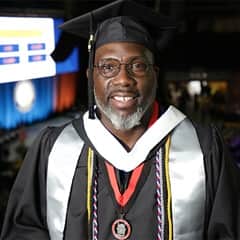
Roberto King Williams '23, who earned a BA in Psychology with a concentration in Addictions from SNHU, opened his own nonprofit called One Purpose, One Life.
“That organization is basically to help veterans who struggle with homelessness, substance abuse disorder, along with mental issues,” he said.
A veteran himself, Williams was injured during his deployment and said he became addicted to opioids as a result. “I received a lot of help from the community services in Baltimore, where they have veteran services that help with those issues,” he said.
Now on the other side of that experience, he called himself a success story. “I felt that it’s my responsibility, actually, to give back to the veteran community because somebody helped me along the way,” he said.

What Are 5 Career Options With a Graduate Degree in Psychology?
It's helpful to explore the educational options after earning your bachelor's in psychology to advance your career or open doors to a variety of other professions. And there's a lot you can do with a master's in psychology.
Adjunct Instructor
As an adjunct instructor, you could contribute to the field of psychology by helping to educate the next generation of psychologists and helping professionals.
If you want to teach psychology courses at the college level, you'll need at least a master's degree in the field. According to BLS, adjunct instructors teach about their subject area, plan lessons, assess assignments and offer advice to help students meet their goals.
Market Research Analyst
Earning a master's in psychology could also prepare you for work as a market research analyst. "Market research analysts study consumer preferences, business conditions, and other factors to assess potential sales of a product or service," BLS said.
Not only can a psychology background help you to better understand the public, but SNHU's MS in Psychology program also requires coursework in statistics, research and measurement that can help prepare you for the technical aspects of this work.
Training and Development Manager
A master's in psychology could be a stepping-stone toward working as a training and development manager, too. These professionals work to design, coordinate and implement trainings and programs to enhance employees' skills and knowledge, according to BLS.
To reach this position, you may need to start with a more junior position, like a training and development specialist role, and then work your way up to a management position.
Crime Analyst
By specializing with an MS in Psychology and a concentration in Forensic Psychology, you could prepare yourself for work as a crime analyst.

Emily Bevens '23G started as a records specialist at a local police department after earning her master's in psychology with a concentration in forensic psychology from SNHU. Now, she's moved up and is working as an investigative analyst, or crime analyst.
In her role today, she said she uses databases and analytical tools to collect, analyze and share information related to criminal investigations.
"My degree aided in my ability to thoroughly research information and provide intelligent and well-written feedback to my colleagues," she said. She also noted that her degree gave her an understanding of the criminal justice system and law enforcement procedures.
Read more about forensic psychology.
Industrial-Organizational (I-O) Consultant
The typical education required to become an industrial-organizational psychologist is a master's degree, BLS reports. While you'll need to get licensed to call yourself a psychologist, you can find other roles in I-O psychology with an MS in Psychology and a concentration in Industrial & Organizational Psychology.
As an I-O consultant or specialist, you would work with organizations to improve efficiency, productivity and overall success, according to the Association for Behavioral and Cognitive Therapies (ABCT).
Learn more about industrial-organizational psychology.
Is Majoring in Psychology Worth It?

One of the main advantages of studying psychology, according to Lesniak, is that the concepts you will encounter are applicable in virtually any profession.
“(Students are) basically going to learn what makes people tick,” Lesniak said. “You’re also going to be able to look into things like building relationships, what motivates people. You can use the degree directly in your work, but I think you can also use it to help understand yourself better."
Two questions Lippold likes to ask students are, "Why do you want psychology and what are you going to do with it?" The reason for these questions is to help students figure out what steps they need to take to achieve their desired outcome.
According to Data USA, graduates from social sciences programs (including psychology) worked in a variety of roles in 2023, including as:
- Educators and administrators
- Human resources workers
- Management analysts
- Managers and executives
- Social and community service managers
In addition to preparing yourself for any number of careers, there are many other benefits inherent in earning your bachelor’s degree in psychology. It can give you insight into the behavior of other people and groups, as well as your own. What you learn can help you communicate and build more fruitful relationships at work and in your personal life.
A degree can change your life. Find the SNHU psychology program that can best help you meet your goals.
*Cited job growth projections may not reflect local and/or short-term economic or job conditions and do not guarantee actual job growth. Actual salaries and/or earning potential may be the result of a combination of factors including, but not limited to: years of experience, industry of employment, geographic location, and worker skill.
Joe Cote is a writer and organic marketer at Southern New Hampshire University (SNHU), where he has worked since 2016. Previously he spent more than a dozen years as a reporter and editor at weekly and daily newspapers in Vermont and New Hampshire. He lives near SNHU's Manchester, New Hampshire campus with his wife and daughter. Connect with him on LinkedIn.
Explore more content like this article

How to Become a Child Psychologist
What is Forensic Psychology?
How Shelbie Lynne Ayles Earned Her BA in Psychology to Help Others
About Southern New Hampshire University
SNHU is a nonprofit, accredited university with a mission to make high-quality education more accessible and affordable for everyone.
Founded in 1932, and online since 1995, we’ve helped countless students reach their goals with flexible, career-focused programs. Our 300-acre campus in Manchester, NH is home to over 3,000 students, and we serve over 135,000 students online. Visit our about SNHU page to learn more about our mission, accreditations, leadership team, national recognitions and awards.