

What Does MBA Stand For?


Understanding the numbers
When reviewing job growth and salary information, it’s important to remember that actual numbers can vary due to many different factors—like years of experience in the role, industry of employment, geographic location, worker skill and economic conditions. Cited projections are based on Bureau of Labor Statistics data, not on SNHU graduate outcomes, and do not guarantee actual salary or job growth.
Perhaps you've seen "MBA" listed as a preferred or required job qualification. Or maybe leaders in your organization have those three letters listed beside their names in business communications.
But what do they mean? And what is an MBA degree, exactly?
MBA stands for Master of Business Administration. It's a master's degree that offers a broad-based business education designed to teach skills that can help you succeed in any business area, from economics and marketing to financial management and social responsibility.
What Does Having an MBA Mean for You?
If you’re considering why you should get an MBA, you’re likely wondering what kind of return on investment you can expect — and how soon you can get it.
An MBA from an institution accredited by the Accreditation Council for Business Schools and Programs (ACBSP) or another major accrediting body carries a certain prestige and reputation — one that is recognized around the globe. That’s because graduates with an MBA are generally considered masters in understanding business, especially from a strategic leadership perspective.

“It’s a respected credential that signals to employers a person’s ability to look at business administration in a holistic, strategic manner while also understanding how the specific functional units work separately together,” said Dr. Kimberly Blanchette, academic associate vice president of STEM and business programs at SNHU with three decades of higher education experience.
Here are 3 good reasons to earn an MBA.
 Versatility as a Professional
Technology, including artificial intelligence and machine learning, is changing or even disrupting entire industries.
“In the long term, MBA graduates are much more versatile employees with regard to where and how organizations can make the best use of their talents,” Blanchette said. “As technology takes care of the more basic types of tasks or services, employers want people who can critically think and reason, who can analyze and leverage data, which is what an MBA prepares a person to do."

An MBA can be a tool to help you advance your career in nearly any industry, from business to finance and in disciplines such as engineering, information technology and healthcare. That's because an MBA teaches you how to motivate your team and lead effectively and ethically, according to Kate Noor, an academic advisor and adjunct faculty at SNHU.
"Everything is business as you progress up the ranks of leadership," Noor said. "An MBA is great for those in a 'traditional' business setting, but every industry has room for an MBA in some capacity."
 Networking Opportunities
Another benefit to being enrolled in an MBA program is the networking and connections learners make with the faculty, classmates (who are often fellow professionals or entrepreneurs), alumni, guest speakers and more.
Upon graduation, you'll also enter into your institution's alumni network — and at a university like SNHU, that's over 324,000 alumni. This is a valuable resource that allows you to connect with and learn from a growing number of MBAs for years to come.
In addition, both before and after graduating, MBA students and degree holders can often join professional associations, such as the:
 Continual Growth and Learning
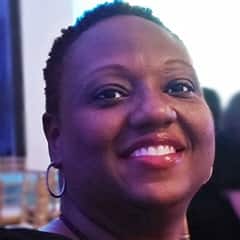
Dr. Charlene Spann, an adjunct instructor of business at Southern New Hampshire University (SNHU), said an MBA will be the most beneficial if you follow it up with ongoing growth in knowledge and skills.
"If one is seeking an MBA to truly understand the nuances of business so that their skills after graduation can expand and grow ... I believe it can future-proof a career," she said. "The key is that the person needs to continue developing their skills after the schoolwork is done."
In addition to having an MBA, Spann went on to earn a Doctor of Business Administration (DBA) as well as a Project Management Professional (PMP)® Certification.**

What is the Average MBA Salary Potential?
While your income as an MBA degree holder can vary significantly based on the industry, position you work in and geographic location, data from the U.S. Bureau of Labor Statistics (BLS) shows that employees with a master’s degree earned a median income of $1,840 per week in 2024.* That's 19% more than those with only a bachelor’s degree, according to BLS.*
Still, with so many advanced business degree options out there, you may be wondering, “Why get an MBA?”

Data from the Graduate Management Admission Council (GMAC) indicates a greater starting pay with an MBA degree.* Its 2026 Corporate Recruiters Survey revealed that the annual median starting salary is $120,000 for U.S. MBA hires, compared to around $72,000 for those with just a bachelor's degree (GMAC PDF source).*
Achieving the advanced credential could also increase your job security. In 2024, workers with a master’s degree faced an unemployment rate of 2.2%, compared to 2.5% for workers with only a bachelor's degree and 4.2% with only a high school diploma, according to BLS data.*
MBAs are in demand across a range of industries and organizations.* According to the GMAC report, more than a third of global recruiters plan to hire more MBA graduates in 2026 than they did the year before.
Types of MBA Programs
While broad-ranging business knowledge is one of the key values of an MBA, if you know you want to enter a particular area of business, choosing from more than 15 types of MBA concentrations could add even more value to your business degree.

"I would encourage students to have a concentration," said Doug Blais, PhD, a director of graduate campus programs at SNHU. "This allows students to have an increased focus on specific areas of interest and (can) make them more marketable to an employer."
From information technology management, public administration and leadership to international business, engineering management and finance, MBA concentrations are a great way to strengthen the skills most relevant to you. They are designed to help you gain the fundamental business understanding you need to be flexible and think strategically in today’s ever-changing economy.
Some other types of MBA concentrations include:
- Accounting
- Entrepreneurship
- Healthcare Management
- Human Resources
- Music Business
Selecting a concentration when earning your MBA can also provide valuable experience if you plan to use your degree to change careers.

Are you currently working in finance but want to move into a marketing career? An MBA with a concentration in Marketing can help give you the marketing know-how you need to stand out to employers and succeed in a new field.
If you're not sure which concentration is right for you, SNHU Assistant Dean of Operations and Student Success Cristina Velez recommended working on your core classes first and paying attention to which areas you most enjoy.
"We also advise students to go talk to their career advisor and navigate the different careers in different business areas, to make sure they choose a concentration where they will see themselves succeed," Velez said.
Learn on Your Schedule
At SNHU, college can fit your life. And with no set class times and multiple term starts per year, you can apply when you’re ready.
Undergraduate: October 26, 2026
Graduate: December 7, 2026
Find your program
How Long Does It Take to Get an MBA?
How long it takes to get an MBA depends on the program you choose and your preferred pacing. For example, at SNHU, you could start and finish your MBA online in just over one year if you take two classes per 10-week term.
That means you can add the three-letter credential to your name sooner.

Especially if you're like so many professionals interested in an MBA who already have a full-time career as well as family responsibilities to balance, an online program may give you the flexibility you need. Studying online can allow you to fit your learning into your daily life, taking as many courses each term as you can handle and accessing course materials at the times that work best for your schedule.
"It's all about finding the balance that works for you," Noor said. "At the end of the day, take the time you need to do well. And make sure you take some time in your week to do something for you... Make sure you are prioritizing what is important, whatever that looks like for you. Without these things, you cannot learn properly."
Read more: Is an Online MBA Worth It?
Is an MBA Hard to Get?
An MBA is an advanced degree, so you can expect it to challenge you. You'll likely encounter new concepts and situations that can help you develop your skills in problem-solving, critical thinking, decision-making and people management, among others.
But an MBA should also feel possible to obtain.
"An MBA is meant to be rigorous and manageable at the same time," said Blais, whose career as an SNHU business educator has spanned three decades. He noted that the perceived difficulty often depends on how well you're able to manage your responsibilities in and out of the classroom.
The MBA program at SNHU, in particular, offers flexibility, according to Blais — and that finding a way to fit it into your schedule can be worth it in the long run.

"At SNHU, we offer real-world applications with a focus on technology, data analysis and the incorporation of artificial intelligence," he said.
All three focuses are connected to skills employers rated as "core" to their work, according to a 2025 World Economic Forum (WEF) report. This means you'll have an opportunity to develop in-demand knowledge — plus many soft skills that are honed along the way.
And in this age of AI, Blais contends MBA professionals are needed more than ever to lead with empathy and trust. In addition to developing leadership skills, he noted that MBA programs also explore cultural awareness and ethical and sustainable business practices.
It's important to note: You won't be going through the program alone, even if you're earning your MBA online.
Your instructors are there to provide clarity and support as you work through subject material — and they can answer questions you might have along the way. Some schools also offer free tutoring services available to you no matter what day or time you're completing coursework.

A Chance to Put Theory to Practice
MBA curriculum varies by institution, but some colleges and universities ensure their students have a chance to apply what they're learning to situations they might encounter in the real world. Scenario-based learning — the approach SNHU's MBA uses — and other methods like it can help grow the skills needed to increase your business knowledge.
"Using real-life scenarios, students can apply what they are learning immediately and then adapt the scenario to their current work function," Spann said. "I have had several students say that they immediately applied what they learned in class to their job."

Through scenario-based learning, Spann said students are also strengthening their technical skills. For example, in one of her classes, students are assigned middle management roles at an auto company and must create an innovation strategy to present to the chief technology officer.
"The students aren’t just reading and writing papers, but they need to use data analytics, PowerPoint and Excel to convey their information to senior leadership," she said. "It’s exactly like what happens in the real world."
With courses ranging from leading people, organizations and change to organizational strategy and success measurement, what you learn in an MBA program can teach you the universal skills you need to succeed across various industries.
Some schools, such as SNHU, offer courses that weave various aspects of business together, offering you a holistic perspective that's necessary in the real world.
Keep reading: What Does an MBA Teach You?
So, is an MBA Really Worth It?
An MBA is the "gold standard" of business degrees, according to Blais. And the value of an MBA can be far-reaching: from potential career and salary growth to personal and professional development.
It can also prepare you for the future, equipping you with an industry-relevant credential and important skills. In today’s fast-paced, technology-driven economy, employers are seeking workers who can be flexible and learn and adapt on the fly.
Throughout your MBA program, you'll also have the opportunity to earn credentials beyond a diploma. At SNHU, "Strategy Development Implementation" and "Data Analytics Core Concepts" are just two examples of credentials embedded directly into MBA courses. There are also "core skill" credentials you can earn, such as "Leading vs. Managing" and "Building Personal Resilience."
These credentials include certificates sought throughout the business sector. More than half of surveyed employers identified the following as core skills for their workforce, according to the WEF report:
- Analytical thinking
- Resilience, flexibility and agility
- Leadership and social influence
- Creative thinking
- Motivation and self-awareness
In addition, you can gain experience with using common business platforms such as Microsoft Excel, Power BI and Tableau, to name a few.
The combination of learning various business scenarios, earning additional business credentials and using business technology and platforms helps prepare you for whatever your next step may be.
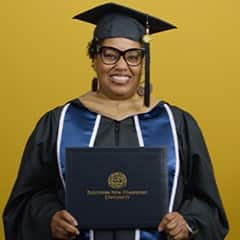
When Joi Taylor '21 '26MBA decided to earn an MBA, she already had a bachelor's in business administration. And she already built a career in finance. But she wasn't done.
Taylor decided to go back to SNHU — her alma mater — to get her MBA with a concentration in Leadership.
"I've been working to finance for a while, but with this degree, I think that it ... has heightened my leadership skills and will make me a better leader and help me impact the lives of others," she said.
During the program, Taylor noted that she took several helpful courses — with "Leading Organizational Change" standing out as the most beneficial. She said she learned a lot about the different types of leadership, which she plans to apply to her career.
More than knowledge, Taylor said she gained confidence throughout her business administration programs. "I am just ready to face the world and use the skills and tools that I've learned and gained on this journey," she said.
*Cited job growth projections may not reflect local and/or short-term economic or job conditions and do not guarantee actual job growth. Actual salaries and/or earning potential may be the result of a combination of factors including, but not limited to: years of experience, industry of employment, geographic location, and worker skill.
**The Project Management Professional (PMP)® is a registered mark of the Project Management Institute, Inc. The PMI® Authorized Training Partner seal is a mark of the Project Management Institute, Inc.
Danielle Gagnon is a freelance writer focused on higher education. She started her career working as an education reporter for a daily newspaper in New Hampshire, where she reported on local schools and education policy. Gagnon served as the communications manager for a private school in Boston, MA before later starting her freelance writing career. Today, she continues to share her passion for education as a writer for Southern New Hampshire University. Connect with her on LinkedIn.
Explore more content like this article

Is an Accounting Degree Worth It?

Is a Degree in HR Worth It?

How Madison Richards Found the Flexibility to Earn Her Degree
About Southern New Hampshire University

SNHU is a nonprofit, accredited university with a mission to make high-quality education more accessible and affordable for everyone.
Founded in 1932, and online since 1995, we’ve helped countless students reach their goals with flexible, career-focused programs. Our 300-acre campus in Manchester, NH is home to over 3,000 students, and we serve over 135,000 students online. Visit our about SNHU page to learn more about our mission, accreditations, leadership team, national recognitions and awards.