

What’s the Difference Between Finance and Accounting?


Many business programs are based on a foundation of what is known as the FAME subjects: finance, accounting, management and economics. Business students should gain a good working knowledge of all four topics, but some may wish to specialize in one of these areas.
Two common areas you may choose to focus on or pursue further education in are finance and accounting. These areas have several elements in common and are often grouped.
So, what exactly is the difference between finance and accounting?
What is Finance?
Between finance and accounting, finance can be thought of as the more general subject of the two areas. The study of finance can provide you with a strong foundation of knowledge of banking, economics and financial markets, which can be helpful in all types of workplaces.
Future business professionals studying finance have the opportunity to learn industry best practices and build skills in:
- Collaboration
- Communication
- Quantitative analysis
Successful professionals in finance, like financial analysts, understand the stock market and other types of investments and are skilled at interpreting mathematical and statistical data, according to the U.S. Bureau of Labor Statistics (BLS).
Types of Finance Degrees
If you're looking to break into the finance field, you might start with an associate degree in finance, where you can learn important decision-making methodologies and build foundations in different areas of finance. The degree can prepare you for some entry-level positions and place you halfway through a bachelor's degree program.

It's also a good degree choice if you want to explore the subject before you decide on a bachelor's degree major.
"The associate degree serves as an opportunity to determine if the selected focus of study is truly what the student desires," said Dr. Russ Bellemare '92 '96MBA, a finance instructor at SNHU with more than four decades of experience in the banking and commercial real estate industry. "(The) curriculum and workload will often mirror the same courses offered in the bachelor’s degree program during the first two years of study."
If you choose to pursue a bachelor's degree in finance, topics you might explore include:
- Entrepreneurial finance
- Financial management
- Investment management
A significant focus may be placed on the study of markets and how they function and fluctuate, as well as how to wisely and effectively manage and mitigate the risks inherent in investing.
You could further focus your finance education with a concentration in financial planning from a CFP Board-Registered Education Program.
What is Accounting?

Where finance is primarily future-focused, accounting generally works with existing records and documents.
"Accounting tells the financial story of an organization and provides the financial justification for resolving various business problems," said Mona Stephens, CPA, MSA, an associate dean of business at SNHU.
Stephens, who has more than 25 years of professional accounting experience, said accountants use financial data to answer questions such as:
- What happened?
- Why did it happen?
- What does it mean?
- How can we use that information to make better decisions?
Studying accounting prepares you to become an accountant, either working in the field or one of many adjacent career paths.
Course content in a bachelor's accounting degree program can include:
- Financial accounting
- Management accounting
- Tax accounting
"The work is important, challenging and allows you to continue to enhance your skill set," Stephens said. For example, you may develop skills in data-driven decision-making, technology and risk assessment, she said. You'll also study business strategy, risk management, information systems, quantitative analysis and more.
Specialized Accounting Degrees
You may choose to specialize in specific areas of accounting.
An accounting degree with a concentration in forensic accounting and fraud examination, for instance, is a good first step toward becoming a forensic accountant. This concentration is intended to support you if you're interested in pursuing the Certified Fraud Examiners (CFE) certification exam, which proves your ability to investigate and identify fraud.

Management accounting is another concentration you might consider, and it can prepare you for work in all types of industries. "After years of working as a management accountant and also teaching many students in management accounting, I am still amazed at the different fields that can make use of managerial accounting tools," said SNHU instructor Leslie Minich, CPA.
Minich, for example, is an experienced management accountant in the fields of energy, aviation and media.
At SNHU, you also have the opportunity to earn three VITA certifications, which then allows you to gain valuable, real-world experience volunteering with the IRS’s Volunteer Income Tax Assistance (VITA) program. VITA is a program geared toward supporting underserved populations with tax assistance, providing community service and skill-building for aspiring and current accounting professionals.
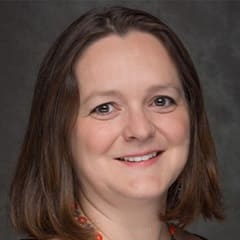
"VITA is a great way for students to learn how to file income taxes directly from the IRS," said Dr. Zuzana Buzzell, an associate dean of business at SNHU with nearly 20 years of experience as a business and accounting analyst. After completing the VITA certification exams, you can help individuals or families in need prepare their income taxes through VITA.
“VITA volunteering is valued in the accounting profession, as it shows industry skill development, community involvement and dedication to the accounting profession,” Buzzell said. The volunteer work you do can also be applied toward your program credits through experiential learning.
Find Your Program
What Can You Do With a Finance Degree?
Education in finance can help open doors to a business career. People holding degrees in finance often work in banks, mortgage companies and investment firms, among other settings.

Finance courses can be a pathway to becoming a personal financial advisor, according to BLS. Financial analysts and managers are also needed in all types of organizations, from family-run local businesses to global corporations.
Stable career growth makes finance a nice choice for students.* According to BLS, employment for business and financial occupations is expected to grow faster than the average for all occupations through 2034, with a projected 942,500 job openings annually.*
A few roles to consider in this field include:
- Financial Analysts: Work with individuals and organizations to make strategic decisions based on shareholder interests, stock viability, growth expectations, competition and more. Financial analysts earned a median of $101,910 in 2024, with a 6% job growth through 2034, according to BLS data.* See what it takes to become a financial analyst.
- Financial Examiners: Help organizations engaged in financial transactions consider their risks and ensure regulations and policies are followed. In 2024, financial examiners earned a median salary of $90,400, and the role is projected to grow 19% through 2034, according to BLS.*
- Financial Managers: Direct investment activities, review financial performance and oversee long-term financial planning to ensure the overall financial health of an organization. Financial managers earned a median of $161,700 in 2024, with a 15% job growth through 2034.*
See what else you can do with a finance degree.
What Can You Do With an Accounting Degree?
Accounting is a bit more specialized as a field, although, as with finance, there are accountants and people with accounting backgrounds working in all types of businesses and organizations.
According to Stephens, an accounting degree can help position you for several different career paths. "You can do public accounting work, be an accountant within an organization, do taxes, work in government or nonprofits, be an auditor, etc.," she said.

SNHU graduate Elham Sulieman '23 is passionate about accounting and wanted more job options for herself.
"Earning an accounting degree can open up a range of career opportunities in fields such as public accounting, corporate accounting, government accounting and more," said Sulieman.
Personally, she found a degree helped her build skills in topics such as financial reporting, taxation, auditing and more.
She also found that a degree can help you build a professional network, gain access to industry events and lead you in the right direction to become eligible for professional certifications such as Certified Public Accountant (CPA), said Sulieman.
Obtaining a certification can help you become a more competitive candidate. "Due to the testing and ethics requirements, the CPA certification represents a high level of accounting expertise and ethics," said Stephens. "It shows employers and clients a dedication to the accounting profession and to the people the profession serves."
At SNHU, you might consider earning a CPA graduate certificate in a CPA discipline area that interests you, including business analysis and reporting for accounting, information systems and controls or tax compliance and planning.
Becoming an accountant may be the most well-known career path with an accounting degree. The job may require a training period, further education, certification or a combination.
Studying accounting can lead to more specialized roles, too, such as actuary, auditor or financial examiner. People with accounting backgrounds can also be found working as bookkeepers, tax preparers and payroll administrators, according to O*NET OnLine.

Other roles include working for government agencies, as an internal or external auditor examining an organization's finances for cases of waste or fraud or as an information technology auditor, evaluating a company's computer system controls to ensure financial data is reliable, according to BLS.
The employment of accountants and auditors is anticipated to grow 5% through 2034, BLS projects.* Accountants are in demand when the economy is strong because economic health and growth mean more people are needed to manage and oversee financial records, BLS said.
While there are many different roles within accounting that you can pursue, Minich said accounting is about people more than numbers.
"The work we do with the finances of a company in many ways helps determine if people have jobs, affordable products and even retirement funds," she said. "Our work is not crunching numbers — it is helping people succeed."
If a career in accounting interests you, learn more about what you can do with an accounting degree.

Further Education in Finance and Accounting
Many jobs in finance and accounting will require a minimum of a bachelor's degree, BLS reported. However, you can also earn many advanced degrees and certifications throughout your career to gain a more specialized or in-depth understanding of your field.
Finance Graduate Programs and Certifications
In finance, you might be interested in:
- Master of Science in Finance: Should you wish to position yourself for specialized finance opportunities, you could choose from concentrations such as corporate finance and investments.
- MBA with a concentration in Finance: A Master of Business Administration (MBA) could help you gain a holistic understanding of business in addition to learning more about subjects such as corporate financial management, short-term financial management and investment analysis.
- CFP® Certification: This can help you become a CERTIFIED FINANCIAL PLANNER™ professional, indicating to clients that you're knowledgeable and hold yourself to high ethical standards.

Accounting Graduate Programs and Certifications
In accounting, you can pursue advanced degrees and credentials, including:
- Master of Science in Accounting: Choose from certificates such as management and fraud examiner accounting to help you propel your career in one of these directions.
- MBA with a concentration in Accounting: Complement your interest in accounting with topics such as financial reporting and cost accounting with classes that help you become a well-rounded business professional.
- Graduate Online Accounting Certificate: If you already have a bachelor's degree in another field and want to change careers, a graduate certificate may be a good fit for you.
- Certified Fraud Examiner (CFE): "The CFE certification is valuable for accountants who want to specialize in fraud investigations," Stephens said.
- Certified Management Accountant (CMA): "The CMA certification is valuable for accountants working within organizations as management accountants, cost accountants and chief financial officers," Stephens said.
- Certified Public Accountant (CPA): "The CPA is a well-respected certification that many employers like to see," Stephens said. Most states require you to have 150 hours of college coursework before you can sit for the exam, often earned via CPA-aligned bachelor's and master's in accounting programs. Other eligibility requirements may be needed. Be sure to check with your state's licensing requirements before committing to a program pathway.
Read more: What is a CPA?
So, Which is Better: Finance or Accounting?
Both subjects play crucial roles when it comes to financial information. The path you choose depends on what you hope to do with your degree.

College can be a good time to explore your interests if you're not sure which direction you want to take your career. Minich recommends completing internships to help you decide. An internship and other forms of experiential learning can give you a feel for what a future career could look like.
If you determine you want to gain experience in both subject areas, some schools also offer a combined focus with an accounting and finance degree. This option could help you unlock new careers and pathways in both the finance and accounting worlds.
"I love the idea of the combined degree because it gives students greater flexibility, especially as they are beginning their professional careers and don't yet know where their career will take them," Minich said.
A degree can change your life. Find the SNHU accounting or finance program that can best help you meet your goals.
**Certified Financial Planner Board of Standards Center for Financial Planning, Inc. owns and licenses the certification marks CFP®, CERTIFIED FINANCIAL PLANNER®, and CFP® (with plaque design) in the United States to Certified Financial Planner Board of Standards, Inc., which authorizes individuals who successfully complete the organization’s initial and ongoing certification requirements to use the certification marks.
*Cited job growth projections may not reflect local and/or short-term economic or job conditions and do not guarantee actual job growth. Actual salaries and/or earning potential may be the result of a combination of factors including, but not limited to: years of experience, industry of employment, geographic location, and worker skill.
Rebecca LeBoeuf Blanchette '18 '22G is a writer at Southern New Hampshire University, where she fulfills her love of learning daily through conversations with professionals across a range of fields. She earned her Bachelor of Arts in Communication with a minor in Professional Writing at SNHU’s campus in Manchester, New Hampshire, and followed her love of storytelling into the online Master of Arts in English and Creative Writing at SNHU. Connect with her on LinkedIn.
Explore more content like this article

How Jordan Earned 2 Degrees in 2 Ways at the Same University

Cynthia Preston ’26 Tailored Her Way to a Marketing Degree

How Do You Become a Financial Advisor?
About Southern New Hampshire University

SNHU is a nonprofit, accredited university with a mission to make high-quality education more accessible and affordable for everyone.
Founded in 1932, and online since 1995, we’ve helped countless students reach their goals with flexible, career-focused programs. Our 300-acre campus in Manchester, NH is home to over 3,000 students, and we serve over 135,000 students online. Visit our about SNHU page to learn more about our mission, accreditations, leadership team, national recognitions and awards.